
Camping Battery and Portable Power Stations




Camping Battery & Portable Power Stations for Overlanding & Off Road
A camping battery is a portable power station, lithium battery pack, or solar generator that keeps your fridge running, lights on, devices charged, and CPAP working when you're camping, overlanding, or driving off road for days without grid power. We carry camping batteries and portable power stations from EcoFlow and National Luna, plus a bifacial solar panel that turns any unit into an indefinite-runtime off grid power system. Prices start at $299 for the EcoFlow RIVER 3 Plus and run up to $3,699 for the EcoFlow DELTA Pro 3 flagship. Every unit on this page uses lithium iron phosphate (LiFePO4) chemistry, ships with a real warranty, and is sized for genuine camping and overlanding use, not just emergency home backup. Call us at 844-200-3979 to talk through capacity sizing for your fridge, lights, and other camp loads.
Featured Camping Batteries & Power Stations

EcoFlow RIVER 3 Plus Portable Power Station
Price: $299.00
Capacity: 286Wh LiFePO4 battery | Output: 600W AC inverter (1200W X-Boost)
Charging: AC, 12V car, USB-C 100W, solar input compatible
The most affordable camping battery in our lineup and the right entry-point for weekend overlanders, solo campers, and anyone who needs to keep phones, lights, and a small fridge running for 1-2 nights off-grid. The 286Wh LiFePO4 capacity handles a portable fridge for roughly 24 hours plus device charging. EcoFlow's X-Boost technology lets you run higher-wattage loads (kettle, coffee maker) intermittently up to 1200W. Compact enough to live in the footwell of an SUV without taking up real estate.
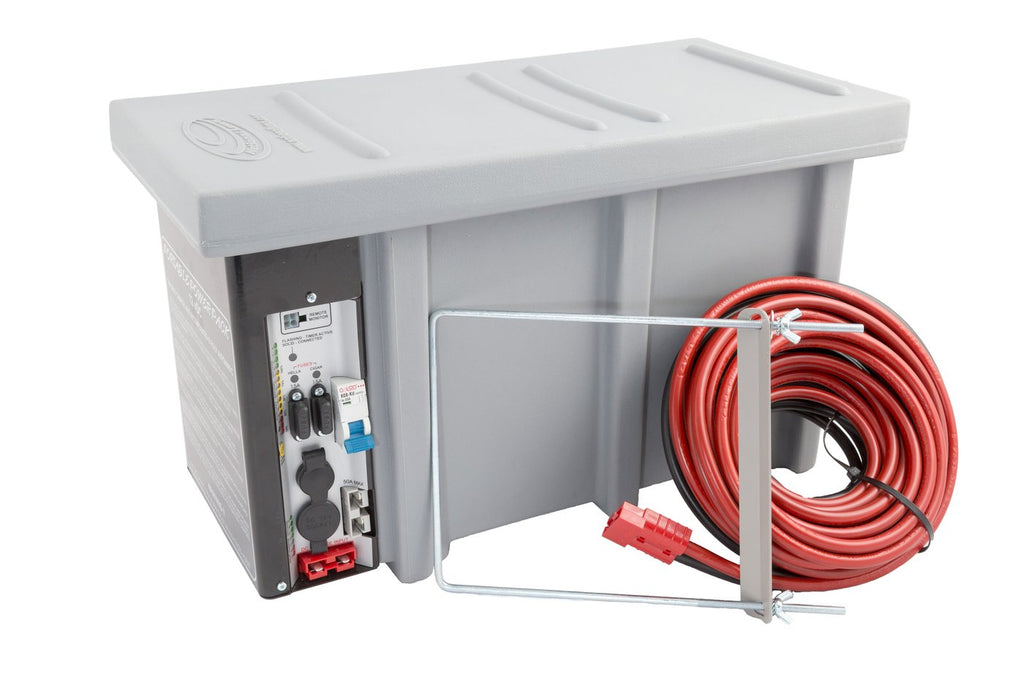
National Luna Portable Power Pack
Price: $490.00
Type: Overlanding-specific portable battery | Fits: National Luna fridges & 12v overland loads
Build: Heavy-duty case, built-in battery management, expedition-engineered
National Luna's portable power pack is the overlanding-specific option in our lineup, engineered from the ground up for off road and expedition use rather than home backup. The heavy-duty case takes vibration that consumer power stations don't tolerate well, the built-in battery management protects against over-discharge, and it's optimized to run National Luna 12v fridges without efficiency loss. The right pick when you're running National Luna fridges or want a pack engineered for genuinely rough overland conditions.

EcoFlow RIVER 2 Pro Portable Power Station
Price: From $599.00
Capacity: 768Wh LiFePO4 battery | Output: 800W AC inverter (1600W X-Boost)
Charging: AC (70-min full charge), 12V car, USB-C 100W, solar to 220W
The sweet-spot camping power station for most overlanders. 768Wh capacity runs a portable fridge for roughly 2-3 days off-grid, charges phones, laptops, and cameras for a week, and powers LED lighting for full-trip use. EcoFlow's fast-charge tech hits a full charge from a wall outlet in 70 minutes. X-Boost up to 1600W handles kettles, induction cooktops (briefly), and similar loads. The biggest jump in real-world usefulness vs the smaller RIVER 3 Plus.

EcoFlow 220W Bifacial Solar Panel
Price: $649.00
Type: Portable solar panel | Fits: EcoFlow power stations & compatible 12-150V solar inputs
Build: Bifacial cells, 23% efficiency, IP68, folding kickstand design
The EcoFlow 220W bifacial portable solar panel captures sunlight on both sides of the cells, delivering up to 25% more power than equivalent single-sided panels when the rear surface picks up reflected light. 23% conversion efficiency, IP68 waterproof rating, and a folding kickstand design that packs flat for transport. Pair it with any EcoFlow power station for indefinite off-grid runtime, or use it standalone as a portable solar generator setup with compatible non-EcoFlow stations.

EcoFlow RIVER 3 Max Plus + Extra Battery (600Wh)
Price: $717.00
Capacity: 600Wh base + extra battery bundle | Output: Higher continuous & surge ratings
Charging: AC, 12V car, USB-C, solar input compatible
The RIVER 3 Max Plus with the included extra battery bundle gives you serious overlanding capacity in the RIVER form factor. The 600Wh base unit plus extra battery handles 3-4 day fridge runs comfortably, with the modular battery option letting you scale up further if your trips get longer. The right call for owners who want RIVER-series portability but need capacity closer to a DELTA-series unit without the DELTA price tag.
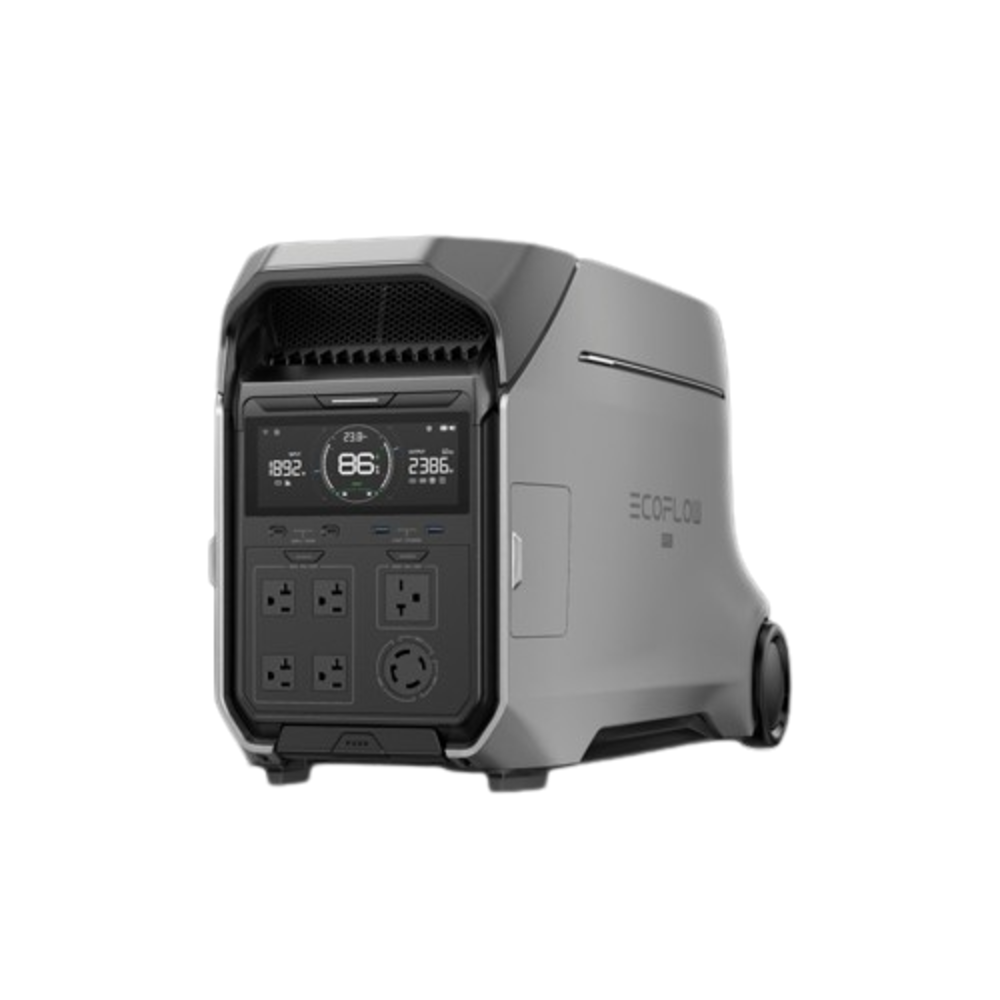
EcoFlow DELTA Pro 3 Portable Power Station
Price: $3,699.00
Capacity: 4096Wh LiFePO4 (expandable to 36kWh) | Output: 4000W AC inverter (8000W X-Boost)
Charging: AC, 12V car, USB-C, up to 2600W solar input
The flagship EcoFlow DELTA Pro 3 is the serious overlanding power solution: 4096Wh base capacity (roughly 4kWh, or about 1 week of fridge runtime), 4000W continuous AC output that runs anything you'd plug into a home outlet, and modular expansion up to 36kWh for off-grid living scenarios. Solar input up to 2600W means a couple of bifacial panels charge it from empty in a few hours. The premium pick for full-time overlanders, expedition rigs, and anyone using it as both off-grid power and home backup.
Camping Batteries & Power Stations Compared
| Product | Capacity | AC Output | Best For | Price |
|---|---|---|---|---|
| EcoFlow RIVER 3 Plus | 286Wh | 600W (1200W X-Boost) | Weekend trips, solo overlanders | $299.00 |
| National Luna Power Pack | Overlanding-grade | 12V optimized | National Luna fridge users, rough off-road | $490.00 |
| EcoFlow RIVER 2 Pro | 768Wh | 800W (1600W X-Boost) | 2-3 day trips, sweet spot for couples | From $599.00 |
| EcoFlow 220W Bifacial Solar Panel | Solar input (no battery) | N/A | Indefinite runtime pairing | $649.00 |
| EcoFlow RIVER 3 Max Plus + Extra Battery | 600Wh + expansion | Higher continuous | 3-4 day trips, RIVER portability | $717.00 |
| EcoFlow DELTA Pro 3 | 4096Wh (to 36kWh) | 4000W (8000W X-Boost) | Multi-week trips, full expedition rigs | $3,699.00 |
Why You Need a Camping Battery on Off-Grid Trips
A camping battery solves a specific problem that grows more painful the longer you camp: keeping electrical loads running without idling your truck. Modern overland setups have real power requirements (a 12v fridge draws 1-2 amp-hours per hour, LED lighting adds another 1-3 amp-hours, charging phones and cameras adds 0.5-1 amp-hour daily, a CPAP machine adds 5-8 amp-hours per night). Running these off your starter battery for more than a day risks leaving you stranded with a dead battery and a 40-mile walk. This is exactly the problem portable batteries and dedicated camping batteries are designed to solve.
A dedicated portable power station or camping battery handles all that load without touching your vehicle's electrical system. The RIVER 3 Plus handles a weekend; the RIVER 2 Pro handles 2-3 days; the RIVER 3 Max Plus with extra battery handles 3-4 days; the DELTA Pro 3 handles a week or more. Add a portable solar panel like the 220W bifacial and runtime becomes indefinite as long as you're getting decent sun. The right camping battery for your build is whichever capacity matches your real loads with 25% headroom on top.
Why LiFePO4 chemistry matters: Every EcoFlow unit on this page uses lithium iron phosphate (LiFePO4) batteries instead of the older lithium-ion or lead-acid chemistries. LiFePO4 cells survive 3,000-6,500+ charge cycles (vs 500-1,000 for older lithium-ion), tolerate higher temperatures without thermal runaway, hold capacity better in cold weather, and don't lose significant capacity over the first few years of ownership. The trade-off is slightly higher up-front cost and slightly heavier weight, but for off road and camping use the longer lifespan is worth it.
How to Size Your Camping Battery
Sizing a portable power station for camping comes down to one calculation: total watt-hours per day of all your loads multiplied by your trip length in days.
Typical camp loads (daily watt-hour consumption):
12v portable fridge: 25-50 Wh per day depending on ambient temperature and how often you open it. ~35 Wh average for a 50-quart fridge in moderate conditions.
LED lighting: 5-15 Wh per day for typical camp lighting (string lights, headlamps charged via USB, area lights).
Phone and camera charging: 30-50 Wh per day for 2-3 phones and a camera body.
Laptop work: 50-80 Wh per day for 2-3 hours of laptop use.
CPAP machine: 50-100 Wh per night without humidifier; 100-200 Wh per night with humidifier.
Sum your daily loads, multiply by trip length, then add 25% headroom for inefficiency and unexpected loads. A typical couple's overland trip with fridge, lights, two phones, and a camera runs about 100-150 Wh per day. A 768Wh RIVER 2 Pro handles 5+ days of that load profile without recharging; the 4,096Wh DELTA Pro 3 handles 25+ days.
Portable Solar Generators: Pairing a Power Station With Solar
A portable solar generator is just the combination of a portable power station and a solar panel. The panel captures sunlight, sends DC power to the station, the station stores it in the lithium battery, and you draw it out through AC outlets, USB ports, or 12v connections as needed. This is the standard off grid power configuration for serious overlanders and expedition users.
The EcoFlow 220W bifacial solar panel on this page pairs with any RIVER or DELTA series unit. In full sun (4-6 productive hours per day depending on latitude and season), it generates roughly 800-1,200 Wh per day. That's enough to recharge a RIVER 2 Pro from empty to full in one day, or to keep a DELTA Pro 3 topped up indefinitely under normal overland power loads.
For owners wanting maximum solar capacity, the DELTA Pro 3 accepts up to 2600W solar input simultaneously, which means you can run three or four bifacial panels in parallel for serious off-grid living scenarios. Most overlanders find one or two panels is enough for typical use, with the second panel adding redundancy more than capacity.
EcoFlow vs National Luna: Which Should You Pick?
EcoFlow is the modern consumer power station leader. The RIVER and DELTA series win on capacity-per-dollar, fast charging, USB-C and AC output flexibility, app integration, and the modular expandable battery system in the DELTA series. The downside is that EcoFlow units are built for consumer use and home backup as much as overlanding, so they're less rugged than purpose-built expedition gear. For 80% of overland and camping users, an EcoFlow is the right call.
National Luna builds the National Luna Portable Power Pack specifically for off road and expedition use. The case takes vibration that consumer units don't tolerate well, the battery management is optimized for the 12v overland load profile (especially National Luna fridge integration), and the South African expedition design heritage shows in every detail. Choose National Luna if you're running National Luna fridges, doing genuinely rough overland expeditions where vibration and shock matter, or simply prefer the overlanding-specific build philosophy.
Frequently Asked Questions
What size camping battery do I need for a portable fridge?
A 12v portable fridge typically draws 25-50 watt-hours per day depending on ambient temperature, size, and how often you open it. For a 1-2 night trip with just the fridge running, the EcoFlow RIVER 3 Plus (286Wh) is sufficient. For 2-3 days, step up to the RIVER 2 Pro (768Wh). For 3-4 days, the RIVER 3 Max Plus + Extra Battery (600Wh + expansion). For a week or more, the DELTA Pro 3 (4096Wh). Add 25% buffer if you also need to charge devices, run lights, or use a CPAP.
Can I use these portable power stations at home for backup?
Yes, every EcoFlow unit on this page doubles as home emergency backup. The DELTA Pro 3 in particular is built for both off road camping use and home backup, with the modular battery expansion system letting you scale capacity for whole-home backup during power outages. The RIVER series is sized more for camping but still handles refrigerator, lights, and critical electronics during shorter outages.
How long does it take to charge a portable power station from solar?
Depends on the panel and the station. The EcoFlow 220W bifacial panel generates roughly 800-1,200 Wh per day in full sun (4-6 productive solar hours). That's enough to fully charge a RIVER 2 Pro (768Wh) in one solar day, or to keep a DELTA Pro 3 topped up against normal overland loads. For faster charging, run multiple panels in parallel; the DELTA Pro 3 accepts up to 2600W solar input.
Are portable power stations safe to use inside a tent or RV?
Yes. Unlike gas generators, portable power stations produce zero emissions, zero noise, and no combustion. They're safe to run inside tents, rooftop tents, RVs, and any enclosed space. The LiFePO4 battery chemistry used in every unit on this page is also significantly safer than older lithium-ion chemistries, with much higher thermal stability and resistance to fire risk.
Can I charge a portable power station while driving?
Yes. Every EcoFlow unit on this page includes a 12V car charging port that draws from your vehicle's accessory outlet while driving. Charge rate depends on the unit and the outlet, typically 100-200W of input, which adds roughly 100-200 Wh per hour of driving. The most efficient charging strategy on a multi-day trip is to charge from the vehicle while driving between camp sites, then top off with solar at camp.
Related
Portable Fridges
12v portable fridges and freezers that are the most common load running on your camping battery.
Off Road Lights
LED light bars, ditch lights, and rock lights powered from your aux battery or wired to a portable power station.
Need Help Sizing Your Camping Battery?
Tell us your fridge wattage, lights, devices, and trip length. We will match you with the right capacity and solar setup.