
Are Roof Top Tents Worth It? Honest Pros, Cons & Real Costs (2026)
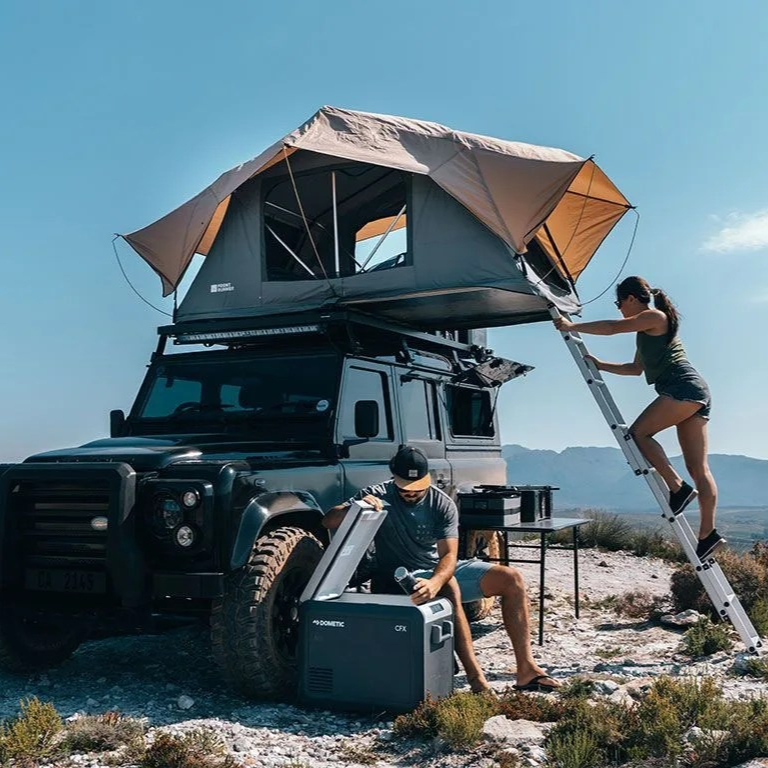
Are roof top tents worth it? It's the question everyone asks before dropping $2,500–$7,500 on an RTT setup. You've seen those Instagram photos of adventurers camping on cliff edges with their roof top tents deployed, and you want in. But is a roof top tent actually worth the money, or is it just expensive camping gear hype?
Here's the reality: roof top tents aren't for everyone. After talking to hundreds of customers and spending thousands of nights combined in various RTT models across our team, we've learned that whether a roof top tent is worth it depends entirely on how you camp.
This guide gives you the honest answer—including the roof top tent pros and cons nobody talks about, the hidden costs of roof top tent ownership, and when you should absolutely skip the RTT and save your money. We're a roof top tent dealer, but we'd rather you make the right choice than the expensive one.
📋 Quick Navigation
What Is a Roof Top Tent? (Quick Primer)
A roof top tent mounts directly to your vehicle's roof rack and provides an elevated sleeping platform that deploys in minutes. Unlike traditional ground tents that require finding level terrain and setting up poles, roof top tents attach to your car and pop open when you reach camp.
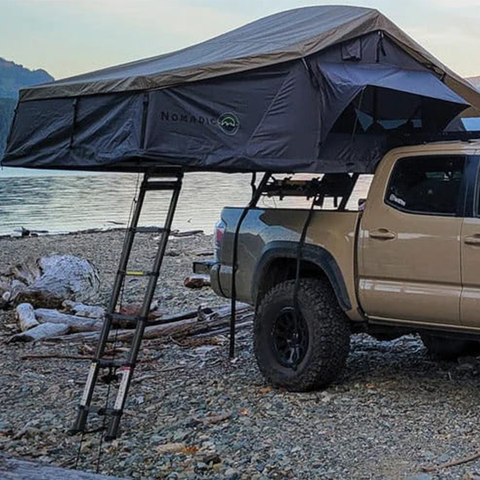
There are two main types:
Hardshell Roof Top Tents
Hardshell tents feature rigid panels that open via gas struts in 30-60 seconds. They're more expensive ($2,500-$4,500) but offer unbeatable convenience and better aerodynamics. Think of models like the iKamper Skycamp that opens with one hand.
Softshell Roof Top Tents
Softshell tents use collapsible fabric construction supported by aluminum poles. They take 3-5 minutes to deploy, cost less ($1,000-$2,500), and offer significantly more interior space. The OVS Nomadic 3 is our best-selling example.
Now that you understand the basics, let's get to what you actually want to know: is a roof top tent worth buying?
🏕️ Ready to Browse Roof Top Tents?
Explore our complete collection of hardshell and softshell RTTs for every budget
BROWSE ALL ROOF TOP TENTSThe Real Pros of Roof Top Tents (What Actually Matters)
Let's start with why people love roof top tents. These aren't marketing claims—these are real advantages we've observed after years of camping and customer feedback.
✓ Setup Takes 60 Seconds to 5 Minutes
This is the number one reason people buy roof top tents. Hardshell models like the iKamper literally open in under a minute—unlatch four clips, lift the shell, and you're done. Even softshell tents set up in 3-5 minutes once you've practiced.
Compare this to ground tents requiring 15-30 minutes of pole assembly, staking, and rainfly attachment. When you're exhausted after a long day of driving or hiking, that time difference is genuinely life-changing. You arrive at camp, pop the tent, and you're ready for dinner within minutes.
✓ Your Bedding Stays Inside
This advantage sneaks up on you. With a roof top tent, your sleeping bags, pillows, and sheets live inside the tent permanently. You're not packing and unpacking bedding every trip. You're not sleeping on a different surface every night.
When you close a hardshell tent, everything is protected and locked inside. Even softshell tents keep your bedding dry and ready. Roll into camp late? Your bed is already made. That convenience adds up over dozens of camping trips.
✓ You're Elevated Off the Ground
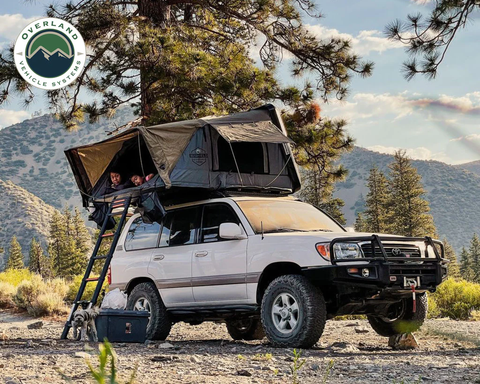
Sleeping five feet off the ground provides multiple benefits. You're away from ground moisture, mud, and puddles. You're above rocky, uneven terrain that would be miserable in a ground tent. You're not worried about creepy crawlies—spiders, scorpions, snakes—exploring your sleeping area at night.
In areas with wildlife, the psychological comfort of elevation matters. We're not claiming roof top tents are bear-proof, but sleeping elevated provides genuine peace of mind in backcountry camping.
✓ Genuine Sleeping Comfort
Roof top tents come with built-in mattresses—typically 2-4 inches of high-density foam or memory foam. The OVS Nomadic series includes 3-inch foam mattresses. Premium tents like the iKamper Skycamp feature memory foam.
You're sleeping on an actual mattress every night, not a thin sleeping pad on rocky ground. After 40+ years old, this comfort difference becomes non-negotiable for many campers. Your back doesn't hurt in the morning. You actually sleep well.
✓ Camp Anywhere Your Vehicle Can Go
Ground tents require relatively flat, clear ground. Roof top tents don't care about terrain underneath your vehicle. Parked on a slope? Your tent stays level. Camping in a rocky desert? Irrelevant. Muddy campsite? You're sleeping above it.
This flexibility opens camping locations ground tenters can't access. We've camped on lava rock fields in Arizona, muddy mountain passes in Colorado, and beach parking lots where ground tents would be impossible. Your vehicle's footprint is your campsite.
✓ Superior Weather Protection
Quality roof top tents use heavy-duty ripstop canvas—600D polyester or poly-cotton blends—with 2000mm+ waterproof ratings. The elevated position keeps you away from ground water. Robust construction handles wind better than most ground tents.
During thunderstorms, we've stayed completely dry in roof top tents while watching water pool where a ground tent would have been. The rigid structure doesn't flap violently in wind like ground tent fabric.
The Real Cons Nobody Mentions (The Honest Truth)
Now for the roof top tent problems dealers don't advertise. These aren't deal-breakers for everyone, but they're absolutely deal-breakers for some people. Understanding these cons helps you decide if roof top tents make sense for your camping style.
✗ The True Cost Is Much Higher Than the Tent Price
That "$1,500 roof top tent" actually costs $2,200-$2,800 once you factor in everything needed:
- Roof rack system: $300-800 for quality racks that can support RTT weight
- Installation: $100-200 if not DIY
- Basic accessories: Shoe bag, annex, guy lines ($150-300)
- Potentially new roof crossbars: $200-400 if factory bars can't support weight
Suddenly that "affordable" tent costs as much as a quality tonneau cover and bed rack system combined. Budget accordingly.
✗ Fuel Economy Takes a Real Hit
Expect to lose 2-4 MPG on highway driving. Hardshell tents impact fuel economy less (1-2 MPG) due to better aerodynamics. Softshell tents create more wind resistance (2-4 MPG loss).
Let's do the math: 2 MPG loss × 15,000 miles per year ÷ 20 MPG average × $3.50/gallon = roughly $265 per year in additional fuel costs. Over five years, that's $1,325 in extra fuel. Factor this into your roof top tent cost analysis.

✗ You Can't Leave Camp Once It's Set Up
This is the roof top tent disadvantage nobody talks about until they own one. Your tent is on your vehicle. If you set up camp and want to drive into town for groceries or explore a trail, you have two options:
- Pack up your entire tent (5-10 minutes) every time you leave
- Leave your tent deployed and walk/bike to destinations
Ground tenters set up camp, then drive wherever they want. Roof top tent campers either commit to staying put or spend significant time packing/unpacking. For some camping styles (basecamp for day hikes), this works fine. For spontaneous explorers, it's genuinely frustrating.
Solution: Some overlanders tow a small off-road trailer and mount their tent there. Others accept the limitation and plan accordingly.
✗ Height Restrictions Become a Problem
Your vehicle gains 9-15 inches of height with a roof top tent (more for softshells when deployed). This creates real-world problems:
- Parking garages: Many have 7-foot clearances—you won't fit
- Drive-throughs: Forget them (which might be healthier anyway)
- Gas station canopies: You'll need to verify clearance or use pumps without cover
- Your garage: Measure before buying—many people can't store vehicles with RTTs inside
- Low-clearance trails: Overhanging branches become obstacles
We've watched customers remove roof top tents seasonally because they can't garage park. That's $200-400 annually in removal/reinstallation costs if you pay shops.
✗ Climbing the Ladder at 3 AM Isn't Fun
Need to use the bathroom at night? You're climbing down a ladder in the dark. In rain. In freezing temperatures. With boots you have to put on first.
This sounds minor until you're 65 years old or have bad knees. Suddenly that "convenient" elevated sleeping position becomes a genuine obstacle. We recommend keeping a dedicated pee bottle in your tent (clearly labeled) for middle-of-the-night bathroom needs. It's unglamorous but practical.
✗ Your Vehicle Handles Differently
Adding 120-250 pounds of weight (tent plus occupants) six feet above your vehicle's roof raises the center of gravity. This affects handling:
- More body roll in corners
- Longer braking distances
- More wind sensitivity on highways
- Increased rollover risk if you drive aggressively
Most people adapt within a few hundred miles and drive more conservatively. But if you enjoy spirited driving or frequently navigate mountain switchbacks, the handling change is noticeable.
✗ Condensation Management Is Constant
Your breath contains moisture. In cold weather or high humidity, that moisture condenses on tent walls and the underside of hardshells. Wake up to water droplets on interior fabric or—in freezing temps—frost on everything.
You manage this with proper ventilation (crack windows even in cold weather), wiping down walls regularly, and buying anti-condensation mats. But condensation is a persistent roof top tent issue, especially in shoulder-season camping.
✗ It Becomes a Permanent Part of Your Vehicle
Realistically, most people don't remove roof top tents seasonally. They stay mounted year-round. This means:
- Your vehicle always gets worse fuel economy
- You always have height restrictions
- Your vehicle looks "outdoorsy" 365 days/year
- Resale value may decrease (or increase to right buyer)
If you only camp 10 nights per year, your vehicle is modified for 355 days of non-camping driving. Some people love the adventure aesthetic. Others wish they could remove it more easily.
🤔 Still Weighing Your Options?
Read our complete beginner's guide to choosing the right roof top tent
READ THE BUYING GUIDEHidden Costs of Roof Top Tent Ownership
Beyond the purchase price and roof rack system, roof top tents create ongoing costs most first-time buyers don't anticipate.
Maintenance and Repairs
Quality tents require maintenance every 1-2 years:
- Seam sealing: $30-50 in sealant every 2-3 years
- Zipper replacement: $50-150 when zippers fail (they will eventually)
- Canvas patching: $20-40 for repair kits for tears or punctures
- Hardware replacement: Latches, gas struts, hinges ($50-200)
Budget $50-100 annually for maintenance supplies and occasional repairs. This isn't major, but it adds up.
Storage When Not in Use
If you remove your tent seasonally (or want the option), storage becomes an issue. Roof top tents are bulky—4-5 feet long, 4 feet wide, 8-12 inches thick when closed. They don't fit in standard closets.
Options include garage ceiling storage (install pulley systems, $100-200), renting storage units ($50-150/month), or building dedicated storage racks. Or leave it mounted year-round and accept the fuel economy penalty.
Lost Cargo Capacity
Your roof rack is now occupied by the tent. Those roof cargo boxes, kayak racks, or bike racks you used? They're displaced.
Solutions include adding truck bed racks for additional gear mounting (add $400-800), using drawer systems for internal storage ($600-1,500), or accepting you'll carry less gear. Either way, roof top tents change how you pack for trips.
Insurance Considerations
Some insurance companies require notification when you permanently modify your vehicle with accessories worth over $1,000. Roof top tents qualify. You might need to add them as scheduled items on your policy (typically $20-50/year additional premium).
If you don't notify your insurer and the tent is stolen or damaged, your claim might be denied. Always check your policy and notify your agent about major vehicle modifications.
Who Should Buy a Roof Top Tent (and Who Should Skip)
After evaluating the roof top tent pros and cons, here's our honest assessment of who benefits most from roof top tents versus who should save their money.
✓ Buy a Roof Top Tent If You:
Camp 15+ nights per year. The convenience and comfort justify the cost when you're a frequent camper. The setup time savings alone—5 hours annually if you camp 20 nights—is worth it.
Value sleep comfort over everything. If you're willing to pay for better sleep, roof top tents deliver. That iKamper memory foam mattress genuinely feels like sleeping at home.
Camp in rough terrain or remote areas. Overlanders who explore backcountry locations where ground tents struggle will appreciate the anywhere-campable flexibility.
Have physical limitations. Ironically, some people with bad backs find roof top tents easier than ground tents—no bending to set up poles, and the mattress comfort helps. The ladder can be challenging, but the setup ease compensates.
Own a truck or SUV you're already modifying. If you're building a dedicated overland rig with aftermarket bumpers, winches, and auxiliary lighting, adding a roof top tent fits your build philosophy.
Camp with a partner or small family regularly. A quality 3-person tent like the OVS Nomadic 3 gives couples plenty of room or accommodates two adults plus a child comfortably.
✗ Skip a Roof Top Tent If You:
Camp fewer than 10 nights per year. The cost-per-use doesn't justify the investment. A quality ground tent from REI makes more financial sense for occasional camping.
Like to set up basecamp and drive around. If your camping style involves setting up camp for 2-3 days and taking day trips in your vehicle, a ground tent or truck bed tent works better.
Camp at developed campgrounds primarily. If you're camping at KOA-style campgrounds with hookups, picnic tables, and amenities, you don't need the advantages roof top tents provide. Save your money.
Can't afford the true total cost. If $1,500 for the tent is already stretching your budget, you probably can't comfortably afford the $2,200-2,800 total system cost plus ongoing expenses. Better to buy quality ground camping gear and enjoy camping within your budget.
Drive a sedan or car with low roof capacity. Many passenger cars have 100-pound or lower dynamic roof load limits. This eliminates most roof top tent options. Stick with ground tents unless you plan to upgrade vehicles.
Need your vehicle for daily commuting in urban areas. If you navigate underground parking garages, multi-level parking structures, or dense urban environments daily, the height restrictions become genuinely problematic.
Camp with larger groups or families. Even 4-person tents get cramped with four adults. For families with multiple kids or group camping, ground tents provide more space for less money.
The Real Cost-Benefit Analysis (Numbers Don't Lie)
Let's run the actual math on whether roof top tents are worth it financially. We'll compare three scenarios: quality ground camping, mid-range roof top tent, and premium hardshell setup.
Scenario 1: Quality Ground Tent Setup
Initial Investment:
- Quality 3-season tent: $300
- Sleeping pads (2): $200
- Sleeping bags (2): $150
Total Initial Cost: $650
Annual Costs: Maintenance/replacement $30
5-Year Total: $800
Scenario 2: Mid-Range Softshell RTT
Initial Investment:
- OVS Nomadic 3: $1,627
- Roof rack system: $500
- Installation + accessories: $250
Total Initial Cost: $2,377
Annual Costs: Fuel penalty $200 + maintenance $75 = $275
5-Year Total: $3,752
Scenario 3: Premium Hardshell Setup
Initial Investment:
- iKamper Skycamp 3.0: $4,200
- Premium roof rack: $700
- Installation + accessories: $400
Total Initial Cost: $5,300
Annual Costs: Fuel penalty $150 + maintenance $75 = $225
5-Year Total: $6,425
Cost Per Camping Night
Let's calculate cost per night assuming 15 camping nights annually over 5 years (75 total nights):
- Ground tent: $800 ÷ 75 nights = $10.67 per night
- Mid-range RTT: $3,752 ÷ 75 nights = $50.03 per night
- Premium RTT: $6,425 ÷ 75 nights = $85.67 per night
The question becomes: Is the convenience, comfort, and experience worth an extra $40-75 per camping night? For frequent campers, yes. For occasional campers, probably not.
At 30 nights per year over 5 years (150 total nights), costs drop dramatically:
- Mid-range RTT: $25.01 per night
- Premium RTT: $42.83 per night
This is where roof top tents start making financial sense—when you camp frequently enough that the per-use cost drops to reasonable levels.
Alternatives Worth Considering Before Buying an RTT
Roof top tents aren't your only option for elevated or convenient camping. Here are legitimate alternatives worth evaluating:
Truck Bed Tents
Truck bed tents mount in your truck bed, providing protected sleeping without occupying roof space. They cost $200-500, set up in 10 minutes, and let you drive away from camp easily (just pack the tent in the bed).
Best for: Truck owners who want protected camping without roof mounting and fuel economy penalties.
Truck Camper Shells
Quality camper shells or canopy campers turn your truck bed into enclosed sleeping/storage space. They're more expensive ($1,500-5,000) but provide weather-sealed storage year-round plus sleeping space.
Best for: Truck owners who want secure storage and sleeping capability without roof mounting.
Quick-Setup Ground Tents
Modern popup tents and instant-setup ground tents have improved dramatically. Models from REI and Coleman set up in 5-10 minutes—not quite roof top tent speeds but far better than traditional tents.
Best for: Campers who want faster ground tent setup without the roof top tent investment.
Slide-In Truck Campers
For serious overlanders, slide-in truck campers provide genuine living quarters—kitchen, sleeping, storage—in your truck bed. They're expensive ($8,000-30,000+) but transform your truck into a self-contained adventure vehicle.
Best for: Overlanders planning extended trips who want full camping amenities.
Trailer Tents
Trailer-mounted tents let you tow your sleeping quarters, keeping your vehicle's roof clear. You can disconnect at camp and drive wherever you want. They cost $3,000-8,000 plus the trailer.
Best for: Campers who want roof top tent benefits plus the freedom to leave camp and explore.
💬 Still Have Questions?
Our team has decades of overlanding experience and can help you make the right choice
CONTACT USThe Verdict: Are Roof Top Tents Worth It?
For the right person, yes—roof top tents are absolutely worth the investment. But "the right person" isn't everyone who thinks roof top tents look cool on Instagram.
After thousands of conversations with customers and our own extensive camping experience, here's the honest answer to "is a roof top tent worth buying?":
You should buy a roof top tent if: You camp 15+ nights annually, prioritize setup convenience and sleep comfort, camp in varied terrain where ground tents struggle, and can comfortably afford the $2,500-5,000 total investment plus ongoing costs. For this profile, roof top tents genuinely improve camping quality of life.
You should skip a roof top tent if: You camp fewer than 10 nights per year, primarily use developed campgrounds, need to set up basecamp and drive around, or are stretching your budget to afford the tent. In these scenarios, quality ground camping gear serves you better.
Our Specific Recommendations
Best value for most buyers: OVS Nomadic 3 ($1,627). It hits the sweet spot of quality, features, price, and proven reliability. This tent converts more first-time buyers into regular campers than any other model we sell.
Best for frequent campers: iKamper Skycamp 3.0 ($4,200). The 30-second setup, memory foam comfort, and premium construction justify the price if you camp 20+ nights annually. Buy once, enjoy for a decade.
Best budget option: OVS TMBK 3 ($1,000-1,200). Genuine 4-season capability at an entry-level price. Perfect for testing whether roof top tent camping suits your style before committing to premium models.
The Final Word
Roof top tents aren't magic solutions to camping problems. They're tools that excel in specific situations and struggle in others. Understanding your camping style, frequency, and priorities helps you make the right decision.
We're roof top tent dealers, but we'd rather you buy the right solution than just buy from us. If that's a roof top tent—great. If it's quality ground camping gear—also great. The goal is getting you outdoors enjoying adventures, regardless of how you sleep.
Start by honestly evaluating your camping frequency and style. If you're camping 15+ nights yearly and value convenience, start shopping for roof top tents. If you're camping 5-10 nights yearly, invest in quality ground gear and save the difference for more trips.
The answer to "are roof top tents worth it?" depends entirely on who's asking.
Ready to Experience Roof Top Tent Camping?
Browse our complete collection of hardshell and softshell tents for every budget and camping style. Free shipping, expert installation advice, and real customer reviews on every product.
SHOP ALL ROOF TOP TENTS READ BUYING GUIDEFrequently Asked Questions About Roof Top Tent Value
Are roof top tents really worth the money?
Roof top tents are worth it for frequent campers (15+ nights/year) who value setup convenience and sleep comfort. At that usage level, the cost-per-night drops to $25-50, making the investment reasonable. For occasional campers (under 10 nights/year), ground tents provide better value at $10-15 per night. The total system cost including rack and accessories runs $2,200-5,300, so your camping frequency determines whether the investment makes financial sense.
What are the biggest disadvantages of roof top tents?
The biggest roof top tent problems are: 1) You can't drive away from camp without packing up your tent, 2) They cause 2-4 MPG fuel economy loss ($200-265 annually), 3) Height restrictions limit parking options, 4) True total cost is $2,200-5,300 including rack and accessories, not just the tent price, and 5) Climbing the ladder at night in rain or cold becomes tedious. These issues aren't deal-breakers for frequent campers but matter significantly for occasional use.
How much does a complete roof top tent setup actually cost?
Budget $2,200-2,800 for mid-range setups or $5,000-6,000 for premium systems. This includes the tent ($1,000-4,500), quality roof rack ($300-800), installation ($100-200), and basic accessories ($150-300). Plus ongoing costs: $200-265 annually in extra fuel, $50-100 yearly maintenance, and potential insurance premium increases. Most first-time buyers underestimate total investment by focusing only on tent price.
Should I buy a hardshell or softshell roof top tent?
Buy hardshell tents if you prioritize 30-60 second setup, better fuel economy (1-2 MPG loss vs 2-4 MPG), and weather-sealed gear storage. They cost $2,500-4,500. Buy softshell tents if you want more interior space, lower prices ($1,000-2,500), and better value per dollar. For most first-time buyers, mid-range softshells like the OVS Nomadic 3 ($1,627) provide the best balance of features and cost.
Do roof top tents ruin your car's gas mileage?
Yes, expect 1-4 MPG loss depending on tent type and driving speed. Hardshells cause 1-2 MPG reduction due to better aerodynamics. Softshells cause 2-4 MPG loss from increased wind resistance. At 15,000 miles annually, this costs $150-265 per year in extra fuel at $3.50/gallon. Over five years, that's $750-1,325 in additional fuel costs. Factor this into your total cost of ownership when deciding if roof top tents are worth it.
Can you leave a roof top tent on your car year-round?
Yes, most people leave roof top tents mounted year-round. Hardshell tents are designed for permanent installation with weather-sealed interiors. This means accepting constant fuel economy reduction, height restrictions in parking garages, and the "adventure vehicle" aesthetic 365 days. If you only camp 10 nights yearly, your vehicle is modified for 355 days of non-camping use. Consider whether that trade-off makes sense for your situation.
What's better than a roof top tent for camping?
Alternatives worth considering: Truck bed tents ($200-500) for protected sleeping without roof mounting, camper shells ($1,500-5,000) for secure year-round storage plus sleeping space, quick-setup ground tents ($150-400) for budget-conscious campers, or trailer tents ($3,000-8,000) for basecamp flexibility. Each serves specific camping styles better than roof top tents depending on your priorities.
Are roof top tents good for winter camping?
Quality 4-season roof top tents handle winter well. Look for models with insulated bases, minimal mesh, and heavy-duty construction. The OVS Nomadic 3 includes double-insulated flooring for cold weather. However, condensation management becomes more challenging in freezing temps—your breath freezes on interior walls. Budget 3-season tents struggle below freezing. Read our complete winter camping guide for detailed cold-weather tent selection advice.
How long do roof top tents last?
Quality roof top tents last 5-10 years with proper maintenance. Fabrics degrade from UV exposure, zippers eventually fail, and seams need resealing every 2-3 years. Budget tents ($1,000-1,500) typically last 3-5 years. Mid-range tents ($1,600-2,500) last 5-7 years. Premium hardshells ($3,000+) last 7-10 years or more. Lifespan depends on usage frequency, storage conditions, and maintenance diligence. Factor replacement costs into long-term value calculations.
Is it worth buying a used roof top tent?
Used roof top tents save 30-50% but come with risks. Inspect thoroughly for: torn fabric, broken zippers, failed gas struts (hardshells), water damage or mildew, bent poles (softshells), and missing hardware. Many sellers bought tents enthusiastically but rarely used them—these can be excellent deals. However, you're buying without warranty, and repair costs can be significant. If the used tent costs 60% or more of new price, buy new for the warranty protection.
📚 Keep Reading: More Roof Top Tent Guides
Complete Beginner's Buying Guide
Everything you need to know to choose your first roof top tent: hardshell vs softshell, sizing, vehicle compatibility, and more.
Read Guide →Winter Camping & RTT Guide
Master cold weather camping with roof top tents: insulation, condensation management, heating options, and 4-season tent selection.
Read Guide →Plan Your First Overlanding Trip
Simple 5-step system for planning overlanding adventures without stress: route research, camp zones, and realistic mileage calculations.
Read Guide →