
Complete Truck Bed Length Comparison Guide: Short Bed vs Long Bed vs Standard Bed
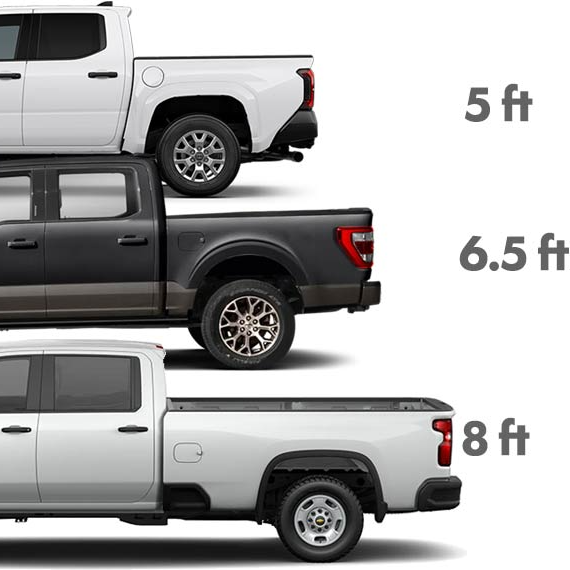
Choosing the right truck bed length affects everything from your daily parking routine to weekend hauling capacity. Whether you’re navigating tight city streets or loading construction materials, your truck’s bed determines how well your vehicle fits your lifestyle and work demands.
The world of pickup trucks offers three primary bed length categories that cater to different needs: short beds (5.5-6 feet), standard beds (6.5 feet), and long beds (8 feet). Each configuration brings unique advantages and trade-offs that can make or break your truck ownership experience.
This comprehensive truck bed length comparison will help you understand exactly which bed size matches your specific requirements. We’ll examine cargo capacity differences, maneuverability implications, real owner experiences, and practical considerations to ensure you make the right decision for your situation. And if you want to go into more detail about each truck model, you can check them out below!
-
Chevy Silverado Truck Bed Guide
- Chevy Colorado Truck Bed Guide
- Ford F150 Truck Bed Guide
- Ford Ranger Truck Bed Guide
- RAM 1500 Bed Width Guide
- Toyota Tundra Bed Length Guide
What Makes Each Truck Bed Length Unique?
Understanding truck bed sizes requires looking beyond simple measurements. Each bed length category serves distinct purposes and attracts different types of drivers based on their hauling needs and driving environments.
Short Truck Bed (5.5-6 feet) – Urban Maneuverability Champion
Short beds dominate urban and suburban markets where parking spaces come at a premium. These compact configurations typically measure between 5.5 to 6 feet, making them the most maneuverable option in the pickup truck world.
The Toyota Tacoma’s 5-foot bed measures 60.5 inches internally, providing enough space for camping gear, bicycles, and recreational equipment while maintaining a turning radius that won’t leave you stranded in tight parking lots. Short bed trucks excel at daily commuting tasks, offering better fuel economy due to their reduced weight and shorter wheelbase.
Urban drivers appreciate how easily these trucks navigate through traffic and squeeze into parking spots that would challenge longer configurations. The shorter beds require more creative loading for larger items, but their convenience factor makes them ideal for weekend warriors who prioritize ease of use over maximum cargo capacity.
Standard Bed (6.5 feet) – Versatile All-Purpose Option
Standard truck bed sizes represent the sweet spot for many truck buyers, offering balanced capability without compromising too much on maneuverability. The Chevrolet Silverado 1500’s standard bed measures 79.4 inches (6’6”), providing the versatile middle ground that handles most residential and light commercial applications.
These truck bed sizes accommodate truck bed camping setups comfortably, with enough length for most adults to sleep without their feet hanging over the tailgate. Home improvement projects become manageable with standard beds, as they can carry drywall, lumber (with the tailgate down), and most appliances without requiring special arrangements.
Manufacturers typically offer standard beds across their entire lineup, making them available in regular and extended cab configurations as well as crew cab models. This widespread availability reflects their popularity among buyers who need genuine utility without the parking challenges that come with long beds.
Long Bed (8 feet) – Maximum Cargo Capacity Leader
Long truck bed sizes serve the serious hauling crowd, typically measuring 8 feet or slightly longer depending on the manufacturer. The Silverado 2500HD and 3500HD long beds measure 98.3 inches (8’2”), providing the cargo capacity that contractors and commercial operators require.
These configurations shine when carrying full-length lumber, ladders, and construction equipment without overhang concerns. Fifth-wheel towing applications often require long beds to accommodate the hitch placement without interfering with the truck’s cab during sharp turns.
Construction professionals appreciate how long beds provide a mobile workspace, allowing them to organize tools and materials efficiently. While these trucks demand more careful navigation in urban environments, their cargo capacity justifies the extra planning required for daily operation.

Truck Bed Length Comparison: Key Differences
Cargo Capacity
The cargo capacity differences between truck bed lengths create distinct usage patterns. Short beds typically provide 35-45 cubic feet of storage space, which sounds limited until you consider that most recreational and daily hauling tasks fit comfortably within these dimensions.
Standard beds increase capacity to 50-60 cubic feet, opening possibilities for larger camping setups and moderate construction projects. This additional space proves valuable for families who regularly transport sporting equipment, camping gear, and household items.
Long beds deliver 70-80 cubic feet of cargo volume, transforming your truck into a legitimate work vehicle capable of handling commercial-grade equipment and materials. The extra length eliminates the need for cargo extensions and reduces safety flag requirements when hauling long items.
Maneuverability
Turning radius measurements reveal significant differences between bed configurations. Short bed trucks achieve turning radii of approximately 40-45 feet, making them competitive with many SUVs for urban navigation. This tight turning capability proves invaluable when backing into driveways or navigating crowded parking lots.
Standard beds increase turning radius to 45-50 feet, which remains manageable for most driving situations while providing additional cargo space. The maneuverability difference between short and standard beds is noticeable but not prohibitive for most users.
Long bed trucks require 50-55 feet for complete turns, demanding more planning in tight spaces. Contractors and commercial users typically accept this trade-off because the cargo capacity benefits outweigh the maneuvering challenges in their daily operations.
Specific Use Cases
Real-world applications highlight the practical differences between several bed lengths. Dirt bike transport illustrates these differences clearly: short beds require angled loading with careful positioning, standard beds accommodate most bikes lengthwise with the tailgate down, and long beds handle multiple bikes or allow for additional gear storage.
For construction materials, short beds work for small projects but often need cargo extensions for lumber. Standard beds handle moderate residential projects effectively, while long beds provide the professional capacity that eliminates material delivery concerns.
Camping applications reveal interesting patterns across truck bed sizes. All configurations work for camping, but standard and long beds offer more comfortable sleeping arrangements and better gear organization. The Toyota Tundra’s various bed options demonstrate this progression, with short beds at 77.75 inches, 6.5-foot boxes at 79.25 inches, and 8-foot configurations extending to 97.5 inches.
What Truck Owners Say About Different Bed Lengths
Real owner feedback provides valuable insights into bed length satisfaction and common regrets. Short bed owners consistently praise the parking convenience and fuel economy benefits, with many noting they rarely need the extra cargo space that longer beds provide.
“I thought I’d miss the extra space, but honestly, the short bed handles everything I throw at it,” explains one Colorado Crew Cab owner. “The difference in gas mileage and parking ease makes up for any cargo limitations.”
Standard bed owners frequently describe their choice as the “Goldilocks option” - not too short, not too long, but just right for their varied needs. These owners appreciate the versatility that allows them to handle both daily tasks and weekend projects without compromise.
Long bed owners express satisfaction with their cargo capacity but acknowledge the maneuvering challenges. Professional contractors emphasize that the utility justifies the inconvenience, while recreational users sometimes wonder if they chose too much truck for their actual needs.
The most common regrets come from buyers who underestimated their actual hauling needs or overestimated their tolerance for parking challenges. Urban buyers who selected long beds often struggle with daily usability, while rural buyers who chose short beds sometimes find themselves wishing for more space during busy seasons.

Practical Considerations for Each Bed Length
Financial Implications
Purchase prices typically favor shorter configurations, with long beds commanding premium pricing of $500-1500 over their short bed counterparts. This pricing reflects the additional materials and engineering required for extended bed construction.
Fuel economy differences become meaningful over time. Short beds generally achieve 1-3 MPG better efficiency than long beds due to reduced weight and improved aerodynamics. For drivers covering 15,000 miles annually, this difference can represent $200-400 in annual fuel savings.
Resale values follow regional patterns, with short beds maintaining stronger values in urban markets while long beds hold their worth in rural and commercial areas. Understanding your local market helps predict long-term ownership costs.
Insurance and Operational Costs
Insurance companies typically don’t differentiate significantly between bed lengths, though some carriers may consider overall vehicle length when calculating premiums. The differences are generally minimal and shouldn’t influence your decision heavily.
Accessory costs favor shorter beds, with tonneau covers, bed liners, and camper shells generally costing less for compact configurations. The price differences can be substantial - a quality tonneau cover might cost $200-500 more for a long bed compared to a short bed.
Maintenance costs remain relatively consistent across bed lengths, though longer trucks may require more frequent alignment services due to increased stress on suspension components during heavy hauling.
Which Truck Bed Length is Right for You?
Choose Short Bed (5.5-6 feet) if you want:
Short beds make sense for urban professionals who need truck capability without sacrificing daily usability. If your primary truck use involves commuting, recreational activities, and occasional hauling, the short bed provides adequate space while maximizing convenience.
Consider the Nissan King Cab with a short bed if you frequently navigate tight parking spaces, prioritize fuel economy, and rarely haul items longer than six feet. The maneuverability advantages prove valuable every time you park or navigate through traffic.
Budget-conscious buyers appreciate the lower purchase price and reduced operating costs. When combined with better fuel economy and lower accessory costs, short beds provide an economical path to truck ownership.
Choose Standard Bed (6.5 feet) if you want:
Standard beds suit buyers who need genuine versatility without extreme compromises. If you regularly switch between work tasks and recreational activities, the standard bed accommodates both without major limitations.
Home improvement enthusiasts find standard beds ideal for moderate projects. The additional length over short beds proves valuable when transporting building materials, while the bed width consistency means you still get the full cargo box width for bulky items.
Families who camp frequently appreciate the sleeping space and gear organization that standard beds provide. The extra inches make a significant difference in comfort during truck bed camping adventures.
Choose Long Bed (8 feet) if you want:
Professional contractors and commercial operators should seriously consider long beds for their superior cargo capacity. If your livelihood depends on hauling capability, the extra space and reduced need for cargo extensions justify the maneuvering challenges.
Fifth-wheel towing applications often require long beds for proper hitch placement. The additional frame length provides the clearance necessary for sharp turns without the trailer contacting the cab.
Rural property owners who regularly transport large equipment, building materials, or agricultural supplies benefit from the maximum cargo capacity. When you need to carry full sheets of plywood or multiple pieces of lumber, long beds eliminate the complications that shorter configurations create.
Making Your Final Decision
The right bed length depends entirely on your specific circumstances and priorities. Urban drivers who value convenience and fuel economy typically find happiness with short beds, while suburban users often appreciate the versatility that standard beds provide.
Commercial operators and rural property owners usually require the maximum capacity that long beds deliver, despite the maneuvering challenges. The key is honest assessment of your actual needs versus your perceived requirements.
Before making your final choice, spend time measuring the items you regularly transport. Use a measuring tape to check your current vehicles and storage areas. This verification process helps ensure your choice matches your real-world requirements rather than hypothetical scenarios.
Consider test driving different configurations in your typical driving environment. The difference in maneuverability between bed lengths becomes apparent quickly when navigating your regular routes and parking spaces.
Remember that bed lengths represent one aspect of truck capability. Factors like towing capacity, payload ratings, and cab configurations also influence your truck’s utility for specific applications. The right truck balances all these elements to match your lifestyle and work demands.
Your truck bed length choice will affect your daily experience for years to come. Take time to carefully consider your priorities, test different options, and choose the configuration that truly fits your needs rather than simply following popular trends or recommendations.