
Off Road Recovery Gear: Essential Equipment for Vehicle Recovery

When your vehicle is buried axle-deep in mud miles from civilization, having the right recovery gear becomes the difference between a minor inconvenience and a potentially dangerous situation. Off road adventures inevitably lead to challenging terrain where even the most capable vehicles can get stuck. Whether you’re navigating sand dunes, rock crawling, or pushing through muddy trails, proper recovery gear isn’t just recommended—it’s essential for safe off-roading.
The key to successful vehicle recovery lies in carrying the right combination of tools, understanding how to use them properly, and maintaining safety throughout the recovery process. This comprehensive guide covers all the recovery gear you’ll need to extract your rig from any challenging situation while keeping yourself and others safe during recovery operations.
Essential Off Road Recovery Gear
Every off-road vehicle should carry a core set of recovery gear that covers the most common stuck situations. This essential recovery gear forms the foundation of any comprehensive recovery setup and provides the absolute minimum equipment needed for basic vehicle extraction.
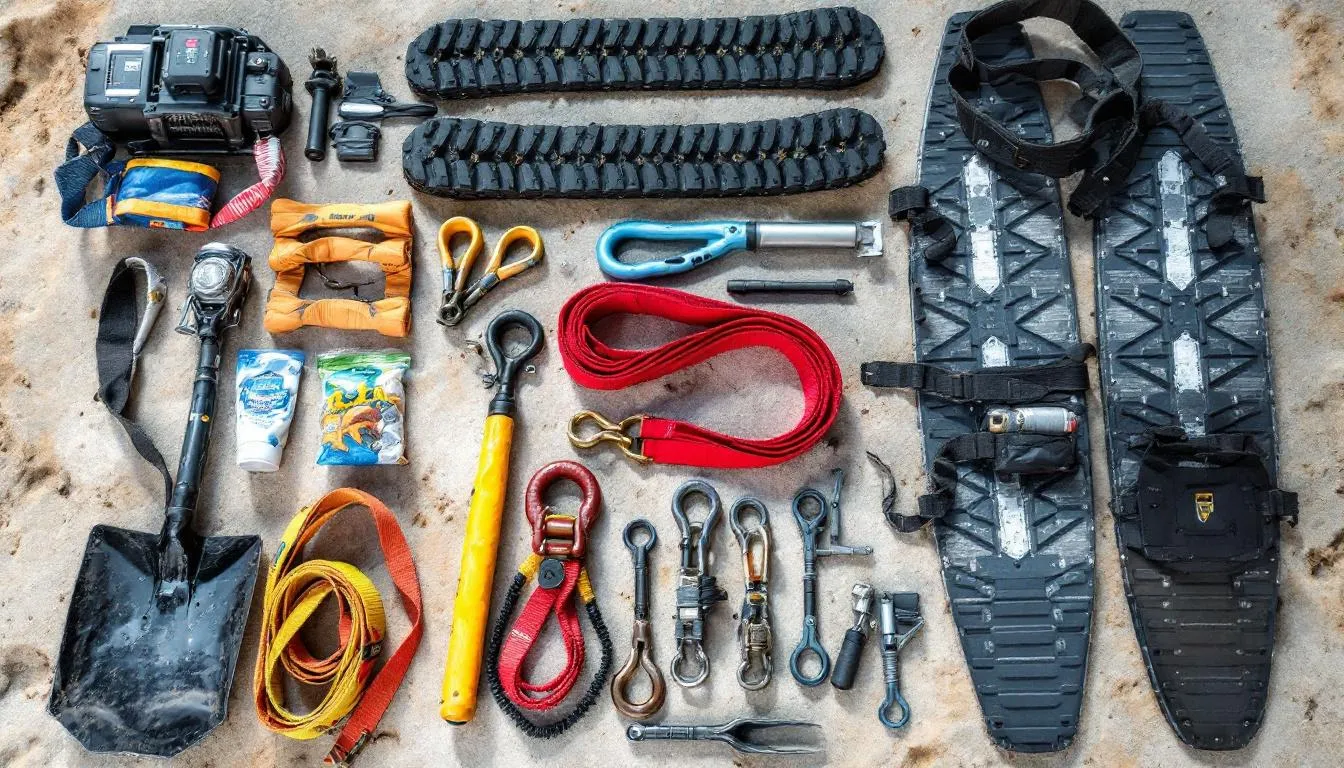
Recovery straps serve as the backbone of most recovery operations. Look for straps with a minimum 20,000 lb working load limit for most vehicles, though trucks and larger SUVs benefit from 30,000+ lb rated straps. These heavy-duty straps can handle the forces involved in pulling a stuck vehicle without breaking under load.
Soft shackles have revolutionized recovery operations by providing a safer alternative to traditional steel D-rings. A 7/16” diameter soft shackle offers the strength needed for most recoveries while eliminating the projectile risk that comes with steel hardware. These synthetic connectors are lighter to carry and won’t damage your vehicle’s finish during use.
Snatch blocks multiply your winch’s pulling power and allow you to change direction during recovery operations. By doubling the line back through a snatch block, you effectively double your winch’s pulling capacity while reducing the load on individual components.
Tree protector straps prevent environmental damage when using trees as anchor points for winching operations. These wide, padded straps distribute the load across the tree’s bark without causing permanent damage to the anchor point.
Traction boards like MAXTRAX provide immediate self-recovery capability from sand, mud, and snow. These engineered boards give your tires the grip needed to climb out of challenging terrain without requiring another vehicle for assistance.
A comprehensive tire repair kit including patches, plugs, and a portable air compressor ensures you can fix punctures and maintain proper tire pressure throughout your trip. Trail damage to tires is common, and the ability to make permanent repairs keeps your adventure going.
Basic hand tools round out the essential kit. A quality shovel helps dig out wheels and create recovery paths, while work gloves protect your hands during all recovery operations. An axe or hatchet proves helpful for clearing brush that might interfere with recovery operations.
Recovery Straps and Ropes
Understanding the different types of recovery straps and ropes available is crucial for selecting the right equipment for specific recovery situations. Each type serves distinct purposes and offers unique advantages depending on the recovery scenario you encounter.
Kinetic recovery ropes represent the latest advancement in recovery technology. These specialized ropes stretch 20-30% under load, creating a smooth, progressive pull that’s easier on both vehicles and equipment. The stretching action absorbs shock loads that would otherwise damage vehicle components or cause sudden failures. Quality kinetic ropes can handle multiple recovery cycles and provide superior performance compared to older snatch strap technology.
Static tow straps offer steady pulling power without elasticity, making them ideal for consistent towing situations rather than extraction from stuck positions. These straps work best when the stuck vehicle can still move under its own power and just needs assistance maintaining momentum.
Winch rope selection involves choosing between synthetic and steel cable options. Synthetic winch rope weighs 80% less than steel cable and won’t store potentially dangerous energy if it breaks. However, steel cable resists abrasion better and typically lasts longer in harsh conditions. Most experts recommend synthetic rope for its safety advantages, despite requiring more careful handling and regular inspection.
Proper working load limits are critical for safe recovery operations. The general rule requires recovery equipment rated for 2-3 times your vehicle’s weight. A 6,000-pound truck should use recovery straps rated for at least 12,000-18,000 pounds to provide an adequate safety margin during high-stress recoveries.
Storage and maintenance directly impact the longevity of your recovery gear. Keep straps and ropes clean and dry, inspect them regularly for wear or damage, and replace any equipment showing signs of degradation. Proper care can extend the life of quality recovery gear for decades of reliable service.
|
Rope Type |
Stretch |
Best Use |
Pros |
Cons |
|---|---|---|---|---|
|
Kinetic Recovery Rope |
20-30% |
Dynamic extractions |
Smooth pulls, absorbs shock |
Higher cost |
|
Static Tow Strap |
None |
Steady towing |
Simple, reliable |
Hard jolts, potential damage |
|
Synthetic Winch Line |
None |
Winching operations |
Lightweight, safer |
Requires careful handling |
|
Steel Winch Cable |
None |
Heavy-duty winching |
Extremely durable |
Heavy, dangerous if broken |
Winches and Winch Accessories
A quality winch transforms your recovery capabilities by providing consistent pulling power when stuck vehicles can’t move under their own power. Selecting the right winch and understanding its accessories ensures reliable performance when you need it most.
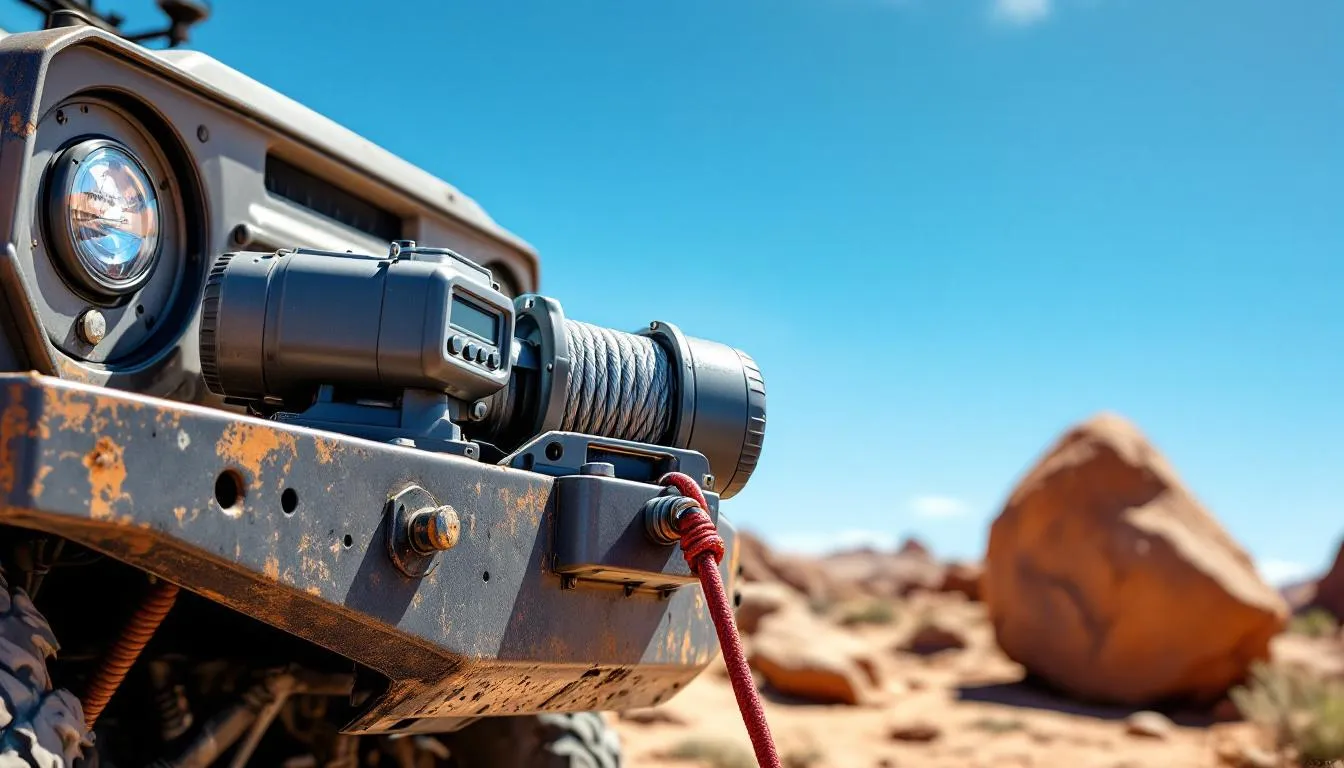
Electric winches rated at 1.5 times your vehicle’s weight provide the minimum pulling capacity for safe recovery operations. Most trucks and SUVs require 8,000-12,000 lb capacity winches, though heavier vehicles or challenging terrain may demand even more pulling power. Electric winches draw power from your vehicle’s electrical system and offer convenient operation through handheld controllers.
Hydraulic winches deliver superior performance for heavy-duty applications where maximum pulling power is required. These units tie into your vehicle’s power steering system and provide consistent performance regardless of engine RPM. While more complex to install, hydraulic winches excel in demanding recovery situations where electric units might overheat or drain your battery.
Portable winches like come-alongs serve lighter recovery work and provide backup options when your main winch isn’t accessible. These manual units weigh less and cost significantly less than vehicle-mounted winches while still offering substantial pulling capacity for smaller vehicles or specific situations.
Winch controllers come in wired and wireless configurations, each offering distinct advantages. Wired controllers provide reliable operation without battery concerns, while wireless units allow safe operation from a distance during recovery operations. Many users prefer carrying both options for maximum flexibility.
Fairleads protect your winch line from damage during angled pulls and guide the rope smoothly onto the winch drum. Hawse fairleads work best with synthetic rope, while roller fairleads suit steel cable applications. Proper fairlead selection and installation prevents premature winch line failure and ensures smooth operation.
The winch installation process requires mounting the unit to a sturdy front bumper or specialized winch mount that can handle the forces involved in recovery operations. Proper electrical connections, including upgraded wiring and solenoids, ensure reliable winch performance when you need it most.
Traction and Digging Tools
Prevention often proves more effective than recovery, and the right traction and digging tools can help you avoid getting seriously stuck in the first place. These proactive tools focus on maintaining momentum and creating better conditions for your vehicle to maintain traction.
Traction boards comparison reveals significant differences between popular brands. MAXTRAX boards offer the gold standard in engineering and durability, with aggressive teeth that bite into tire treads and linkable designs for longer runs. ARB TRED boards provide similar performance at a lower cost, while ActionTrax boards offer budget-friendly options for occasional users. All quality traction boards support 10,000-20,000 lbs static load and can make the difference between self-recovery and requiring assistance.
Recovery shovels choice depends on storage space and intended use. Folding handle options pack smaller and weigh less, making them ideal for motorcycle or ATV use where space is at a premium. Fixed handle shovels offer superior leverage and durability for serious digging work, though they require more storage space in your vehicle.
Tire chains and cable chains provide essential traction in snow and ice conditions where traction boards alone aren’t sufficient. Cable chains install easier and store more compactly, while traditional link chains offer superior traction and durability. Both types require practice to install quickly in challenging conditions.
Sand ladders serve specialized desert recovery operations where standard traction boards might not provide enough surface area. These longer platforms distribute vehicle weight over soft sand and create temporary roads for heavily loaded expedition vehicles navigating challenging dune crossings.
Brush clearing tools including hatchets and pruning saws help create clear paths for recovery operations and remove obstacles that might damage your vehicle or recovery equipment. A sharp hatchet proves invaluable for clearing fallen branches or cutting anchor points when natural anchors aren’t available.
The key to effective use of traction and digging tools lies in early deployment before you become seriously stuck. At the first sign of losing traction, stop and assess the situation rather than spinning tires and digging deeper holes.
Safety Equipment for Recovery Operations
Recovery operations involve significant forces and potential hazards that can cause serious injury if proper safety equipment and protocols aren’t followed. Prioritizing safety protects everyone involved and prevents recovery situations from becoming emergency rescues.
Recovery dampers, also known as winch blankets, absorb energy from broken straps or cables and prevent dangerous snapback that could seriously injure bystanders. These weighted blankets drape over tensioned lines during recovery operations and can save lives if equipment fails under load. Every recovery operation involving straps, ropes, or winch lines requires recovery dampers for safe operation.
Heavy-duty work gloves rated for winch operations protect your hands from cuts, punctures, and rope burns during recovery work. Quality recovery gloves feature reinforced palms, full finger coverage, and materials that maintain grip even when wet. Never attempt recovery operations without proper hand protection, as injuries to hands and fingers are common during vehicle extractions.
Safety glasses and high-visibility clothing help prevent injuries from flying debris and ensure you remain visible to other vehicle operators during recovery operations. Trail recoveries often involve loose dirt, sand, or debris that can cause eye injuries, while high-visibility clothing helps maintain situational awareness when multiple vehicles are involved.
First aid kit specifically equipped for trail injuries should include supplies for treating cuts, punctures, burns, and sprains common during off-road adventures. Include emergency supplies for serious injuries and ensure at least one person in your group has current first aid training. Trail injuries often occur far from professional medical help, making comprehensive first aid preparation essential.
Fire extinguisher rated as ABC type with minimum 2.5 lb capacity addresses multiple types of fires that could occur during recovery operations. Electrical fires from winch motors, fuel fires from damaged fuel lines, or grass fires from hot exhaust components all require immediate suppression capability. Mount your fire extinguisher in an easily accessible location and ensure everyone in your group knows its location.
Communication devices including radios, satellite messengers, or cell boosters maintain contact with your group and outside help if recovery operations encounter serious problems. Two-way radios allow coordination during complex recoveries, while satellite communication devices provide emergency contact capability in areas without cell phone coverage.
Recovery safety protocols should include establishing clear communication signals, maintaining safe distances from tensioned lines, and designating one person to direct recovery operations. Never stand in line with tensioned straps or cables, and always brief all participants on safety procedures before beginning recovery operations.
Vehicle-Specific Recovery Points and Hardware
Proper attachment points are crucial for safe and effective recovery operations. Understanding the difference between factory and aftermarket recovery gear options helps ensure your recovery gear can actually be used when you need it most.
Factory recovery points vary significantly between manufacturers and model years. Many vehicles come with front and rear tow hooks that appear suitable for recovery but may only be rated for on-road towing rather than off-road extraction forces. Check your owner’s manual for specific ratings and limitations, as using inadequate recovery points can damage your vehicle’s frame or suspension components.
Aftermarket options provide stronger, more versatile mounting points specifically designed for off-road recovery operations. Frame-mounted recovery points distribute loads across multiple attachment points and can handle the forces involved in serious recovery situations. Quality aftermarket recovery points typically offer 10,000+ lb capacity and include proper hardware for secure mounting.
Receiver hitch recovery points offer convenient attachment options for vehicles equipped with trailer hitches. Specialized recovery shackles designed for 2” receiver hitches provide 10,000-16,000 lb capacity and allow quick connection of recovery straps without tools. These systems work well for lighter recovery situations but may not handle the forces involved in serious extractions.
Frame-mounted recovery points represent the gold standard for serious off-roading applications. These substantial mounting systems tie into multiple frame points and distribute loads properly throughout the vehicle structure. Professional installation ensures proper load distribution and prevents damage to your vehicle during high-force recovery operations.
Proper shackle selection depends on your vehicle weight and recovery point specifications. Most applications use 3/4” soft shackles for lighter vehicles and 7/8” shackles for trucks and heavy SUVs. Always match your shackle rating to your recovery strap capacity, and inspect soft shackles regularly for wear or damage that could lead to failure.
Recovery point inspection and maintenance schedules should include checking mounting bolts for proper torque, inspecting attachment points for cracks or deformation, and ensuring all hardware remains properly secured. Recovery points endure significant stress during use and require regular attention to maintain reliability.
Popular off-road vehicles often have specific aftermarket solutions designed for their mounting points and frame characteristics. Research options specific to your vehicle make and model to ensure proper fit and load distribution for safe recovery operations.
Choosing Quality Recovery Gear
Selecting reliable recovery gear requires understanding industry standards, comparing quality levels between manufacturers, and balancing budget considerations with safety requirements. Quality recovery gear can last decades with proper care, making initial investment decisions particularly important.
Industry certifications including Working Load Limit (WLL) ratings, proof testing, and safety factors provide standardized measures of equipment capability. Look for gear that clearly states its WLL rating rather than just breaking strength, as WLL incorporates appropriate safety factors for real-world use. Quality manufacturers provide detailed specifications and testing documentation for their products.
American versus imported gear comparison reveals significant differences in quality control, materials, and manufacturing standards. Domestic manufacturers like Warn, ARB, and Hi-Lift typically offer superior quality control and warranty support, while imported gear may offer lower initial cost but potentially inconsistent quality. Research manufacturer reputation and warranty terms before making purchasing decisions.
Budget considerations should prioritize essential items over nice-to-have accessories when building your initial recovery kit. Start with quality recovery straps, soft shackles, and basic tools before adding specialized equipment like winches or advanced traction boards. Building a comprehensive kit gradually allows you to learn what works best for your specific off-roading style and terrain.
Warranty coverage varies significantly between manufacturers, with some offering lifetime warranties on critical components. Brands like Rhino USA and Warn provide comprehensive warranty coverage that demonstrates confidence in their products and provides long-term value for users. Factor warranty terms into your purchasing decisions, especially for expensive items like winches.
Testing and replacement schedules help ensure your gear remains reliable when you need it. Visual inspection before each trip identifies obvious damage, while annual detailed inspections check for wear that might not be immediately visible. Establish replacement schedules based on usage frequency and manufacturer recommendations rather than waiting for obvious failure signs.
Quality brand recommendations based on industry reputation and user feedback include:
-
Recovery Straps: ARB, Warn, Rhino USA
-
Winches: Warn, Smittybilt, Superwinch
-
Traction Boards: MAXTRAX, ARB TRED, ActionTrax
-
Shackles: Factor 55, Rhino USA, ARB
-
Tools: Hi-Lift, ARB, Smittybilt
Price ranges for essential recovery gear vary from budget-friendly options around $200 for basic recovery straps and shackles to comprehensive kits exceeding $2,000 for complete winch and accessory packages. Plan your purchases based on your off-roading frequency and terrain difficulty to ensure appropriate capability without overspending on unused features.
Research specific products through user reviews, off-road forums, and manufacturer specifications before purchasing. Quality recovery gear represents a significant investment in your safety and should be selected based on proven performance rather than price alone.
The commitment to carry proper recovery gear and maintain the skills to use it effectively makes the difference between minor trail inconveniences and serious emergency situations. Proper planning and preparation with quality gear ensures your off-road adventures remain enjoyable and safe, giving you the peace of mind to focus on the trail ahead rather than worry about getting stuck.
Start building your recovery kit with the essentials, practice using your equipment in controlled situations, and gradually expand your capabilities as your off-road experience grows. Remember that the best recovery gear is the equipment you have with you, know how to use properly, and maintain in ready condition for when adventure takes an unexpected turn.