
Getting The Right Overland Truck
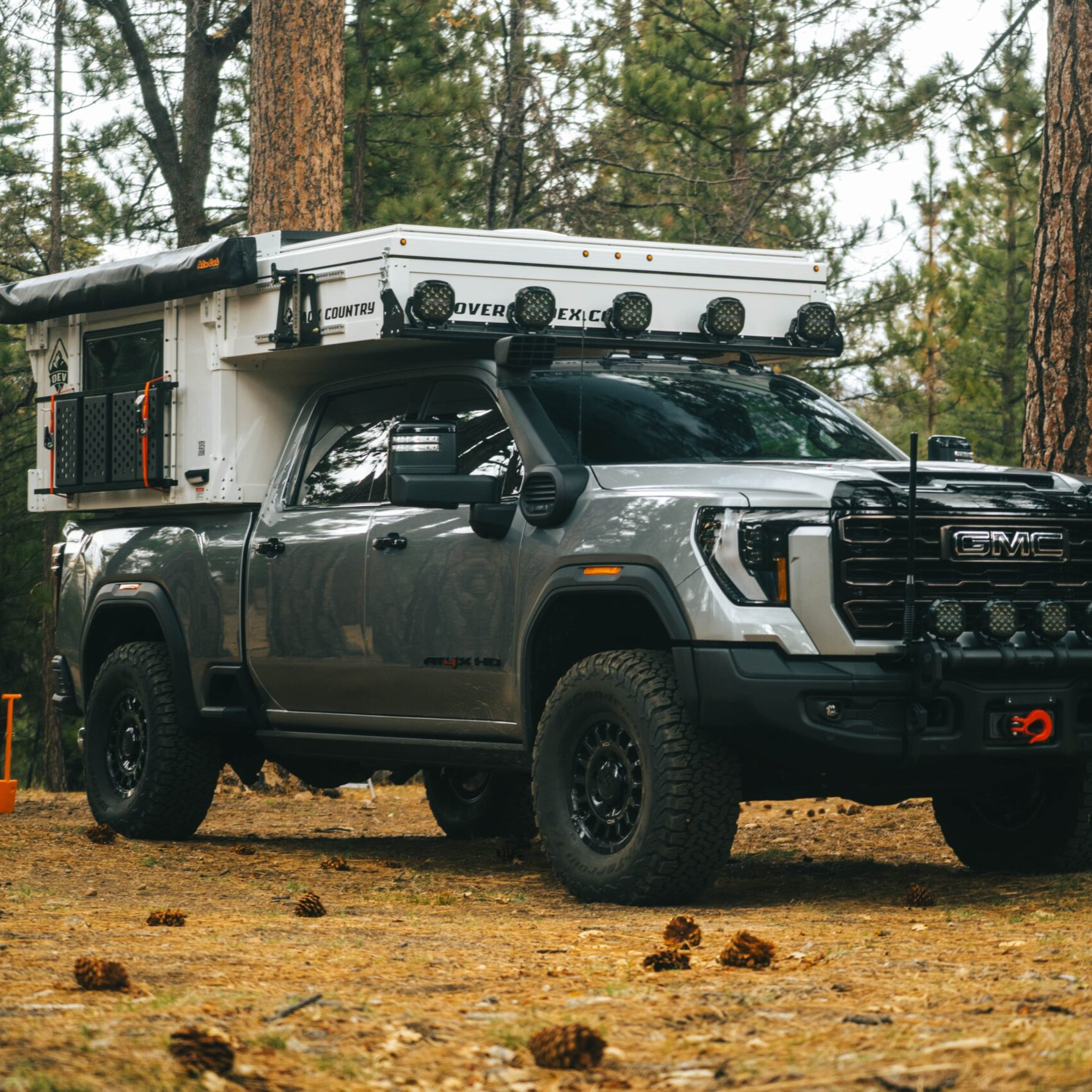
Getting the Right Overland Truck: Choosing, Building, and Living with the One That's Truly Up to the Task
The idea of hitting the open road in a capable truck and making camp out in the wilderness wherever the trail takes you is pretty appealing. The real adventure begins when you leave the pavement behind and set out on your overland journey, tackling remote trails and challenging terrains. But with all the options out there and the varying needs of any given overlanding trip, choosing the right overland truck can get pretty complicated - and that’s before you even start thinking about payload limits, fuel range, and your actual travel plans.
This guide is designed to cut through all the noise and give you the low down on what trucks are up to the task, how to match your rig to your needs, and what it takes to build a setup that will really get you through. Whether you’re planning a weekend escape out into the public lands or a multi month journey along the Pan-American Highway, you’ll find all the info you need to make confident decisions.
What Is Overlanding All About?
Overlanding’s a bit of an old-school term for self-reliant vehicle based adventuring - your truck becomes both your transport and your home. You might pilot a nimble mid-size truck with basic gear, or a fully loaded full-size rig with all the bells and whistles - either way you’re covering serious distance through remote terrain, carrying everything you need to stay out there for days or weeks.
The story of overlanding is more than just the journey—it's about the community-driven spirit that brings enthusiasts together. Many overlanders prioritize building a community with like-minded individuals who share a passion for adventure and exploration. Overland enthusiasts often share their journeys and experiences through various platforms, fostering a sense of camaraderie. Many also seek to connect with others through events, forums, and social media to share knowledge and resources.
The overland market’s got options to suit every budget - you can build a capable weekend rig with basic gear, or go all out and invest in a top-of-the-line platform designed to handle months of off-grid exploration. Whatever you choose, it’ll be the right setup to help you tackle tough terrain, haul the gear you need, and explore at your own pace.
To Start, What Is the Best Overland Truck?
Here's some top choices:
Mid-Size Trucks:
-
2024-2026 Ford Ranger (Tremor) – Balanced all-rounder with a payload of 1,560 to 1,905 lbs
-
2020-2026 Jeep Gladiator Rubicon – Best for technical trails and a payload of 1,200 to 1,400 lbs depending on options
-
2024+ Toyota Tacoma – Strong reliability reputation and a payload of 1,500 to 1,700 lbs
Full-Size Trucks:
-
2022-2026 Toyota Tundra (i-FORCE MAX) – Excellent hybrid platform and a payload of 1,600 to 1,940 lbs
-
2021-2026 Ford F-150 PowerBoost – Versatile with plenty of outlets for all your gadgets and a payload of 1,700 to 3,000+ lbs depending on config
Heavy-Duty Trucks:
-
2023-2026 Ram 2500 Rebel – Perfect for lugging around big campers and holding a payload of 3,100+ lbs
-
2023-2026 Ford F-250 Tremor – No compromises expedition platform with a payload of 3,200 to 3,500+ lbs
The thing is, "best" depends on where you're headed and what you're planning to carry. A lone traveler cruising tight trails in Colorado's going to have different needs than a family hauling a hard-side camper across continents.
If you're going to be driving in North America with some moderate gear loads, a mid-size truck will give you better maneuverability and fuel economy. But if you're hauling a heavy camper or towing across multiple countries, you're going to need the payload and range of a full-size or heavy-duty truck.
Quick Comparison
|
Truck |
Payload Range |
Base Price (Est.) |
Best For |
Watch Out For |
|
Ford Ranger Tremor |
1,560–1,905 lbs |
~$47,000 |
Balanced capability, global parts |
Limited camper options |
|
Jeep Gladiator Rubicon |
1,200–1,400 lbs |
~$54,000 |
Technical trails, fun factor |
Lower payload, 5-ft bed |
|
Toyota Tundra i-FORCE MAX |
1,600–1,940 lbs |
~$68,000 |
Hybrid efficiency, reliability |
Wide body, price |
|
Ram 2500 Rebel |
3,100+ lbs |
~$64,000 |
Heavy campers, diesel range |
Size, fuel consumption |
|
Ford F-250 Tremor |
3,200–3,500+ lbs |
~$72,000 |
Maximum capability |
Large footprint, cost |
Budget build suggestion: 2024-2026 Ford Ranger with FX4 package, lightweight wedge camper, 33-inch all-terrain tires. Total cost under $65,000 - should get you highway cruising and moderate off-road work without breaking the bank.
No-compromise build idea: Ford F-250 Tremor with a 6.7L Power Stroke diesel paired with a quality flatbed camper. That'll give you the serious hauling capacity and off-grid capability you need to explore the far reaches of the world.
What Makes a True Overland Truck?
An overland truck is a self-reliant, road-legal vehicle built for long-distance travel on and off pavement - it carries people, gear, fuel, and shelter into remote areas where there’s no infrastructure. These vehicles are specifically created for overland travel and durability, with deliberate engineering and craftsmanship to withstand extreme conditions and adventure.
The key criteria that set a true overland truck apart from a regular weekend rig are:
Payload capacity – The weight this truck can carry without going over safety limits
Range – How far you can drive on a full tank of gas without needing to resupply in the middle of nowhere
Reliability – The truck’s got to be able to get you through tough terrain without breaking down, so you can rely on it when you really need to
Parts availability – You need access to replacement parts where you’re headed - or at least, not be too far from civilization when something breaksOff-road Capability – four wheel drive, enough ground clearance, gearing you’d actually use
Comfort - enough space for your crew on those long travel days
Overland trucks carry everything needed for survival and commonly integrate features such as sleeping quarters, built-in water tanks, and power systems. They are almost always equipped with field-repair and recovery gear, such as winches and traction boards, for emergencies in remote areas. Modern overland trucks feature self-sustaining power systems with high-capacity lithium-ion battery banks paired with rooftop solar arrays for off-grid power. Enhanced off-road capability features in modern overland trucks include factory lifts and electronic locking differentials for navigating extreme terrain.
A weekend trail truck can pretty much run the Mojave Road or spend three days in Moab, it’ll need some basic off-road features, but you can rely on nearby towns to sort you out in case of an emergency. A vehicle designed to take on multi-month trips from Alaska to Baja needs pretty much everything - spare parts, frozen tundra handling, and all that other fun stuff.
This article is all about trucks - the mid-size, full-size, and heavy-duty pickups - plus the pop-up and flatbed campers that turn them into expedition vehicles.
Best Mid-Size Overland Trucks
Mid-size trucks are great for navigating tight trails, getting better fuel economy on highway stretches, and fitting nicely with lightweight pop-up campers. The width of the truck and its wheels can impact how easily you can maneuver through narrow tracks, but with the right wheel setup, these trucks can handle challenging terrain and offer advantages for overlanding. For solo travelers and couples they usually hit the spot where capability meets practicality.
2019-2026 Ford Ranger

The current Ranger chucks out 270 horsepower and 310 lb-ft from its 2.3L EcoBoost engine - plenty for most wedge-style campers. Payload is 1,560-1,905 lbs depending on how you spec it - room to spare for most campers.
The FX4 package gets you off-road suspension, skid plates and an electronic locking rear diff. The Tremor package adds Trail Control and upgraded shocks. The Ranger's global platform means a ton of aftermarket support and you can source parts pretty much anywhere in the world.
Best pairing: Ranger Tremor with a lightweight wedge camper from Go Fast Campers or Alu-Cab, and 33" all terrain tyres. Expected loaded weight: 6,500-7,000 lbs.
2020-2026 Jeep Gladiator

The Gladiator brings genuine off-road capability to the mid-size truck party. The Rubicon trim gets you Dana 44 solid axles front and rear, electronic front and rear lockers, sway bar disconnect, and 33-inch factory tyres.
Payload is your main limitation - 1,200-1,400 lbs depending on how you spec it, which means you're stuck with pretty lightweight pop-tops and rooftop tents. The 5-foot bed is a bit short compared to others.
Best pairing: Gladiator Rubicon with a canopy, a rooftop tent, rear drawer system. Expected loaded weight: 6,800-7,200 lbs.
2015-2026 Chevy Colorado / GMC Canyon

The Colorado and Canyon twins come with a 3.6L V6 that churns out 308 horsepower and reasonable fuel economy. The ZR2 and ZR2 Bison trims add Multimatic DSSV shocks, front and rear locking differentials and a bit of extra width.
Many overlanders who have owned a diesel engine Colorado report positive experiences with its performance and running costs.
Payload is about 1,400-1,550 lbs on ZR2 models. The platform is pretty reliable, aftermarket support is good but the new generation truck is getting a bit closer to full-size dimensions.
Best pairing: Colorado ZR2 Bison with a minimalist topper, a sleeping platform and a ground tent. Expected loaded weight: 6,200-6,600 lbs.
2024+ Toyota Tacoma

The new gen Tacoma features a 2.4L turbo four-cylinder churning out 278 horsepower as standard, with an available i-FORCE MAX hybrid powertrain that promises both power and improved fuel economy.
The new platform is massive - almost full-size in dimensions, but payload is still 1,500-1,700 lbs. Overlanding aftermarket is still developing, but Toyota's reliability reputation and strong resale value make it a compelling long-term option.
Best pairing: Tacoma TRD Off-Road with a lightweight pop-up camper from Four Wheel Campers Fleet, and 33" tyres. Expected loaded weight: 6,800-7,400 lbs.
Best Full-Size & Heavy-Duty Overland Trucks
When you’re planning on hitting the trails with your family, lugging heavy hard-side campers, or living off-grid for months - full-size and heavy-duty trucks make the most sense. These platforms give you the payload, towing capacity and interior space that mid-size trucks can only dream of. The trade-off is they have a bigger footprint and drink more fuel.
While this section focuses on trucks, some overlanders also consider vans—especially Japanese Domestic Market vans—for their reliability, parts availability, and suitability as adventure-ready platforms.
2022-2026 Toyota Tundra
The third gen Tundra comes with a standard 3.4L twin-turbo V6 that puts out 389 horsepower, but the i-FORCE MAX hybrid option gives you 437 horsepower and 583 lb-ft of torque - and actually gets a bit better fuel economy than the competition. The 10-speed auto is silky smooth.
The TRD Pro trim adds Fox shocks, front skid plate, and multi-terrain select. With a 32-33 gallon tank, you can do around 450 miles on the highway. Payload runs 1,600-1,940 lbs depending on how you spec it.
2021-2026 Ford F-150
The hybrid PowerBoost model pairs a 3.5L EcoBoost with an electric motor for 430 horsepower and lots of low-end grunt. The Pro Power Onboard outlets let you stick a bunch of extra appliances on the back of the truck.The FX4 Off-Road package gives you the skid plates, an electronic locking rear differential, & off-road tuned shocks to help you tackle tough terrain. The Tremor package includes 33-inch tires and unique suspension tuning to really make your truck handle off-road. Payload can vary by a lot - 1,700 to over 3,000 lbs, depending on what cab and bed you choose.
2023-2026 Ram 2500 Rebel
If you're doing heavy-duty off-roading with a big expedition trailer, the Ram 2500 Rebel has the kind of payload you can't get with a half-ton truck - usually over 3,100 lbs, which lets you haul a big hard-side camper without any worries.
The 6.7L Cummins diesel has a great reputation for being tough and having a lot of range. And the 6.4L HEMI V8 works well for lighter builds. The Rebel trim gives you Bilstein shocks, an electronic locking rear differential, and some nice off-road styling touches. Plus, the solid front and rear axles mean this thing can take a beating.
2023-2026 Ford F-250 Super Duty
This is the kind of truck that can handle no-compromise builds - the 6.7L Power Stroke diesel puts out 500 hp and 1,200 lb-ft of torque, which makes hauling a 3,000 lb camper a breeze.
Payload can reach as high as 3,200-3,500+ lbs on most trim levels, and the towing capacity eclipses 15,000 lbs. The Tremor package adds a unique suspension setup, 35-inch Goodyear Territory tires, a locking rear differential, and rock-crawl mode on the 10-speed transmission. This is a purpose-built truck for hauling big flatbed campers and expedition boxes.
Platform Matching Guide
For Slide-in Pop-Up Campers (Four Wheel Campers, Overland Explorer Vehicles, Scout Campers): You'll want a full-size truck like the Tundra or F-150 - they have enough payload without being too complicated.
For Large Hard-Side or Composite Expedition Boxes (AT Overland, Global Expedition Vehicles): You'll need a 2500/3500 class truck for the kind of payload and frame strength you need. Don't even think about running these on a half-ton.
For Towing Overland Trailers while Carrying Bed Gear: F-250 or Ram 2500 gives you the best balance of bed payload and towing capacity.
Some example pairings to keep in mind:
-
F-350 + Supertramp Flagship LT: All-up weight around 11,500 lbs - that's way within capability
-
Ram 2500 Rebel + OEV Backcountry 6.85: All-up weight is around 12,000 lbs
Overland Truck Campers: Pop-Up vs. Hard-Side

The truck-and-camper combo is a classic American overlanding setup that's been around for decades - but one of the toughest decisions you'll make in your build is whether to go with a pop-up or hard-side camper.
Pop-Up Campers
The Good Stuff:
-
Lower profile when it's collapsed, fits in standard garages and under highway overpasses\
-
Better fuel economy due to reduced wind resistance when cruising\
-
Easier international shipping - it fits in standard containers\
-
Improved trail clearance and lower center of gravity\
-
Lighter weight means it's compatible with mid-size and half-ton trucks
The Not-So-Good Stuff:
-
The canvas sides don't keep heat in as well in extreme temps\
-
Setup time at every camp (2-5 minutes)\
-
Canvas exposure to the elements and UV degredation over time\
-
Less interior headroom and livable space when deployed
Some good examples of pop-up campers are Four Wheel Campers (Hawk, Fleet, Grandby), Scout Campers Yoho, Supertramp Campers Flagship LT.
Hard-Side Campers
The Good Stuff:
-
Four-season comfort with full insulation and weatherproofing\
-
Security - a lockable solid structure protects your gear and passengers\
-
Sound insulation for a quiet night's rest in noisy areas\
-
No setup time - you just park and walk inside\
-
More interior space and amenities (full kitchens, shower, bathroom options)\
-
High-output heaters for winter camping, optional 12V air conditioning
The Not-So-Good Stuff:
-
Heavier - usually requires a 3/4-ton or HD truck platform\
-
Higher center of gravity affects handling and trail stability\
-
Height restrictions limit access to some trails, bridges, covered areas\
-
Higher cost for quality construction
Some good examples of hard-side campers are Alaskan 650 (telescoping hard-side), AT Overland Aterra ASI, Scout Campers Kenai, OEV Backcountry series.
Choosing Between Pop-Up and Hard-Side
Planning some mixed highway and trail travel with occasional international shipping? A pop-up camper might be the most flexible choice.
If you're building for cold-weather living or prioritizing interior comfort over maximum off-road capability, a hard-side camper might be worth the weight penalty.
Key Specs That Matter
Take a screenshot of this section and bring it to the dealership - these specs actually matter when evaluating any truck for overland use.
Payload Capacity - This is the single most important number. Weigh your actual gear, camper, passengers, water, and fuel. Industry guidance recommends staying under 85% of rated payload to keep your handling and safety intact.
GVWR, rear axle rating & tow rating - When it comes to camper use, these matter more than you think. Your rear axle carries the bulk of that camper's weight. Exceeding rear axle rating causes dangerous handling—regardless of total GVWR.
Fuel economy and range - The 2026 Ranger with 2.3L EcoBoost gets around 21 mpg combined with an 18-gallon tank (378 miles range). A Tundra i-FORCE MAX hybrid manages 15-18 mpg with a 32-gallon tank (480-576 miles range). Range matters when you're 200 miles from the nearest fuel station.
Size and footprint - Length, width, wheelbase, and breakover angle all matter when it comes to which trails you can tackle. Shorter wheelbase helps in tight spots, but you sacrifice highway stability.
Drivetrain and gearing - Low-range transfer case is essential for serious off-roading with a loaded rig. A rear locker is highly valuable, and all-terrain tires (at least 32-33 inches) work hand-in-hand with gearing. If you're running 35s on stock axles, you might need to regear.
Reliability and parts availability - American trucks (Ford, Ram, GM) have excellent parts availability across the continent. Toyota runs a close second. Imported trucks have some nice features, but sourcing spare parts in remote areas is a real challenge.
Example Calculation
For a family of four building a Ram 2500 + pop-up camper, youd do the following:
-
Add up the weight of the passengers, camper, gear, etc (4 passengers, aproximatelly 650 lbs + 1,400 lbs camper + 400 lbs of gear & water + a roof rack with a few extra bits = 2,650 lbs extra weight)
-
Verify the payload capacity of the truck is at least 15% higher than that, so at least 3,050 lbs
-
Work out how far you can go on a 32-gallon tank at 14 mpg when youre all loaded up - roughly 448 miles - plenty for most backcountry routes
-
Consider upgrading the suspension to handle all that weight - Carli Suspension or Kelderman are good bets
Reliability and Maintenance
When it comes to overland travel, reliability isn’t just a nice-to-have—it’s the backbone of every successful adventure. Your vehicle is your lifeline when you’re miles from the nearest town, so choosing a truck with a reputation for reliability and keeping up with regular maintenance is non-negotiable. Whether you’re tackling rugged terrain in the Rockies or cruising remote highways in the Tundra, a reliable rig means you can focus on the journey, not the next breakdown.
Start by looking for vehicles known for their robust engines, dependable transmissions, and durable suspensions. Trucks like the Toyota Tundra are favored by many overlanders for their proven reliability and improved fuel economy, especially when equipped with a diesel engine. Diesel powerplants not only offer better fuel economy for long-range travel, but they also tend to be more resilient under heavy loads and in off-grid conditions.
Routine maintenance is your best insurance policy. Regular oil changes, tire rotations, and fluid checks keep your truck performing at its best, while a proactive approach to inspecting brakes, suspension, and driveline components helps you catch issues before they become trip-ending problems. Carrying a basic toolkit and a few essential spare parts—like belts, filters, and fuses—can make all the difference when you’re far from help.
For those venturing into colder climates or planning extended off-grid stays, a diesel heater is a game-changer. Brands like Webasto offer heaters that sip fuel and keep your living space warm and comfortable, no matter how low the temperature drops. This not only adds a layer of luxury to your setup but also ensures safety and reliable performance when the weather turns harsh.
Ultimately, a well-maintained, reliable vehicle is the foundation of every overland adventure. Invest the time and money up front, and you’ll travel with confidence, knowing your rig is truly up to the task—wherever the trail leads.
Overland Gear and Equipment

The right overland gear transforms a capable truck into a true adventure machine, ready to take on the world’s toughest terrain and keep you comfortable, safe, and self-sufficient along the way. Quality gear isn’t just about convenience—it’s about performance, safety, and making sure you’re prepared for whatever the trail throws your way.
Start with the essentials: a sturdy roof-top tent or a well-designed camper gives you a secure place to rest, while a portable shower adds a touch of luxury to life off grid. A battery-powered fridge keeps your food fresh for days, letting you extend your range and enjoy real meals no matter how far you roam. When it comes to cooking, compact stoves and durable cookware make meal prep easy, even in the backcountry.
Recovery gear is a must for any serious overland travel. Invest in high-quality tools from trusted brands like ARB and Warn—think winches, recovery boards, and tow straps. These accessories can mean the difference between a minor hiccup and a major headache when navigating tight trails or challenging terrain. Don’t forget a comprehensive first aid kit and fire extinguisher for added safety.
Towing capacity is another key consideration, especially if you plan to haul a trailer or extra gear. Upgrading your truck with a reliable towing package and all-terrain tires from brands like BFGoodrich ensures you’re equipped to handle heavy loads and rough roads with confidence.
Storage solutions—like roof racks, bed drawers, and exterior lockers—help keep your gear organized and accessible, so you can spend less time searching and more time exploring. Every piece of equipment should earn its place by adding real value to your overland experience, whether it’s improving comfort, boosting safety, or enhancing your rig’s capability.
With the right overland gear, you’ll be ready to tackle any adventure, from quick weekend escapes to months-long expeditions off the grid.
Off-Grid Living

Off-grid living is where the true spirit of overland travel comes alive. It’s about leaving the beaten path behind, embracing the challenge of self-reliance, and finding luxury in the little things—like a hot shower under the stars or a restful night’s sleep on a queen sized bed in the middle of nowhere.
Preparing for off-grid living means thinking beyond the basics. Comfort is key, especially on longer journeys. A queen sized bed transforms your camper into a cozy retreat, while a portable shower and a compact toilet add a touch of home to your remote setup. These small luxuries make extended stays off grid not just possible, but genuinely enjoyable.
Reliable power is essential for modern overlanders. A battery-powered generator or a robust solar setup keeps your lights, fridge, and devices running, so you can stay connected and comfortable no matter how far you roam. Water storage and filtration systems ensure you have a safe, steady supply for drinking, cooking, and cleaning, extending your range and independence.
Safety and security are always top priorities. Invest in quality gear and take the time to learn essential skills—like basic vehicle maintenance, navigation, and first aid. Adventure experts and communities like STORYTELLERS are invaluable resources, offering advice, support, and inspiration for tackling the unique challenges of off-grid living.
Above all, off-grid living is about fun and freedom. It’s a chance to explore new terrain, test your limits, and create unforgettable memories. With the right gear, a reliable rig, and a spirit of adventure, you’ll discover that the best stories begin where the pavement ends and the real world fades into the wild.
Budget Builds and Used Rigs
Not everyone can walk into a dealership with cash for a new truck. Plenty of capable rigs started as budget builds. It just takes more research and realistic expectations.
Path 1: 10-15 Year Old Domestic Pickup + Simple Setup
This is the lowest barrier to entry. A 2010-2014 Ford F-150 in good condition runs $15,000-22,000. A 2008-2015 Toyota Tacoma commands premium prices but offers legendary reliability. Add a quality canopy ($1,500-3,000), a rooftop tent ($1,500-3,500), and basic drawer storage ($500-1,000). You've got a functional rig for under $30,000 total.
Choose trucks with documented service history and inspect for rust—especially if it's been in a northern state for years. Domestic trucks are a safe bet since parts are easy to come by everywhere.
Path 2: Used Turnkey Rig + Camper Package
The used market always has some gems—like a 2017 Ford F-350 with a Four Wheel Camper Hawk pre-fitted with solar, lithium batteries, and a diesel heater. These setups run $70,000-100,000 depending on mileage and camper condition—often $20,000-40,000 less than building equivalent capability new. Look for rigs that have been well-maintained by previous owners.
The factory warranty is likely expired, but a well-cared-for diesel or gas engine with 80,000-120,000 miles has plenty of life left.
Path 3: Ex-Military / Medium-Duty Expedition Trucks
This path requires some know-how, but you get a lot of bang for your buck. Platforms like the Stewart & Stevenson M1079, Mercedes Unimog and LMTV offer payload capacity and durability that consumer trucks just cant match. A military truck with expedition box conversion might cost $45,000-65,000 complete - thats capability on a par with rigs costing three times as much new.
Caveat emptor - Ex-military trucks come with some serious trade-offs. You might need a special license to drive one, parking gets tricky, shipping costs are steep, and sitting in traffic at 55 mph all day gets old.
Realistic Budget Planning
Beyond the purchase price, dont forget to budget for:
-
Camper or sleeping system - $3,000-80,000 (yikes!)\
-
Modifications (suspension, bumper, winch) - $2,000-15,000 (no big deal)\
-
Annual maintenance - $500-2,500 (just another year of bills)\
-
Fuel - 8,000 miles at 14 mpg, $3.50/gal (that's $2,000 just for the first year)\
-
Insurance - $800-2,000 per year\
-
Storage (if needed) - $100-300 per month (ouch!)
If you start with a reliable used truck and upgrade in stages as you travel, youll end up with a rig that suits your budget a whole lot better than buying the most extreme setup from the word go.
Designing Your Build
Before blowing cash on parts and accessories, take the time to plan your build. A well thought out build not only costs less but also performs better than some slapped-together collection of gear.
Build Planning Stages
1. Define Your Travel Plans – Be brutally honest about where you'll actually end up. Do you need a truck that can handle a 3-month Alaska trip or are you just doing weekend getaways out of town? What about the weather – will you be dealing with four seasons or chasing warm weather?
2. Pick the Right Truck Size – This is all about the number of people, pets, gear and payload you need to haul. A couple with a small dog and not a lot of gear might get by with a mid-size truck, while a family of four with bikes needs something a lot bigger.
3. Choose a Camper Style – Most overlanders sleep in one of three styles: a canopy with a rooftop tent (lightweight, yet not too much protection from the elements), a pop-up slide-in (a good all rounder), a flatbed camper (best for space), or a composite habitat box (for extreme expedition use).
4. Plan Your Suspension and Tires After You Know Your Loaded Weight – You can't get away without suspension upgrades no matter what, so start by thinking about how much weight you'll be carrying. Standard choices usually include 33-35 inch all-terrain tires and some fancy shock absorbers from brands like Bilstein, Fox, or Icon Vehicle Dynamics.
5. Figure Out Power and Water Needs – Work out how much power you'll need for your fridge, lights, devices and heating/cooling, and then get some solar panels and batteries to match. For full-time rigs, 80-120 litres of freshwater does the trick.
6. Add Protection and Recovery Gear As You Need It – Skid plates, winches, traction boards, and an air compressor are all a good idea if you're off the beaten track a lot, but don't go overboard – unless you really do spend most of your time rock-crawling.
Example Build Outline
2021 Ford Ranger XLT + FX4 Package
-
Wedge camper (Go Fast Campers) – weighs about 400 lbs
-
33" BFGoodrich KO2 tires with some levelling spacers – you know how it is
-
200Ah lithium battery system with a 200W roof-mounted solar panel
-
100L freshwater tank with a 12V pump
-
ARB front bumper with a Warn winch – basic recovery gear
-
Maxtrax recovery boards with an ARB twin compressor – just in case
-
Total loaded weight: roughly 6,800 lbs
-
Estimated cost (used truck + build): $55,000-65,000
This is a pretty capable rig for continental travel that won't break the bank or stifle your Ranger.
Living with Your Overland Truck
Day-to-day life in an overland truck follows a rhythm that takes some getting used to. You spend long stretches on the highway covering ground, then slow down for serious exploring in the backcountry—on [BLM land](https://www.blm.gov) or in remote wilderness areas.
Comfort Considerations
Sleeping arrangements – Cab-over beds in truck campers give you more floor space below, but you have to climb up. Interior fold-out beds are easier to access but take up living space. A proper queen-sized bed makes all the difference between getting good rest and being exhausted.
Heating and cooling – A diesel heater is essential for cold-weather travel. It keeps you warm without guzzling fuel. Propane furnaces work well too, but you need to think about tank refills. 12V air conditioning exists but demands significant battery power and solar capacity.
Storage organization – Exterior-access lockers let you grab gear without going inside the camper. Interior cabinet systems keep items secure during rough roads. Drawer systems in the truck bed provide organized tool and parts storage.
Water systems – A 50-100 liter freshwater tank with 12V pump gives you enough water for dishes and washing up. Gray water collection keeps you legal on public lands. Water filtration extends time between refills.
Power management – Solar panels (200-400W) paired with lithium batteries (200-400Ah) keep lights, fridge, and devices running indefinitely. Pro Power systems in newer trucks can run AC appliances directly from the vehicle.
Skills Worth Having
Basic mechanical knowledge saves time and money on the road. Learn to:
-
Change a tire and repair punctures
-
Replace batteries and troubleshoot electrical issues
-
Perform oil changes and fluid checks
-
Diagnose common engine problems
-
Use recovery gear properly (winch, traction boards, kinetic rope)
Navigation skills matter in remote areas. Carry paper maps, download offline GPS maps, and learn how to use [BLM Motor Vehicle Use Maps](https://www.blm.gov/programs/recreation/recreation-programs/recreational-permit-service-centers/maps-and-publications).
Community and Resources
The overlanding community shares knowledge freely. Join online forums, attend events like Overland Expo), and connect with local clubs. Experienced travelers offer valuable insights on routes, gear, and troubleshooting.
For personalized advice or to discuss your overland truck plans, contact our adventure experts or reach out to the author for direct support.
Final Thoughts
The right overland truck depends on your travel style, budget, and destinations. A couple running weekend trips to Utah doesn’t need the same capability as a family building a full-time rig for continental travel. Start by defining your actual travel plans. Calculate your payload needs based on real gear, water, fuel, and passengers. Choose a platform that matches your budget and capability requirements. Then build in stages—you’ll learn what works for your travel style as you go.
The best overland truck is the one that gets you out there exploring, not the one sitting in the driveway waiting for the “perfect” setup. Your first trip will teach you more than any amount of research. Get a reliable truck, add the essentials, and hit the road. You can always upgrade later. Whether you choose a nimble mid-size truck for tight trails, a full-size hybrid for balanced capability, or a heavy-duty beast for maximum payload, the important thing is to get started. The trails are waiting.
For nearly two decades, EarthCruiser has set the benchmark in expedition-ready overland vehicles, renowned for their world-class capability and rugged design. The EarthCruiser EXP features a cab-over design and a powerful 6.6L V8 gas engine, while the EarthCruiser MOD is a lightweight, four-season overland camper engineered to fit any pickup truck sold in North America. EarthCruiser is shifting from building vehicles to building a movement focused on craftsmanship and innovative solutions, ensuring each vehicle is built with exceptional skill and advanced features.
The company is also developing next generation platforms for off-grid exploration, and offers a platform program for independent builders to customize vehicle interiors. Other innovative models, like the 2024/2025 Isuzu Predator XLE 4x4 Expedition Truck, are built to tackle the toughest terrain while offering true off-grid comfort, and the 2019 Ford F-550 4x4 Custom Expedition Vehicle stands out as a turnkey global expedition rig. Looking ahead, new overland trucks such as the 2026 Rivian R1T provide eco-friendly exploration with quiet electric drives and significant range, showcasing the next wave of innovation in the overland truck market.