
The Complete Beginner's Guide to Buying Your First Roof Top Tent (2026)
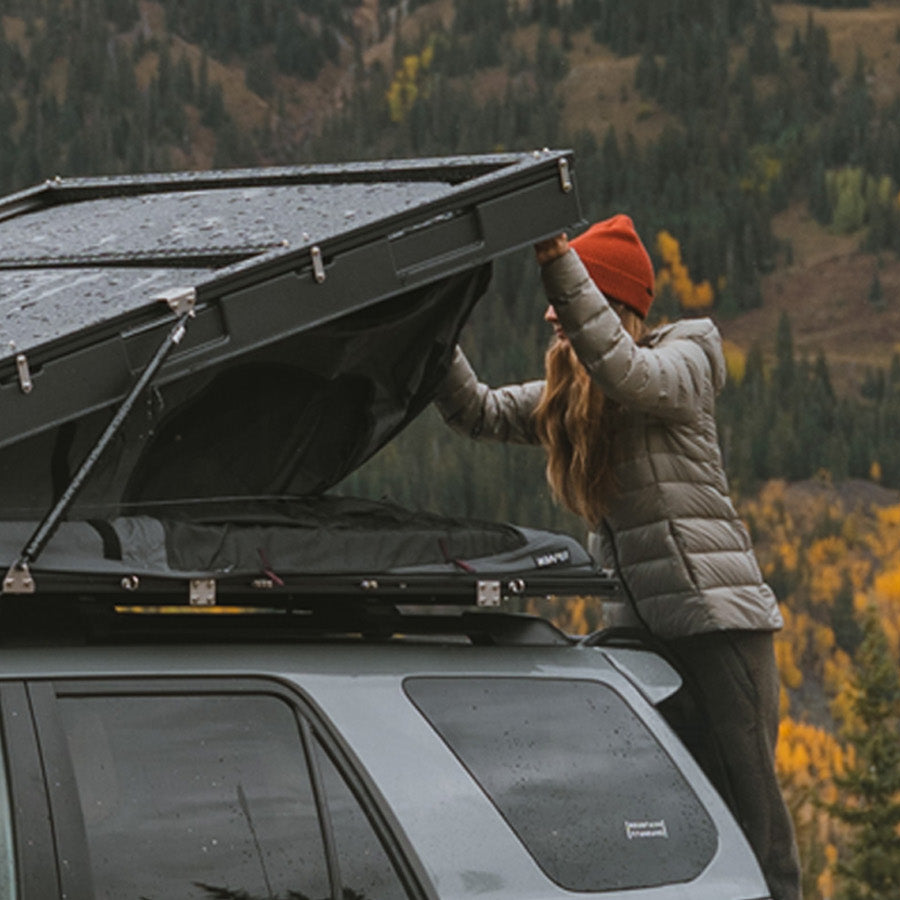
We've talked to hundreds of first-time roof top tent buyers over the years, and they all describe the same experience: standing overwhelmed in front of a wall of options, paralyzed by choice. Hardshell or softshell? Two-person or four? Should you spend $1,500 or $4,000? Will it even fit on your vehicle? Many walk away empty-handed that first day, more confused than when they arrived.
If you're reading this, you're probably in that same position right now. You've seen those Instagram photos of adventurers camping on cliff edges with their roof top tents, and you want in. But the moment you start researching, you're hit with technical specifications, weight capacities, and price tags that make you question everything.
Here's the truth: choosing your first roof top tent doesn't need to be overwhelming. After testing over a dozen models, installing tents on 50+ vehicles, and accumulating thousands of nights of combined team experience, we've learned what actually matters and what's just marketing noise.
This guide walks you through everything you need to know to choose the right roof top tent for your first overlanding adventure. We're covering vehicle compatibility, hardshell versus softshell designs, size selection, budget considerations, and the features that separate great tents from mediocre ones. By the end, you'll know exactly which roof top tent fits your vehicle, your budget, and your camping style.
Let's get you off the ground.
📋 Quick Navigation
What Is a Roof Top Tent? (And Why You'd Want One)
A roof top tent mounts directly to your vehicle's roof rack and provides an elevated sleeping platform that deploys in minutes. Unlike traditional ground tents that require finding level terrain and setting up poles, roof top tents attach to your car permanently (or semi-permanently) and pop open when you reach camp.

The concept isn't new. Roof top tents originated in Europe and Australia in the 1950s when overlanders needed reliable shelter for multi-month expeditions across rough terrain. Modern roof top tents have evolved dramatically, incorporating better materials, faster setup mechanisms, and comfort features that rival many hotel beds.
So why choose a roof top tent over a traditional ground tent?
✓ Setup Speed
Most roof top tents deploy in under five minutes. Hardshell models like the iKamper Skycamp open in under 60 seconds—you literally unlatch four clips and lift. Even softshell tents like the OVS Nomadic series set up in two to three minutes once you've practiced a few times.
✓ Sleeping Comfort
Roof top tents come with built-in mattresses ranging from two to four inches thick. The OVS models include high-density foam mattresses, while premium options like iKamper feature memory foam. You're sleeping on a flat, cushioned surface every night, not rocky ground with a thin sleeping pad.
✓ Camp Anywhere Capability
Ground tents require relatively flat, clear ground. Roof top tents don't care. Parked on a slope? Your tent stays level. Camping in a muddy area? You're sleeping above it. Rocky desert terrain? Irrelevant. This flexibility opens up camping spots that ground tenters can't access.
✓ Weather Protection
Quality roof top tents use heavy-duty ripstop canvas (typically 600D polyester or poly-cotton blends) with waterproof ratings of 2000mm or higher. The elevated position keeps you away from ground water, and the robust construction handles wind better than ground tents.
✓ Security and Wildlife Protection
Sleeping five feet off the ground provides psychological comfort in areas with wildlife. You're not worried about snakes, scorpions, or curious critters exploring your tent. In bear country, a roof top tent (combined with proper food storage) adds a layer of security.
The trade-offs? Roof top tents cost more than ground tents, add weight and wind resistance to your vehicle, and require a quality roof rack system. They're also less convenient if you want to leave camp set up while driving into town for supplies. But for overlanders who camp frequently and value setup speed and sleeping comfort, roof top tents are transformative.
Hardshell vs Softshell: Understanding the Two Main Types
This is the first major decision you'll face when choosing a roof top tent. Hardshell and softshell designs each have distinct advantages, and understanding these differences will immediately narrow your options.
Hardshell Roof Top Tents

Hardshell tents feature rigid top and bottom panels—typically made from ABS plastic, aluminum, or fiberglass composite—that open via gas struts in a clamshell or pop-up design.
How they work: Hardshells fold in half when closed, creating a low-profile package on your roof. When you're ready to camp, you unlatch the locks and lift. Gas struts (like the ones on your car's trunk) assist the opening, making deployment effortless. The iKamper Skycamp 3.0, for example, opens with one hand in about 30 seconds.
✓ Hardshell Advantages
- Setup speed is unbeatable (30-60 seconds)
- Better aerodynamics = improved fuel economy
- Superior weather resistance when closed
- Lockable storage for gear and bedding
- Better insulation for winter camping
✗ Hardshell Disadvantages
- Higher price ($2,500-$4,500+)
- Heavier weight (150-250 lbs)
- More limited interior space
- Usually sleeps 2-3 people max
🏕️ Popular Hardshell Models:
- → iKamper Skycamp 3.0 - $4,200 | Opens in 30 seconds, sleeps 2-4, premium mattress
- → OVS Bushveld - $2,000-2,200 | Best value hardshell, sleeps 4+, only 7" closed height
- → OVS Mamba 3 - $2,500-2,800 | Aluminum construction, 1" honeycomb insulation, best for winter
Softshell Roof Top Tents

Softshell tents use a collapsible design with fabric walls supported by aluminum poles or frames. When closed, the tent folds down into a compact base; when deployed, it unfolds to create a larger interior space.
How they work: Softshell tents typically fold like an accordion or book. You unzip the cover, unfold the tent body, extend the aluminum support poles into sleeves or tracks, and secure the rainfly. The entire process takes 3-5 minutes once you've done it a few times.
✓ Softshell Advantages
- Much more interior space
- More affordable ($1,000-2,500)
- Annex room compatibility
- Better headroom
- Can sleep 3-5 people comfortably
✗ Softshell Disadvantages
- Longer setup time (3-5 minutes)
- More condensation management needed
- Requires periodic maintenance
- Zippers can fail over time
🏕️ Popular Softshell Models:
- → OVS Nomadic 3 - $1,627 | Best-selling tent, sleeps 2-3, 4-season rated, excellent value
- → OVS Nomadic 4 - $1,800-1,900 | Family-sized, sleeps 4-5, massive 122"x75" interior
- → OVS TMBK 3 - $1,000-1,200 | Best budget option, genuine 4-season capability, lightweight
💡 Which Type Is Better for Beginners?
For most first-time buyers, we recommend starting with a softshell tent—specifically the OVS Nomadic 3 or similar mid-range model.
Here's why: Softshell tents offer more value per dollar. You get more interior space, lower entry cost, and enough features to understand what you actually use after a season of camping. We've found that many first-time buyers overestimate how much the 2-minute setup difference matters and underestimate how much they'll appreciate extra space.
However, hardshell tents make sense if you camp frequently (15+ nights per year), prioritize absolute convenience, or camp in harsh weather regularly. The iKamper Skycamp or OVS Bushveld are both excellent "buy once, cry once" investments.
Vehicle Compatibility: Will a Roof Top Tent Fit Your Car?
This is where many first-time buyers make expensive mistakes. Before falling in love with any tent, you need to verify your vehicle can safely support it.

Understanding Dynamic vs Static Weight Capacity
Your vehicle's roof has two weight ratings:
Dynamic Weight Capacity
Measures how much weight the roof can support while the vehicle is moving. This includes the tent's weight plus any gear stored inside when the tent is closed. Typically ranges from 100-200 pounds for most SUVs and trucks.
Static Weight Capacity
Measures how much weight the roof can support when the vehicle is stationary. This includes the tent weight, occupants, and gear when you're sleeping. Usually 3-4 times higher than dynamic capacity.
⚠️ Critical: Your vehicle can probably support a roof top tent's static weight (when you're sleeping in it) but might not support its dynamic weight (when you're driving). This is the limitation that determines whether a roof top tent will work.
Finding Your Vehicle's Weight Capacity
Check three places to find your vehicle's specifications:
- Owner's manual. Look for roof load capacity, roof rack capacity, or maximum roof weight.
- Door jamb sticker. Some vehicles list roof rack capacity on the driver's door jamb sticker.
- Manufacturer website or dealer. Call the parts department for exact specifications.
Conservative rule of thumb: If you cannot find official specs, assume 150 pounds dynamic capacity for most SUVs and trucks. But always try to verify—official specs override rules of thumb.
Roof Rack Requirements
Roof top tents don't attach directly to your vehicle's roof. They mount to roof racks or crossbars, which then attach to the vehicle.
Factory roof racks that come standard on many SUVs typically support 100-150 pounds dynamic weight. This works for lighter tents (under 130 pounds) but may not handle heavier hardshells or larger softshells.
Aftermarket roof rack systems like Yakima, Thule, Rhino-Rack, and Prinsu offer higher weight capacities, typically 165-200 pounds dynamic load. These systems also provide better mounting points and more installation flexibility.
✓ Roof Rack Selection Checklist:
- Verify the rack's dynamic weight rating exceeds your tent's weight by at least 20%
- Measure crossbar spacing (tents typically require 30-48 inches between crossbars)
- Choose systems with T-slot channels for easier mounting
- Ensure compatibility with your specific vehicle make/model
Choosing the Right Size: How Many People Will Actually Sleep in This Thing?
Roof top tent manufacturers rate capacity optimistically. A tent rated for four people means four people can technically fit—but you'll be sleeping shoulder-to-shoulder with zero personal space.

Realistic Capacity Guidelines
2-person tents (48-56" wide, 84-96" long):
✓ Comfortable for two adults with some gear inside
✓ Cozy for two adults plus a small child or dog
✗ Cramped for two adults plus a larger child
3-person tents (56-63" wide, 90-96" long):
✓ Comfortable for two adults plus a child under 10
✓ Comfortable for two adults with lots of room for gear
✓ Acceptable for three adults who don't mind close quarters
4-person tents (72-84" wide, 96-122" long):
✓ Comfortable for two adults plus two children under 12
✓ Spacious for two adults with room for dogs or tons of gear
✗ Cramped for four adults
💡 Pro Tip: Always Size Up
Most first-time buyers are couples without kids or solo adventurers. For couples, a 2-person tent feels cozy and romantic, while a 3-person tent provides comfortable space. We strongly recommend sizing up—the OVS Nomadic 3 (technically a 3-person tent) gives couples plenty of room plus space for a 60-pound dog.
Height Considerations
If you're over 6 feet tall, pay attention to sleeping length. Most roof top tents offer 84-96 inches of interior length, which accommodates most people. The OVS Nomadic 4 provides 122 inches—enough room for even 6'6" occupants.
Headroom matters too. Can you sit up comfortably? Change clothes without contorting? Softshell tents generally offer more headroom than hardshells due to their peaked designs.
Budget Breakdown: What Do Roof Top Tents Actually Cost?
Roof top tent pricing falls into three tiers. Understanding what you get (and give up) at each level helps you make a smart decision.
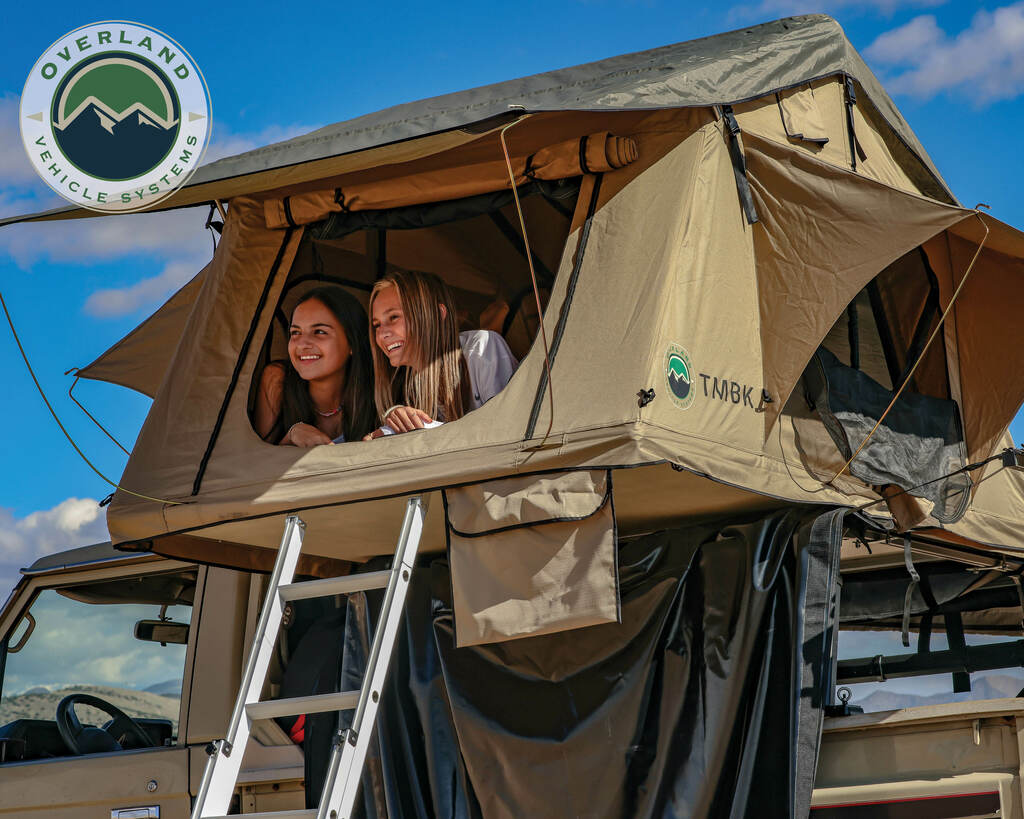
Budget Tier
$1,000-$1,500
What you get:
- Basic 600D ripstop fabric
- Aluminum pole frames
- 2-3" foam mattresses
- 5-7 minute setup
- 1-2 year warranties
Best for: First-time buyers, weekend warriors (5-10 nights/year), budget-conscious overlanders

Mid-Range
$1,600-$2,500
What you get:
- Premium fabrics & materials
- 3-4" high-density foam
- 2-4 minute setup
- LED lighting, windows
- 3-4 year warranties
Best for: Regular campers (10-20 nights/year), couples, families, best quality-to-price ratio
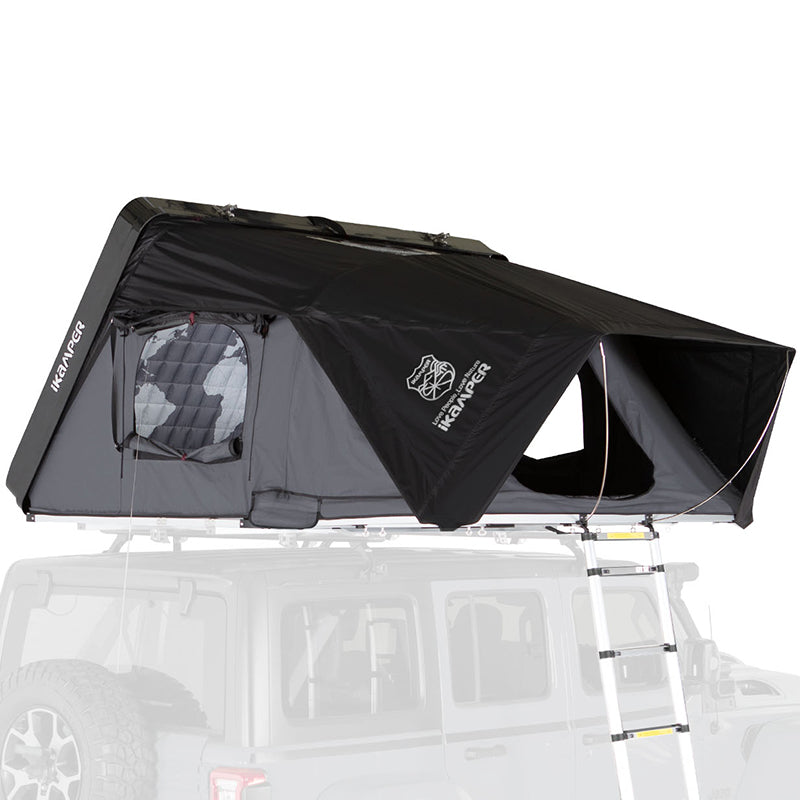
Premium
$3,000-$4,500+
What you get:
- Hardshell convenience
- 30-60 second setup
- Memory foam mattresses
- Superior insulation
- 4-5 year warranties
Best for: Frequent campers (20+ nights/year), serious overlanders, "buy once cry once" mentality
⚠️ Don't Forget Hidden Costs:
- Roof rack system: $300-800 (budget $500 for quality setup)
- Professional installation: $100-200 (if not DIY)
- Accessories: Annex rooms ($200-400), mattress toppers ($50-150), mounting hardware
Total realistic budget for complete first setup: $1,500-$6,000 depending on tier
Essential Features to Look For in Your First Roof Top Tent
Manufacturers love listing features—some matter, some are marketing fluff. Here's what we've found actually makes a difference after thousands of nights testing various roof top tents.
Mattress Quality
You're sleeping on this mattress every night of your trip. In our experience, mattress quality impacts camping satisfaction more than any other single feature.
Thickness matters:
- 2-inch foam: Budget tents—adequate but not comfortable
- 3-4 inch high-density foam: Mid-range tents—significantly better (OVS Nomadic series)
- 3-5 inch memory foam: Premium tents—genuinely comfortable (iKamper Skycamp)
Removable, washable covers are essential. After a week of camping, mattress covers get dirty. Removable covers that zip off for machine washing are non-negotiable for anyone who camps regularly.
Weather Resistance and Waterproofing
Fabric type: 600D ripstop polyester or poly-cotton blends are standard. Poly-cotton breathes better (reducing condensation) but weighs more. Both work fine.
Waterproof rating: Look for 2000mm minimum. The OVS tents use 2500mm waterproof coatings—more than adequate for typical camping conditions.
Rainfly coverage: Full rainflies that extend over windows and doors provide better protection than partial flies.
Ventilation and Condensation Management
Condensation is roof top tenting's persistent challenge. Your breath contains moisture. In cold weather, that moisture condenses on tent walls.
Look for:
- Multiple windows with screens on opposite sides for cross-ventilation
- Adjustable vents near the roof peak to exhaust warm, moist air
- Anti-condensation mats underneath the mattress
The OVS Nomadic tents feature windows on all four sides plus a skylight—excellent airflow.
Ladder Design
You're climbing this ladder 4-6 times per day. Ladder quality matters more than you'd expect.
Look for:
- Wide rungs (3-4 inches) more comfortable than narrow rungs
- Telescoping ladders adjust to different heights and stow compactly
- Proper angle (50-60 degrees) easier to climb than steep ladders
Windows and Interior Features
Skyview Windows
Let you stargaze from your sleeping bag. Waking up to stars overhead is magical. Most OVS softshell models include skylights.
LED Lighting
Eliminates fumbling with headlamps. Look for dimmable LED strips with red-light mode. OVS Nomadic series includes LED strips.
Storage Pockets
Keep phones, headlamps, and small items organized. OVS Nomadic 4 includes six storage pouches.
Installation: Can You Do It Yourself?
Installing a roof top tent requires two people, basic tools, and about 45-90 minutes. It's well within most people's DIY capabilities.
What You'll Need:
- 2-3 people (tent weight requires multiple helpers)
- Metric socket set or wrenches (typically 10mm, 13mm)
- Torque wrench (optional but recommended)
- Measuring tape
- Ladder or step stool
- Mounting hardware (included with tent)
Installation Process Overview
- Install and position your roof rack - Ensure level, properly spaced, and secure
- Position the tent on the rack - Lift with 2-3 people (most tents weigh 110-250 lbs)
- Slide into position - Mount slightly rearward of center for weight distribution
- Bolt the tent down - Use provided hardware, hand-tighten first, then torque to spec
- Connect the ladder - Ensure it locks securely
- Test deployment - Practice opening/closing 2-3 times before first trip
💡 Professional Installation Available
If DIY installation seems daunting, many outdoor retailers offer installation services for $100-200. This includes proper mounting, torque specification adherence, and a tutorial on operating your tent. Worth it for peace of mind.
⚠️ Safety Checks After Installation:
- All bolts are tight (check again after 50 miles)
- Tent opens and closes smoothly
- Ladder locks securely
- Nothing rattles when driving over bumps
- Tent is centered and level on rack
Common Beginner Mistakes to Avoid
We've seen hundreds of customers make these mistakes over the years. Learn from their experiences (and ours).
❌ Mistake #1
Not Verifying Vehicle Weight Capacity
Always verify your vehicle's dynamic roof load capacity before buying. We've watched customers buy expensive tents for vehicles that couldn't support them—a costly lesson.
❌ Mistake #2
Forgetting About Garage Clearance
Measure your garage door height + vehicle height + tent height. If you won't fit, you'll be storing outside or removing seasonally.
❌ Mistake #3
Buying the Wrong Size
First-time buyers often size too small. If you're between sizes, choose the larger option. The comfort is worth the slight extra weight.
❌ Mistake #4
Skipping Accessories Initially
Budget for basic accessories upfront: shoe bag ($30-50), mattress topper if needed ($50-150), extra guy lines ($20-40).
❌ Mistake #5
Not Practicing Setup at Home
Practice deployment 2-3 times in your driveway. This 30-minute practice session prevents campsite frustration.
❌ Mistake #6
Using 3-Season Tent in Winter
If you plan to camp in temperatures below freezing, buy a genuine 4-season tent. Don't try to make a 3-season tent work in winter.
Your First Purchase Checklist
Before clicking "buy," verify these eight points:
✓ Vehicle Compatibility Confirmed
- You've verified your vehicle's dynamic roof load capacity
- Your chosen tent's weight is at least 20% below that capacity
- You have (or will buy) a roof rack rated for your tent's weight
✓ Size Selection Appropriate
- You've chosen a tent one size larger than your minimum occupancy
- The closed dimensions fit on your roof rack
- The tent will fit in your garage (or you have alternate storage)
✓ Budget Includes All Costs
- Tent price + roof rack + installation + accessories
- Total is within your actual budget
✓ Seasonal Capability Matches Use
- You've chosen 4-season if camping in freezing temps
- 3-season tent is adequate for your climate
✓ Type Chosen Based on Priorities
- Hardshell if you prioritize setup speed and weather protection
- Softshell if you prioritize space and value
✓ Feature Requirements Met
- Mattress quality is acceptable (3+ inches for comfort)
- Waterproof rating is 2000mm minimum
- Adequate windows and ventilation
✓ Brand/Model Research Complete
- You've read reviews from actual users
- Warranty terms are clear (3-4 years minimum)
- Replacement parts are available
✓ Return Policy Understood
- You know the return window (usually 30 days)
- You understand return conditions
- You're prepared to test the tent immediately
Frequently Asked Questions
How much does a roof top tent cost?
Roof top tents range from $1,000 for budget models to $4,500+ for premium hardshells. The sweet spot for quality and value is $1,600-2,500, where you'll find excellent mid-range tents like the OVS Nomadic series that balance features, durability, and price. Budget an additional $300-800 for a quality roof rack and $100-300 for basic accessories.
Can my car support a roof top tent?
Most SUVs and trucks can support roof top tents, but you must verify your vehicle's dynamic roof load capacity (the weight limit while driving). This spec is in your owner's manual or available from your dealer. Most vehicles support 100-200 pounds. Choose a tent that weighs at least 20% less than your capacity limit. Sedans and compact crossovers often have 100-pound limits, which restricts tent options.
What's the difference between hardshell and softshell roof top tents?
Hardshell tents use rigid panels that open in 30-60 seconds, offer better weather protection and aerodynamics, but cost more ($2,500-4,500) and provide less interior space. Softshell tents use fabric construction, take 3-5 minutes to set up, offer more space and lower prices ($1,000-2,500), but require more maintenance. For beginners, softshell tents like the OVS Nomadic 3 offer better value, while hardshells suit frequent campers who prioritize convenience.
How long does it take to set up a roof top tent?
Hardshell tents open in 30-90 seconds—unlatch clips and lift. Softshell tents take 3-5 minutes once you've practiced. First-time setup takes longer (10-15 minutes for softshells) as you learn the process. After 3-4 deployments, most people develop a routine and hit these standard times. Either type is dramatically faster than ground tents, which require 15-30 minutes.
Can I install a roof top tent myself?
Yes, with 2-3 helpers and basic tools. Installation takes 45-90 minutes and requires lifting the tent onto your roof rack (most tents weigh 110-250 pounds), positioning it correctly, and bolting it to the rack using provided hardware. You'll need metric sockets or wrenches. If you're uncomfortable with DIY installation, many outdoor retailers offer professional installation for $100-200.
Do I need a special roof rack for a roof top tent?
You need a roof rack rated for your tent's weight plus a safety margin. Factory roof racks on many SUVs support 100-150 pounds, which works for lighter tents. Heavier tents require aftermarket racks from Yakima, Thule, Rhino-Rack, or Prinsu rated for 165-200+ pounds. The rack must also provide correct crossbar spacing (typically 30-48 inches) for your tent's mounting points. Verify both weight capacity and dimensions before buying.
Are roof top tents good for winter camping?
4-season roof top tents handle winter camping well. Look for tents with insulated bases, heavier fabrics, and minimal mesh panels. The OVS Mamba 3 with aluminum honeycomb insulation is the best winter tent available. The OVS Nomadic series with double-insulated bases also performs well in freezing temperatures. Budget 3-season tents struggle below freezing.
How many people can actually sleep in a roof top tent?
Subtract one from the manufacturer's rating for comfortable sleeping. A "3-person" tent comfortably sleeps two adults or two adults plus one small child. A "4-person" tent comfortably sleeps two adults plus two kids or three adults. The OVS Nomadic 3 (rated for 3 people) is ideal for couples who want space or couples with a dog.
Do roof top tents leak?
Quality roof top tents don't leak when properly maintained. Tents with 600D ripstop fabric, 2000mm+ waterproof ratings, and factory-sealed seams handle rain well. Leaks occur when seams degrade (requiring resealing every 2-3 years), zippers aren't fully closed, or rainflies aren't properly deployed. The OVS Nomadic series and most mid-range tents are genuinely waterproof in normal camping conditions.
Can I leave my roof top tent on year-round?
Yes, most people do. Hardshell tents like the iKamper Skycamp and OVS Bushveld are designed for permanent mounting. The hardshell protects the interior from weather. Softshell tents can also stay mounted year-round, though the cover and fabrics experience more UV exposure.
What's the best roof top tent for beginners?
The OVS Nomadic 3 is the best beginner tent. It costs $1,627, sleeps 2-3 people comfortably, offers 4-season capability, includes a 3-inch foam mattress and LED lights, and provides proven reliability. For buyers prioritizing convenience over budget, the OVS Bushveld hardshell ($2,000-2,200) or iKamper Skycamp 3.0 ($4,200) are excellent "buy once" options.
How much does a roof top tent weigh?
Roof top tents weigh 108-250 pounds depending on size and construction. Budget softshell tents weigh 110-140 pounds. Mid-range softshells weigh 140-185 pounds (the OVS Nomadic 3 weighs 165 pounds). Budget hardshells weigh 150-180 pounds. Premium hardshells weigh 160-200 pounds (iKamper Skycamp weighs 160 pounds). Aluminum hardshells like the OVS Mamba 3 weigh up to 250 pounds.
Do roof top tents affect gas mileage?
Yes, expect 1-3 mpg reduction on highway driving. Hardshells impact fuel economy less (1-2 mpg reduction) due to aerodynamic design and lower profile. Softshell tents create more wind resistance (2-3 mpg reduction). Impact increases with speed—driving 75 mph loses more fuel economy than 55 mph. This costs approximately $150-250 annually in extra fuel for typical use.
What accessories do I need with my first roof top tent?
Essential accessories for first-time buyers: 1) Shoe bag or gear hammock ($30-50) for muddy boots and wet clothes, 2) Additional guy lines and stakes ($20-40) for wind protection beyond what's included, 3) Mattress topper ($50-150) if you're picky about sleep comfort—the included foam may not be enough, 4) Basic tool kit for maintenance and adjustments. Optional but recommended: annex room for additional covered space ($200-400).
Start Your Roof Top Tent Journey
Choosing your first roof top tent feels overwhelming when you're staring at dozens of options. But now you understand the decision framework that actually matters.
You know hardshell tents offer convenience while softshell tents provide space and value. You can verify your vehicle's capacity and choose an appropriate roof rack. You understand realistic sizing (always size up) and can identify quality features that impact your actual camping experience.
Most importantly, you know that the "perfect" tent doesn't exist. The OVS Nomadic 3 works brilliantly for weekend warriors and couples. The iKamper Skycamp justifies its price for frequent campers. The OVS TMBK 3 gets budget-conscious adventurers off the ground. All these tents are excellent—they just serve different needs.
💡 Our #1 Recommendation for First-Time Buyers

The OVS Nomadic 3 is the tent we'd recommend to our own family members starting out. Mid-range pricing, proven reliability, 4-season capability, and enough space to be comfortable. Use it for a season. Learn what matters to you. Then decide if you want to upgrade or keep this excellent tent for years.
The hardest part of roof top tent camping isn't choosing the tent. It's taking that first trip. Once you've spent one night sleeping under stars with the convenience of roof top tent camping, you'll understand why overlanders swear by these elevated shelters.
Your adventure starts when you make a decision. Choose a tent that fits your vehicle and budget, install it properly, practice the setup in your driveway, and book a campsite. The research phase is over.
Get off the ground. The view is better up here.
Need Help Choosing Your First Roof Top Tent?
Our team of experienced overlanders is here to help. We've installed hundreds of tents and can provide real-world guidance based on experience, not just spec sheets.