
Hardshell vs Softshell Roof Top Tents: Which To Buy? 2026
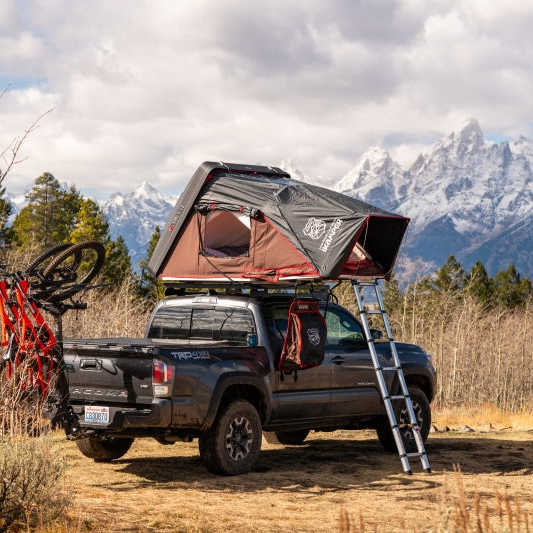
You're standing in your driveway staring at your truck, trying to decide which roof top tent to mount on your rack. The hardshell models look sleek and promise 60-second setup. The softshell tents offer more space and cost half as much. Which one actually works better for real overlanding trips?
📋 Quick Navigation
We've spent years testing both hardshell and softshell roof top tents across desert heat, mountain snow, and coastal rain. The answer isn't simple - it depends on how you camp, what you drive, and what trade-offs you're willing to make. This guide breaks down exactly what separates hardshell from softshell tents so you can make the right choice for your adventures.
Quick Comparison: Hardshell vs Softshell at a Glance
| Feature | Hardshell | Softshell |
|---|---|---|
| Setup Time | 30-60 seconds | 3-5 minutes |
| Price Range | $2,400-$4,500 | $1,400-$2,600 |
| Interior Space | Moderate | Spacious |
| Aerodynamics | Excellent | Fair |
| Weight | 140-180 lbs | 110-140 lbs |
| Best For | Frequent movers, minimalists | Basecamp setups, families |
What Is a Hardshell Roof Top Tent?
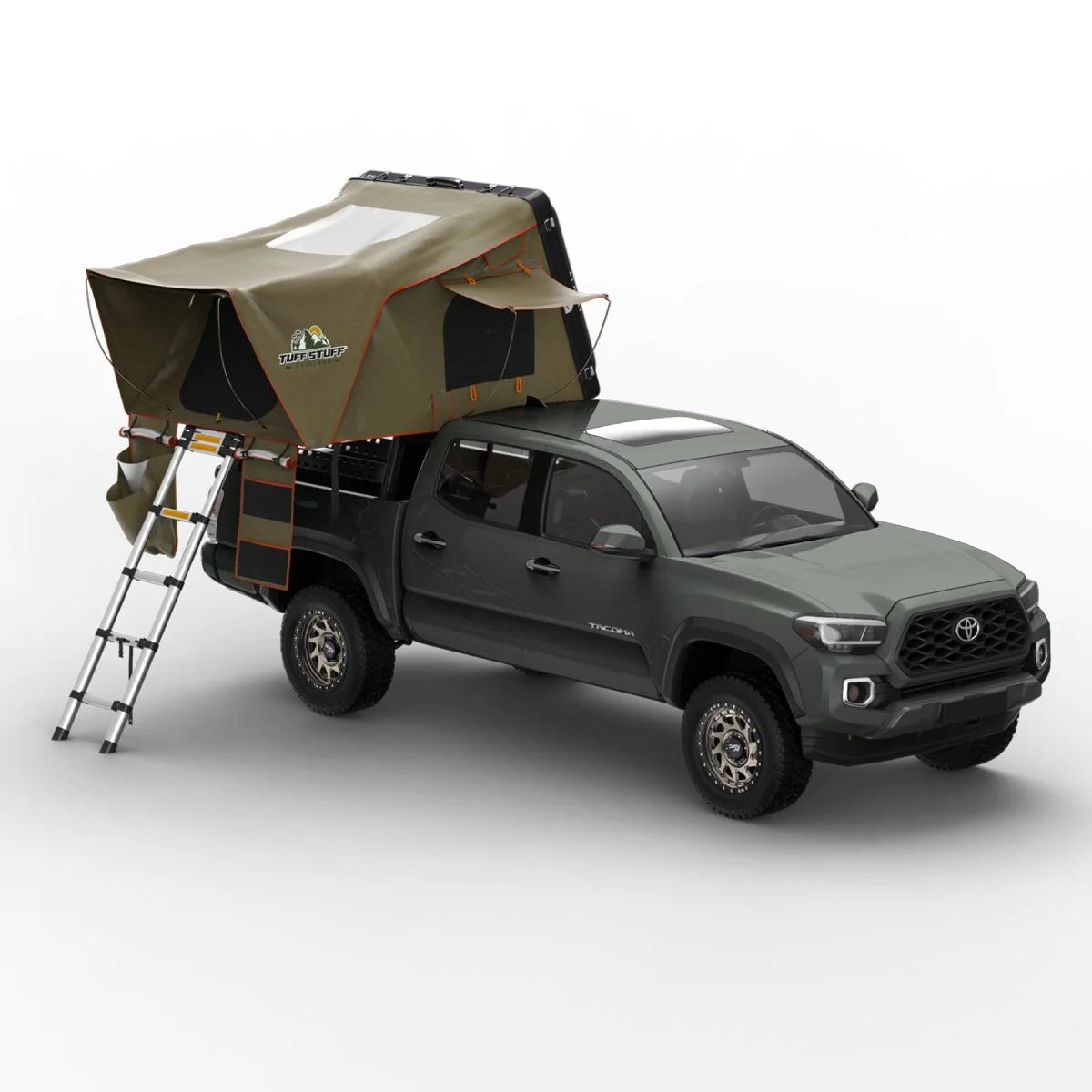
A hardshell roof top tent features a rigid protective shell - typically made from ABS plastic, fiberglass, or aluminum - that creates a low-profile aerodynamic package when closed. When you're ready to camp, gas struts assist in lifting the shell, and the tent deploys in under a minute with minimal effort.
The defining characteristic of hardshell tents is speed and simplicity. You unlatch the shell, lift it (often with one hand thanks to gas-assisted struts), extend the ladder, and you're done. No poles to insert, no fabric to unfold across multiple sections, no fighting with tension straps. The entire setup process takes 30 to 60 seconds once you've done it a few times.
Hardshell roof top tents come in three main design types. Clamshell tents open like a clamshell with hinges on one side, creating a wedge shape when deployed. The iKamper Skycamp 3.0 and OVS Mamba 3 use this design. Side-opening tents have the shell hinged along the length, and when opened, an extension platform slides out to increase floor space dramatically. Pop-up hardshells feature a roof that rises vertically, offering more headroom than clamshells but requiring slightly more setup time.
The materials matter significantly in hardshell construction. The shell protects everything inside from weather, UV damage, and road debris. Quality hardshells use double-walled construction with insulation between layers, which helps manage condensation and provides better temperature regulation in both hot and cold conditions. The base is typically honeycomb aluminum, which offers exceptional strength-to-weight ratio while providing insulation from the cold roof rack below.
Modern hardshell tents like the Tuff Stuff Alpha 2 incorporate features that solve common camping challenges. Built-in LED lighting, integrated mattresses that don't need removal when closing, lockable latches for security, and mounting systems that work with most crossbar configurations. The closed profile measures typically 8 to 14 inches tall, meaning less wind resistance and better fuel economy compared to bulkier softshell alternatives.
Pro Tip: When considering a hardshell tent, check the closed height measurement. An extra 2-3 inches might not seem like much, but it directly impacts wind noise, fuel economy, and whether you can fit into parking garages or drive-throughs.
What Is a Softshell Roof Top Tent?
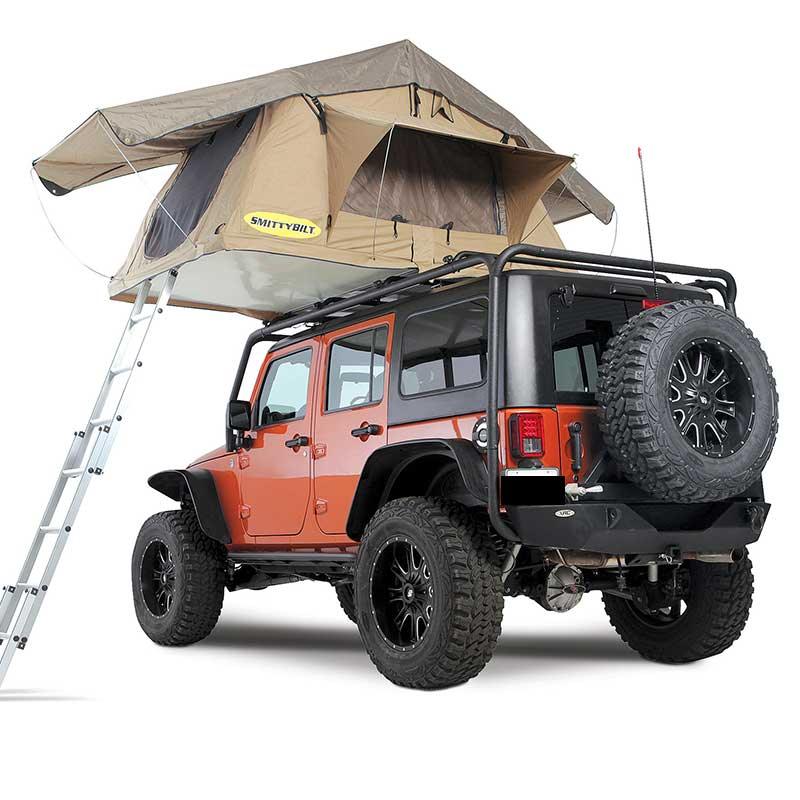
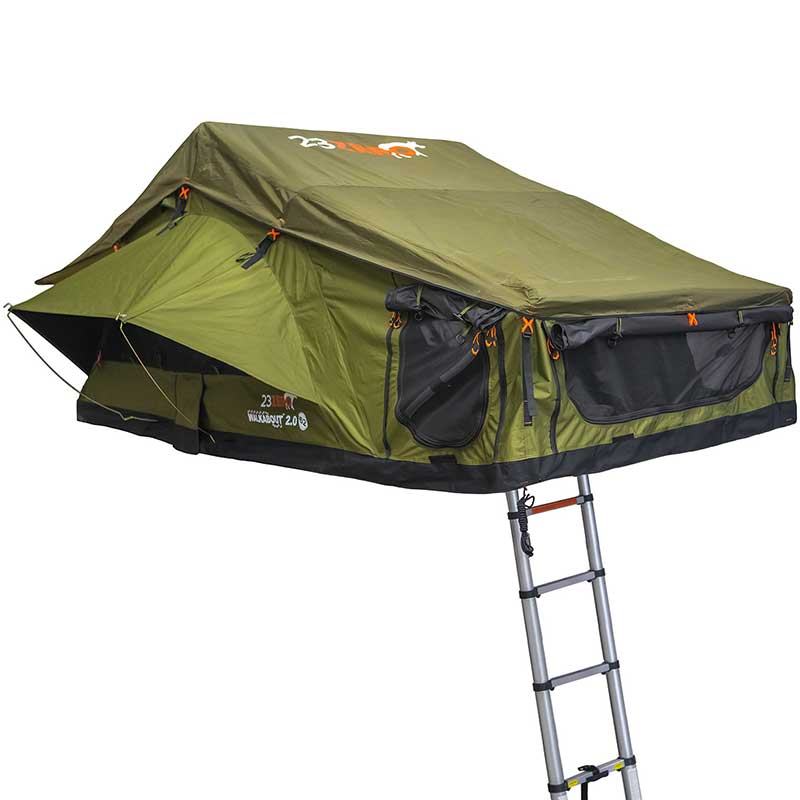
A softshell roof top tent consists of a fabric body supported by an aluminum or steel frame, with a heavy-duty canvas that unfolds to create your sleeping quarters. The tent base mounts to your roof rack, and the fabric accordion-folds or stacks when packed, expanding outward when you set up camp.
Softshell tents have been the traditional design for decades, perfected by overlanders crossing Africa and Australia long before Instagram made roof top tents popular. The Guana Equipment Wanaka 55 and OVS Nomadic 3 Extended represent modern evolutions of this proven design, incorporating lessons learned from millions of nights spent under canvas.
Setup involves unzipping the travel cover, unfolding the tent body, inserting or extending support poles into sleeves or mounting points, and deploying the ladder. The process takes 3 to 5 minutes for experienced users, though first-timers might need 8 to 10 minutes while learning the sequence. Unlike hardshells where everything happens automatically via gas struts, softshells require you to physically guide the fabric and ensure poles seat correctly.
The major advantage of softshell design is interior volume. Because the fabric walls extend outward and upward from the base, you get significantly more living space than a hardshell of similar closed dimensions. A softshell tent measuring 56 inches wide when closed might offer 65 to 70 inches of interior width when deployed. Vertical walls mean usable space extends to the edges rather than tapering like wedge-style hardshells.
Softshell tents typically feature thick, high-density foam mattresses that stay inside the tent when packed. You can leave bedding, pillows, and even some gear inside, which saves time when setting up and breaking camp. The Smittybilt Overlander Gen 1 allows you to store sleeping bags, clothes, and accessories inside the packed tent, so you're essentially deploying a ready-to-sleep bedroom rather than an empty shell.
Material quality varies dramatically across softshell tents. Budget models use 210D polyester, which works but shows wear quickly. Mid-range options like the OVS Nomadic 3 Extended employ 600D ripstop poly-cotton canvas - heavier, more durable, better breathing, and superior water resistance. Premium softshells use even heavier canvas with waterproof coatings rated to 2,500mm or higher water column pressure.
The fabric construction of softshell tents offers natural breathability that helps manage condensation. Unlike the sealed environment of some hardshells, poly-cotton canvas allows moisture to escape while remaining waterproof. This becomes critically important during multi-day trips in humid environments where condensation can otherwise become problematic.
Hardshell Roof Top Tents: Pros and Cons
The Advantages of Hardshell Tents
Lightning-fast setup and breakdown. This isn't marketing hype - hardshell tents genuinely deploy in 30 to 60 seconds. When you've driven six hours to a campsite and arrive after dark, or when weather turns nasty and you need shelter immediately, those saved minutes matter tremendously. Morning packup is equally quick, letting you chase sunrise locations or beat checkout times without stress.
Superior aerodynamics and fuel economy. The low-profile hardshell design creates minimal wind resistance. Testing shows hardshell tents typically reduce fuel economy by 1 to 2 MPG at highway speeds, compared to 2 to 4 MPG reduction from softshell tents. Over a 2,000-mile overlanding trip, that difference equals 15 to 30 gallons of fuel - roughly $60 to $120 in savings.
Weather protection while traveling. Your bedding, mattress, and any gear stored in the tent stays completely dry and protected during transit. Rain, snow, road spray, and dust can't penetrate the sealed hardshell. You can leave pillows, sleeping bags, and clothes inside without worry, unlike softshell tents where the canvas cover might leak or allow dust infiltration on rough roads.
Enhanced security features. Most hardshell tents include lockable latches. The solid shell provides better protection for valuables stored inside compared to canvas that could be cut. While no tent is theft-proof, the hardshell design adds a meaningful deterrent and peace of mind when leaving camp for day hikes or supply runs.
Reduced wind noise and movement. The rigid structure doesn't flap or flutter in wind. Softshell tents can sound like sails in strong gusts, with fabric snapping and poles flexing. Hardshells remain silent and stable even in 30 to 40 MPH winds, which means better sleep on breezy nights.
The Disadvantages of Hardshell Tents
Significantly higher cost. Quality hardshell tents start around $2,400 and quickly climb to $4,500 for premium models. That's double to triple the cost of comparable softshell options. The OVS Mamba 3 at $2,400 costs $900 more than the OVS Nomadic 3 Extended softshell, despite similar sleeping capacity and build quality from the same manufacturer.
Limited interior space. The rigid shell constrains how much the tent can expand. Clamshell designs create sloped ceilings that reduce usable vertical space. You'll have full headroom in the center but end up crouching near the edges. For taller individuals or those who like spreading out, this can feel restrictive compared to softshell vertical walls.
Heavier weight impacts vehicle capacity. Hardshell tents typically weigh 15 to 40 pounds more than comparable softshell models due to the shell materials. The iKamper Skycamp 3.0 weighs 165 pounds compared to 117 pounds for the Smittybilt Overlander Gen 1. This affects your roof rack's dynamic weight rating and reduces capacity for additional gear like awnings, solar panels, or recovery boards.
Condensation management challenges. The sealed environment can trap moisture from breathing and body heat. Without proper ventilation, you'll wake to water droplets on the interior shell surface. Quality hardshells address this with ventilation panels and insulated liners, but budget models often struggle with condensation, especially in humid or cold conditions.
Height restrictions and accessibility. Even when closed at 8 to 14 inches, hardshells add permanent height to your vehicle. This can prevent access to parking garages, some drive-throughs, and certain trail obstacles with low-hanging branches. The added height also makes accessing the tent more challenging for shorter individuals or those with mobility limitations.
Softshell Roof Top Tents: Pros and Cons
The Advantages of Softshell Tents
Dramatically lower cost for entry. Quality softshell tents start at $1,400 and top-tier models rarely exceed $2,600. The Smittybilt Overlander Gen 1 at $1,366 delivers legitimate 4-season capability for less than half the cost of budget hardshells. This lower barrier makes roof top tent camping accessible to more overlanders and reduces financial risk if you discover RTT camping isn't your style.
Exceptional interior space and comfort. Vertical walls and expandable design create genuinely spacious sleeping quarters. The Guana Equipment Wanaka 55 offers 94 inches of sleeping length and actual vertical walls where you can sit upright near the edges - something impossible in most hardshell wedge designs. Families appreciate this extra room for kids, gear, and not feeling cramped.
Lighter weight for small vehicles. Softshell tents typically weigh 100 to 140 pounds compared to 140 to 180 pounds for hardshells. This makes them viable for smaller vehicles with limited roof rack capacity. A Subaru Outback or Toyota RAV4 can safely carry most softshell tents but struggles with the weight of larger hardshells.
Store bedding and gear inside. The thick mattress and fabric walls let you leave sleeping bags, pillows, clothes, and camp accessories packed inside the tent. This saves time during setup and protects gear from moisture. You're essentially deploying a complete bedroom rather than an empty tent that requires furnishing after setup.
Superior breathability and ventilation. Poly-cotton canvas naturally regulates moisture while remaining waterproof. Large mesh windows on all sides create cross-ventilation that prevents stuffiness and manages condensation effectively. You can sleep with windows open for fresh air without sacrificing weather protection thanks to the rainfly design.
Proven durability and field repairability. Canvas can be patched, zippers can be replaced, poles can be repaired or substituted. When something breaks on a softshell tent, you can often fix it in the field with basic tools and supplies. Hardshell components like gas struts or shell hinges require specific replacement parts and professional installation.
The Disadvantages of Softshell Tents
Slower setup requires more effort. Three to five minutes doesn't sound like much until you're setting up in cold rain or dealing with 20 MPH winds that fight you while positioning the fabric. The physical effort of unfolding and securing a softshell tent is noticeably greater than simply lifting a gas-assisted hardshell. After a long day of driving, this difference feels significant.
Worse aerodynamics hurt fuel economy. The larger closed profile and soft cover create more wind resistance. Your vehicle works harder at highway speeds, which translates to measurably worse fuel economy and more wind noise. On long highway drives, the aerodynamic penalty of softshell design adds up in both fuel costs and driving fatigue from increased noise.
Canvas requires maintenance and care. Poly-cotton canvas needs periodic treatment with waterproofing spray, especially after exposure to harsh UV or heavy rain. You must ensure the tent is completely dry before storing it, otherwise mold and mildew will develop. This maintenance requirement adds complexity compared to hardshells that simply wipe clean and require no special care.
Less protection during travel. Despite heavy-duty covers, softshell tents are more vulnerable to road grime, water infiltration, and dust on rough roads. That pristine bedding you loaded might arrive at camp dusty or damp if you drove through rain or muddy conditions. The cover helps but doesn't provide the same sealed protection as a hardshell.
Wind noise and movement in storms. Canvas flaps and snaps in strong wind. Poles flex and creak. During storms with 30+ MPH gusts, softshell tents sound and feel noticeably less stable than rigid hardshells. While quality softshells are structurally sound and won't collapse, the sensory experience of weather buffeting can make sleep difficult for light sleepers.
Head-to-Head Comparison: What Actually Matters
Let's break down the specific factors that impact your actual camping experience, not just specifications on paper.
Setup Time and Daily Convenience
Hardshell tents win decisively on speed. Arriving at camp after dark, you can have a hardshell deployed with headlamp in mouth in under 60 seconds. Softshell setup requires both hands, decent light, and 3 to 5 minutes minimum. This time difference compounds over multi-week trips.
Consider a two-week overlanding trip where you move camp every 2 to 3 days. With a hardshell, you spend roughly 5 minutes total on setup and breakdown per move (1 minute each way, plus organizing). That's about 25 minutes over the entire trip. A softshell requires approximately 8 minutes per move (4 minutes each way), totaling 40 minutes over the same trip. You save 15 minutes - not huge, but those are 15 minutes you're not wrestling with fabric in the dark or cold.
The convenience factor extends beyond pure time. Hardshells deploy consistently regardless of wind, darkness, or weather. Softshells require attention and care during setup to ensure poles seat correctly and fabric positions properly. When you're tired, cold, or dealing with mosquitoes, the hardshell's simplicity feels like a luxury.
Interior Space and Livability
Softshell tents offer objectively more usable interior volume. A hardshell clamshell design creates sloped walls where headroom decreases rapidly as you move from center to edges. You can sit upright in the middle but must crouch or lie down near the walls. Side-opening hardshells improve this somewhat by extending floor space, but the ceiling height still constrains movement.
The OVS Nomadic 3 Extended softshell provides 94.5 inches of length with near-vertical walls. You can sit up anywhere in the tent, change clothes without contorting, and genuinely spread out. The Tuff Stuff Alpha 2 hardshell offers excellent quality but measures just 78 inches of sleeping length with significant taper at the edges.
For solo campers or couples willing to stay compact, hardshell space suffices. For families with kids, taller individuals over 6'2", or anyone who values roominess over minimalism, softshell design clearly wins.
Weather Resistance and Four-Season Capability
Both tent types handle weather well when properly designed, but they excel in different conditions. Hardshells with quality insulation perform exceptionally in cold weather. The rigid shell blocks wind completely, insulated panels prevent heat loss, and the sealed environment retains warmth. The iKamper Skycamp 3.0 with its quilted insulation lining handles freezing temperatures better than most softshells.
Softshells excel in hot, humid conditions where breathability matters most. The poly-cotton canvas allows moisture to escape while remaining waterproof. Large mesh windows create cross-ventilation that prevents the greenhouse effect common in sealed hardshells on hot days. Desert camping in summer strongly favors softshell ventilation.
Rain performance depends more on quality than tent type. Both hardshell and softshell designs keep you dry when properly constructed with adequate waterproofing. The difference emerges in extreme conditions - hardshells remain silent in heavy rain while softshells drum noticeably, though this bothers some people more than others.
Weight and Vehicle Compatibility
Weight matters significantly for smaller vehicles and those with limited roof rack capacity. The Smittybilt Overlander Gen 1 at 117 pounds works on vehicles where the 165-pound iKamper Skycamp 3.0 exceeds safe roof rack ratings.
Consider a Jeep Wrangler JL with factory crossbars rated to 150 pounds dynamic weight capacity. A 165-pound hardshell exceeds this rating before adding mounting hardware, bedding, or occupants. A 117-pound softshell leaves meaningful margin for additional weight and provides safer operation within rated capacity.
Larger trucks and SUVs with aftermarket roof racks rated to 300+ pounds dynamic capacity can handle any tent. But for compact and mid-size vehicles, softshell weight advantage expands your options considerably.
Long-Term Durability and Maintenance
Both tent types last 10+ years with proper care, but maintenance requirements differ dramatically. Hardshells need minimal attention - occasionally wipe down the shell, lubricate hinges, and check gas struts. That's essentially it.
Softshell canvas requires periodic waterproofing treatment, must be stored completely dry to prevent mildew, and benefits from UV protectant application every few years. Zippers need occasional lubrication, poles should be inspected for stress cracks, and fabric tears require prompt repair to prevent expansion.
The trade-off: softshells are field-repairable with basic tools, while hardshell components often require specific replacement parts and professional service. A torn canvas panel can be patched in camp. A failed gas strut requires ordering the exact OEM part.
Price and Value Over Time
Hardshell tents cost more upfront but potentially offer better value for frequent users. If you camp 30+ nights per year, the convenience and fuel savings of a hardshell tent compound significantly. At 100 nights per year, you'll save roughly 100 hours of setup time with a hardshell versus softshell - that's more than four full days of time savings.
Softshell tents deliver superior value for occasional users and those on budgets. Weekend warriors camping 10 to 15 nights annually won't notice the setup time difference enough to justify double the cost. The Guana Equipment Wanaka 55 at $1,500 provides exceptional quality and capacity for far less than budget hardshells.
Feature Comparison Chart
| Factor | Hardshell | Softshell |
|---|---|---|
| Setup Speed | ✓ Winner: 30-60 seconds | 3-5 minutes |
| Interior Space | Moderate headroom | ✓ Winner: Spacious |
| Aerodynamics | ✓ Winner: Low profile | Bulkier profile |
| Fuel Economy | ✓ Winner: 1-3 MPG better | Higher drag |
| Price | $2,400-$4,500 | ✓ Winner: $1,400-$2,600 |
| Weight | 140-180 lbs | ✓ Winner: 110-140 lbs |
| Cold Weather | ✓ Winner: Better insulation | More heat loss |
| Hot Weather | Can overheat | ✓ Winner: Better airflow |
| Maintenance | ✓ Winner: Less upkeep | Canvas treatment needed |
| Field Repair | Shell damage hard to fix | ✓ Winner: Easier repairs |
Which Type Should You Choose? Decision Framework
Stop agonizing over specifications and answer these practical questions about your actual camping style.
Choose a Hardshell Roof Top Tent If You:
Move camp frequently during trips. Overlanders who relocate every 1 to 2 nights benefit enormously from sub-minute setup and breakdown. The cumulative time savings over a multi-week expedition reaches hours, not minutes. If your trips involve covering territory rather than establishing basecamp, hardshell convenience pays off immediately.
Camp 30+ nights per year. Frequent use justifies the higher upfront cost through time savings, reduced setup frustration, and better fuel economy. At this usage level, you'll recoup the price premium within 2 to 3 years through fuel savings alone, not counting the value of time saved.
Prioritize minimalism and efficiency. The streamlined hardshell aesthetic appeals to overlanders who value gear that performs one function exceptionally well. If you appreciate products that eliminate complexity rather than add features, hardshell design philosophy aligns with your mindset.
Camp in cold weather regularly. Winter overlanding, snow camping, and high-altitude trips favor hardshell insulation and wind protection. The sealed environment retains heat more effectively, and the rigid shell doesn't accumulate snow or ice that must be removed before packing.
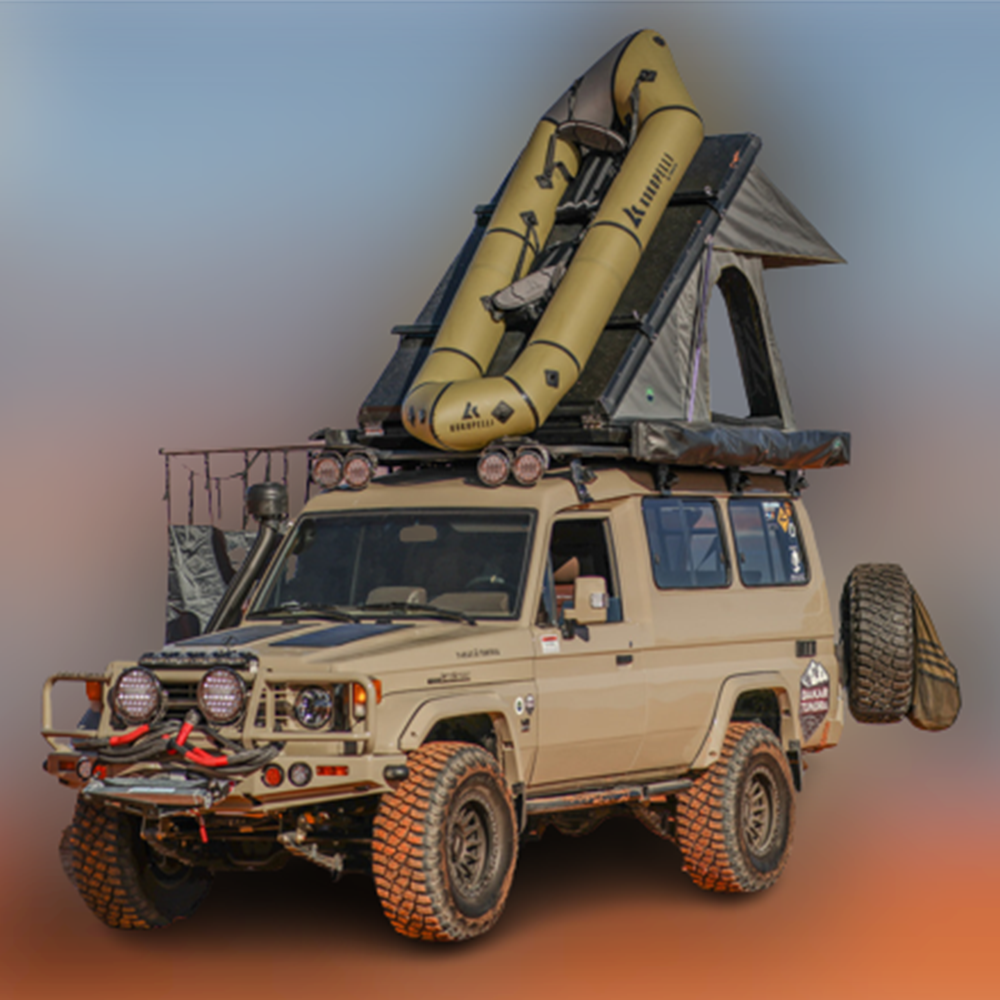
Drive long highway distances between camps. The aerodynamic profile reduces wind noise and improves fuel economy noticeably on extended highway drives. Over a 3,000-mile trip, the fuel savings can exceed $100 compared to similar softshell tents.
Choose a Softshell Roof Top Tent If You:
Establish basecamp for multi-day stays. When you set up once and remain camped for 3 to 5 days, setup time becomes irrelevant. The superior interior space and comfort of softshell design matters more for extended occupancy. The extra room for gear storage, changing clothes, and general livability justifies the slightly longer setup.
Camp with family or multiple people. Kids, partners, and dogs need space. The vertical walls and expandable design of softshells accommodate growing families and provide room for everyone to sleep comfortably without feeling stacked. The Guana Equipment Wanaka 55 sleeps 3 to 4 people genuinely comfortably, not theoretically.
Budget constraints are real. Spending $1,400 on a quality softshell beats spending $2,800 on a budget hardshell. The Smittybilt Overlander Gen 1 delivers proven 4-season capability for less than half what mediocre hardshells cost. Your money goes further with softshell if you're willing to accept slightly longer setup.
You're new to roof top tent camping. Lower initial investment reduces financial risk while you determine if RTT camping suits your style. Many overlanders start with softshell tents, gain experience, and later upgrade to hardshells once they've confirmed the lifestyle fits their needs.
Hot weather camping dominates your adventures. Desert overlanding, summer road trips, and coastal camping in warm climates favor softshell breathability. The ventilation prevents the greenhouse effect that makes sealed hardshells uncomfortable on 90-degree days.
Your vehicle has limited roof rack capacity. Smaller vehicles with factory crossbars rated under 165 pounds dynamic capacity can safely carry most softshell tents but struggle with hardshell weight. The 30 to 50 pound difference expands your options if you drive a Subaru, RAV4, or similar compact vehicle.
Real Talk: Most first-time buyers overthink this decision. Both tent types work excellently when matched to your actual camping style. You'll be happier with an "imperfect" tent that you actually use than a "perfect" tent that never leaves your driveway because you're still researching.
Best Hardshell Roof Top Tents for 2026
After testing dozens of hardshell models, these three represent the best options at different price points and use cases.
iKamper Skycamp 3.0 - Best Overall Hardshell ($4,395)
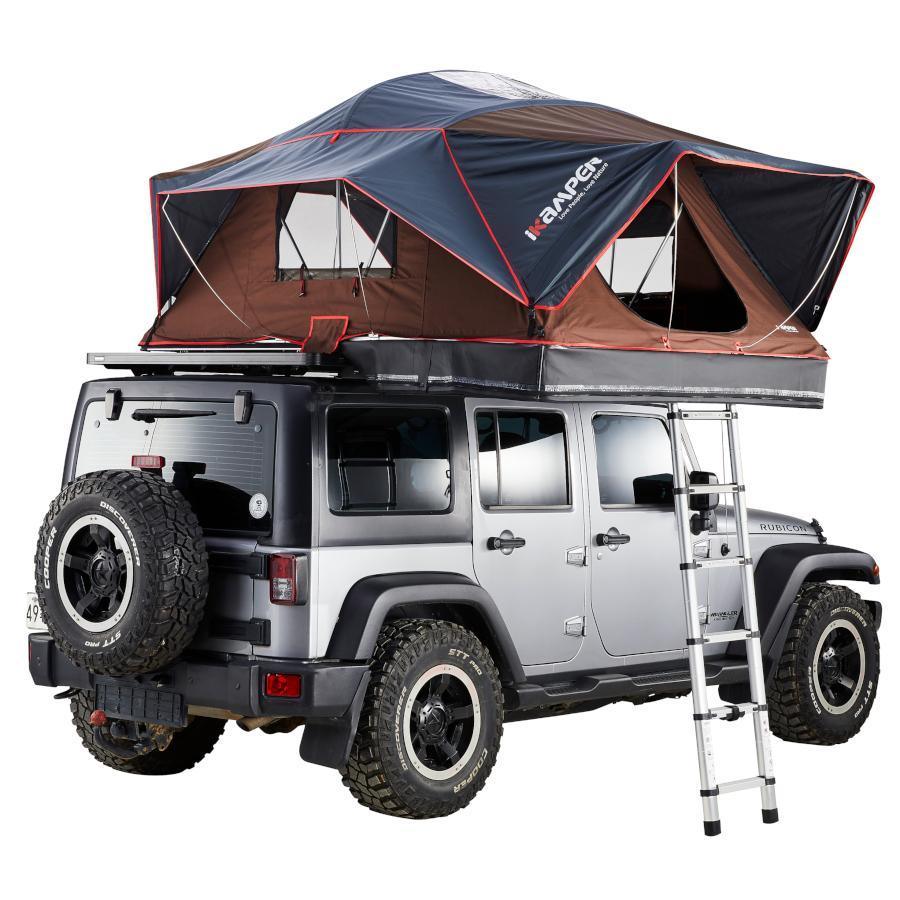
The iKamper Skycamp 3.0 sets the standard for side-opening hardshell design. This 4-person tent opens in under 60 seconds via gas-assisted struts and provides 83 inches by 77 inches of sleeping space - genuinely comfortable for a family of four or a couple with gear.
What makes the Skycamp 3.0 exceptional is the attention to livability details. The honeycomb aluminum floor panels provide structure and insulation. The 9-zone insulated polyfoam mattress (2.5 inches thick) delivers actual comfort, not just a thin pad. Quilted insulation lines the hardshell interior, managing condensation while providing thermal regulation in both hot and cold conditions.
The extended platform design means the floor space increases dramatically when opened, giving you room to move around, store gear, and not feel cramped. Three large windows provide ventilation and views, and the skyview window at the roof lets you stargaze from bed. Built-in LED lighting illuminates the interior without draining your vehicle battery.
At 165 pounds, the Skycamp 3.0 requires a robust roof rack system rated to at least 165 pounds dynamic capacity. The closed dimensions (83" x 51" x 13") fit most full-size trucks and SUVs but verify your rack length before purchasing.
Best for: Families, frequent overlanders who value premium features, and those willing to invest in top-tier quality that will last 15+ years.
OVS Mamba 3 - Best Value Hardshell ($2,399.99)
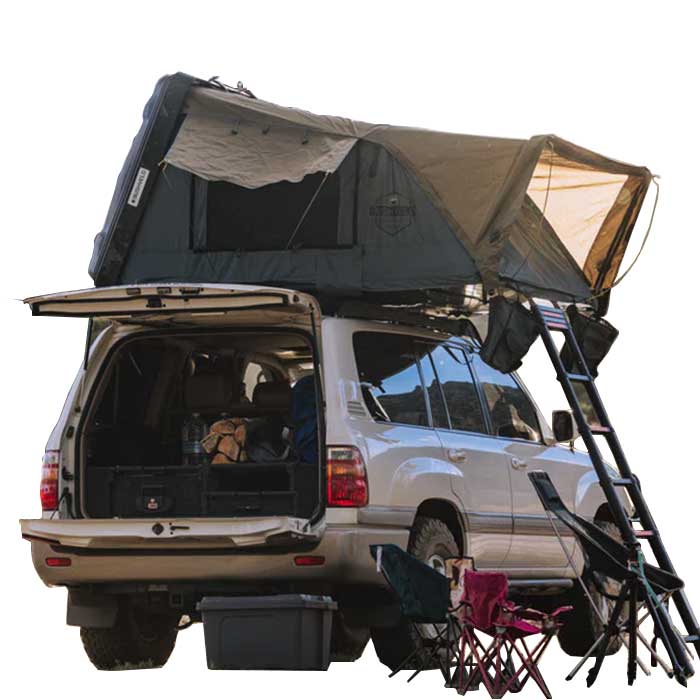
The OVS Mamba 3 delivers hardshell convenience at nearly half the cost of premium options. This clamshell design sleeps 2 to 3 people comfortably and represents exceptional value for overlanders who want hardshell benefits without the premium price tag.
The aerodynamic ABS shell measures just 8 inches tall when closed, making it one of the lowest-profile hardshells available. This reduces wind noise and fuel economy impact significantly. Gas-assisted struts make opening effortless, and the wedge design deploys in 45 seconds once you've practiced the motion.
Build quality impresses at this price point. The 280G ripstop polyester tent body provides genuine 4-season capability with proper waterproofing. The honeycomb aluminum base offers insulation and structural support. Three large windows with mesh screens provide ventilation, and YKK zippers handle thousands of open-close cycles without failure.
The Mamba 3 weighs 250 pounds - heavier than some competitors - but compensates with a robust 4-year warranty that demonstrates OVS confidence in durability. The closed height of just 8 inches means you maintain lower vehicle profile than almost any other hardshell.
Best for: Couples, budget-conscious buyers seeking hardshell convenience, and anyone wanting proven quality without premium pricing.
Tuff Stuff Alpha 2 - Best Compact Hardshell ($2,699.99)
The Tuff Stuff Alpha 2 solves a specific problem: providing hardshell convenience in a package small enough to fit truck cabs and compact vehicles. At just 59.75 inches by 49.75 inches when closed, this 2-person tent mounts on double cab trucks, crew cab short beds, and even some larger SUVs without overhanging significantly.
The side-opening design provides 53 inches by 78 inches of sleeping space - comfortable for two adults despite the compact footprint. The ABS shell with FRP reinforcement handles abuse from branches, rocks, and weather. Honeycomb aluminum floor panels provide exceptional insulation, making this one of the warmest hardshells for winter camping.
At 141 pounds, the Alpha 2 works with roof rack systems where heavier tents exceed capacity. The lockable steel latches provide security, and the tent includes both white and amber LED light strips for versatility. The 280g poly-cotton ripstop canvas delivers true 4-season capability with proper cold weather performance.
Setup remains under 60 seconds thanks to gas-assisted struts, and the compact size means you can mount it over the cab on pickup trucks, leaving your bed free for storage or additional gear. This versatility makes it popular with truck-based overlanders.
Best for: Truck owners, couples seeking compact hardshell design, and winter camping enthusiasts prioritizing insulation and cold weather performance.
Best Softshell Roof Top Tents for 2026
These softshell options deliver proven reliability, excellent value, and features that matter for real overlanding adventures.
Guana Equipment Wanaka 55 - Best Overall Softshell ($1,500)
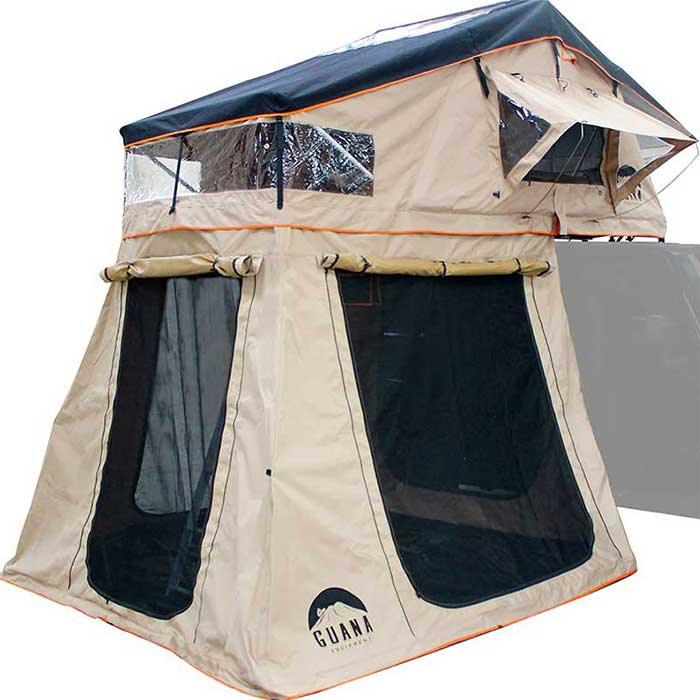
The Guana Equipment Wanaka 55 has earned cult status among overlanders for delivering premium features at mid-range pricing. This 3 to 4 person tent includes one of the largest annex rooms on the market, essentially giving you two rooms for the price of other brands' single tent.
The tent body uses 600D waterproof ripstop polyester oxford canvas with taped seams and PU coating - genuinely 4-season capable material that handles snow, rain, and desert sun equally well. The 1-inch thick aluminum poles provide stability even in 40+ MPH winds. The diamond anti-scratch aluminum base plate offers durability plus edge protectors prevent canvas wear.
Interior features separate this tent from budget competitors. Anti-condensation mat included (most brands charge $100+ for this separately). Two shoe bags keep boots organized outside the sleeping area. LED light strips illuminate both the tent and annex. Skyview windows on the tent body and annex provide stargazing views and daytime light.
The massive XL annex transforms camping logistics. Use it as a changing room, gear storage, or additional sleeping space for kids. The annex floor removes completely for flexibility. At 165 pounds total weight, the Wanaka 55 remains manageable for most vehicles while providing space that rivals much heavier tents.
Best for: Families, groups, anyone wanting maximum space and features without premium pricing, and overlanders who establish basecamp for multi-day stays.
OVS Nomadic 3 Extended - Best Value Softshell ($1,649.99)
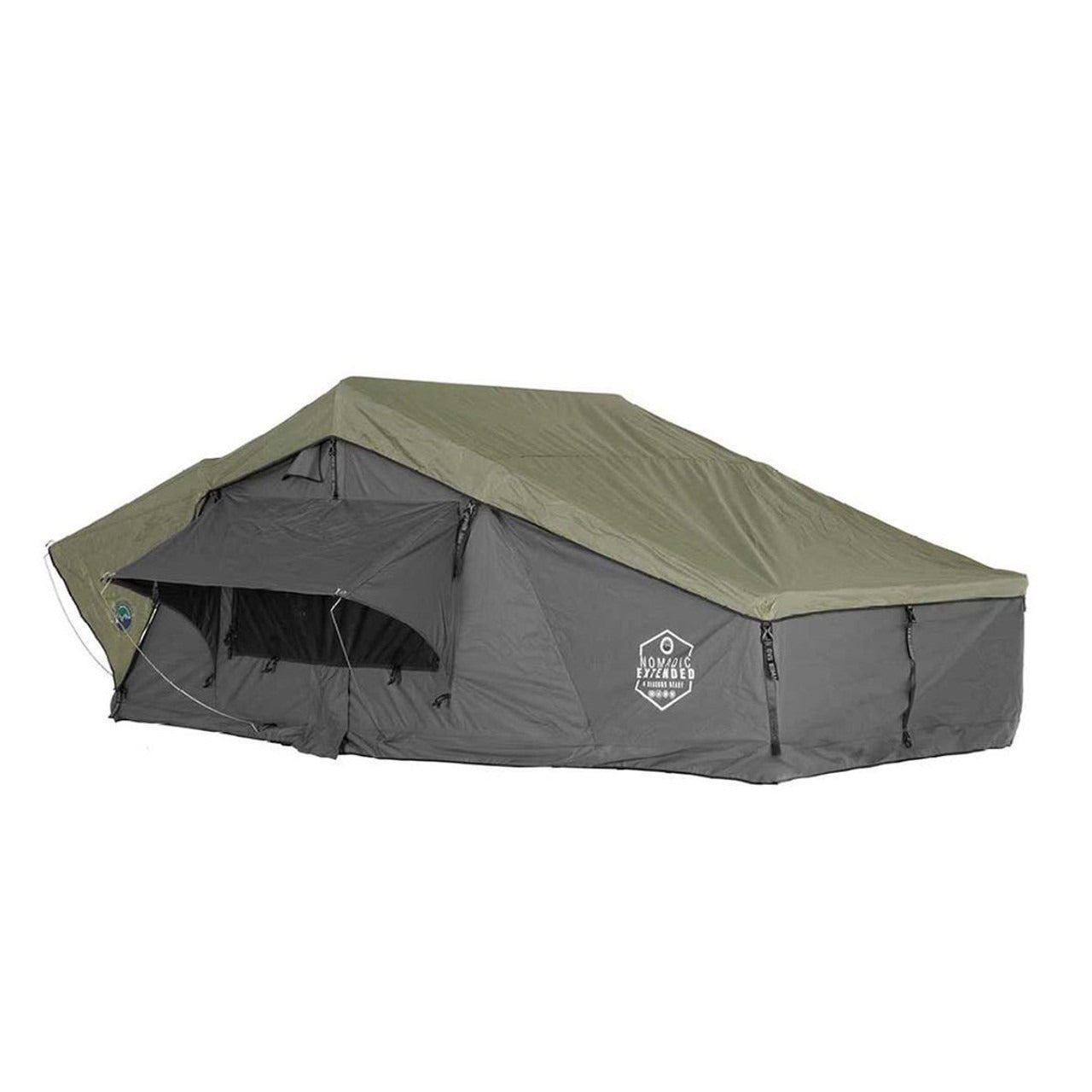
The OVS Nomadic 3 Extended represents the sweet spot of quality, features, and affordability. This 3-person tent delivers legitimate 4-season capability with a 4-year warranty that few competitors match at any price point.
The extended design provides 94.5 inches by 63 inches of sleeping area - genuinely spacious for two adults and a child or three adults who don't mind proximity. The 3-inch high-density foam mattress with removable, washable cover provides comfort that rivals home mattresses. The double-insulated diamond plate aluminum base prevents cold transfer from your roof rack.
Material quality exceeds expectations at this price. The 600D ripstop polyester cotton canvas body handles weather aggressively. Marine-grade hardware resists corrosion. YKK zippers throughout ensure years of reliable operation. The blackout interior coating blocks morning light for better sleep, and the skylight window provides views without sacrificing privacy.
The tent includes LED light strip, two boot bags, and overhead storage net - features that budget tents omit. At 165 pounds, weight remains reasonable for most vehicles. The V-strength ridge integrated into window rod poles provides exceptional wind stability, and thicker-than-normal inner pole structure adds confidence in storms.
Best for: Overlanders seeking proven quality with warranty backing, couples or small families, and anyone wanting hardshell-level build quality at softshell pricing.
Smittybilt Overlander Gen 1 - Best Budget Softshell ($1,365.99)
The Smittybilt Overlander Gen 1 proves you don't need to spend $2,000+ for a reliable roof top tent. At just $1,366, this 2 to 3 person tent delivers genuine 4-season capability with build quality that has earned loyalty from budget-conscious overlanders worldwide.
At 117 pounds, this is one of the lightest roof top tents available, making it viable for smaller vehicles and factory roof racks with limited weight ratings. The coyote tan design uses durable materials including a 1500mm waterproof rating that keeps you dry through heavy storms. The heavy-duty 1-3/16 inch aluminum base plate provides structure without excessive weight.
Interior features include 60mm high-density foam mattress with removable, machine-washable cover. Storage pockets keep gear organized. Built-in LED strips illuminate the interior. Three large mesh-covered windows provide ventilation and insect protection. The skyview window lets you stargaze without leaving your sleeping bag.
The telescoping aluminum ladder extends to 6.8 feet and supports up to 265 pounds. The underside entrance provides privacy compared to side-entry designs. The included 650gsm 1000D PVC travel bag protects the tent during transport and storage.
Setup takes 4 to 5 minutes once you learn the sequence. Build quality won't match premium tents, but reliability proves solid with proper care. Smittybilt's 60+ year history building 4x4 accessories shows in thoughtful design details and proven durability.
Best for: First-time buyers, weekend warriors, budget-conscious overlanders, and anyone with smaller vehicles needing lightweight tent options.
Frequently Asked Questions
Are hardshell or softshell roof top tents better?
Neither is universally better - the right choice depends on your camping style. Hardshell tents excel for overlanders who move camp frequently, value quick setup (30-60 seconds), and can justify higher cost ($2,400-$4,500). Softshell tents work better for basecamp setups, families needing more space, and budget-conscious buyers ($1,400-$2,600). Both types deliver reliable 4-season capability when properly constructed.
How much does a hardshell roof top tent cost compared to softshell?
Hardshell roof top tents range from $2,400 to $4,500 for quality options, with premium models like the iKamper Skycamp 3.0 at $4,395. Softshell tents cost $1,400 to $2,600, with excellent options like the Guana Equipment Wanaka 55 at $1,500. Hardshells typically cost 50-100% more than comparable softshell tents but offer faster setup and better aerodynamics.
Do hardshell tents have condensation problems?
Hardshell tents can experience more condensation than softshells because the rigid shell creates a sealed environment. Quality hardshells like the iKamper Skycamp 3.0 address this with quilted insulation liners and proper ventilation panels. Budget hardshells often struggle with condensation management. The solution involves cracking windows for airflow, using insulation accessories, and wiping interior walls before they freeze in cold weather.
Can you leave bedding in a softshell roof top tent?
Yes, you can leave sleeping bags, pillows, and light gear inside most softshell tents when packed. The thick mattress and fabric walls protect contents during travel, though some dust infiltration may occur on rough roads. This feature saves significant time during setup and breakdown. Hardshells also allow storing bedding inside, though the reduced interior volume when closed limits what fits comfortably.
Which type of roof top tent is better for winter camping?
Hardshell tents generally perform better for winter camping due to superior insulation and wind protection. The rigid shell blocks wind completely, and models with quilted insulation liners (like the iKamper Skycamp 3.0 or Tuff Stuff Alpha 2) retain heat more effectively. However, quality softshell tents with thick poly-cotton canvas also handle winter well, especially when paired with insulation accessories. The key difference is hardshells don't accumulate snow on the exterior that must be removed before packing.
Ready to Choose Your Roof Top Tent?
Still have questions about which tent type fits your overlanding style?
Call us at 844-200-3979 or email [email protected]
Our team has real experience with every tent we sell and can help you make the right choice for your vehicle and camping style.
Shop All Roof Top TentsMaking Your Final Decision
You've now got the complete picture of what separates hardshell from softshell roof top tents. Stop second-guessing specifications and trust your instincts about which design better matches how you actually camp.
If you move frequently, value efficiency, and camp often, hardshell convenience justifies the premium cost. The iKamper Skycamp 3.0 represents the pinnacle of hardshell design, while the OVS Mamba 3 delivers excellent value for budget-conscious buyers who still want hardshell benefits.
If you establish basecamp for multiple days, camp with family, or prioritize value over convenience, softshell design offers superior space and affordability. The Guana Equipment Wanaka 55 provides exceptional features and space, while the Smittybilt Overlander Gen 1 proves quality roof top tent camping doesn't require $2,000+ investment.
The most important decision isn't hardshell versus softshell - it's choosing a tent you'll actually use instead of one that collects dust because you're still researching "better" options. Both designs work exceptionally well when matched to your needs. Pick the one that fits your camping style and vehicle, then get out there and use it.
The best roof top tent is the one mounted on your rack heading to your next adventure, not the theoretical perfect tent you're still comparing on spreadsheets.
📚 More Roof Top Tent Guides
Complete Beginner's Buying Guide
Everything you need to know to choose your first roof top tent: hardshell vs softshell, sizing, vehicle compatibility, and more.
Read Guide →Are Roof Top Tents Worth It?
Honest analysis of roof top tent pros, cons, hidden costs, and whether they're worth the investment for your camping style.
Read Guide →Roof Top Tent Weight Limits Explained
Understanding static vs dynamic load capacity, vehicle-specific limits, and how to safely mount your tent without exceeding capacity.
Read Guide →Winter Camping & RTT Guide
Master cold weather camping with roof top tents: insulation, condensation management, heating options, and 4-season tent selection.
Read Guide →Plan Your First Overlanding Trip
Simple 5-step system for planning overlanding adventures without stress: route research, camp zones, and realistic mileage calculations.
Read Guide →