
Platform Roof Rack vs Crossbars: Complete Comparison Guide 2026

Choosing between a platform roof rack vs crossbars is one of the most important decisions you'll make when building your overland rig or adventure vehicle. The difference between platform racks (also called flat racks or basket racks) and traditional crossbars (roof bars) goes far beyond appearance—it affects your budget, fuel economy, weight capacity, installation difficulty, and what gear you can actually carry. Whether you're mounting a roof top tent, hauling bikes and kayaks, or building a full overlanding platform rack system, understanding the crossbars vs platform rack debate prevents expensive mistakes. This complete comparison guide breaks down cost, capacity, versatility, aerodynamics, and real-world use cases so you can choose the best roof rack system for your specific needs—not just what looks cool on Instagram.
Quick Navigation
- What Are Platform Racks & Crossbars?
- Roof Rack Terminology Explained
- 6 Key Differences That Matter
- Head-to-Head Comparison Table
- When to Choose Platform Racks
- When to Choose Crossbars
- Roof Top Tent Mounting: Which Is Better?
- Total Cost Breakdown
- Installation Difficulty Compared
- Best for Tacoma, 4Runner, Jeep, SUVs
- Decision Flowchart: Which To Choose
- Best Platform Racks & Crossbars 2026
- FAQ: 10 Common Questions Answered
What Are Platform Racks and Crossbars? Clear Definitions
Before comparing them, let's define exactly what we're talking about. The roof rack terminology industry uses can be confusing—"roof rack," "crossbars," "platform," "basket rack," and "roof bars" are often used interchangeably but mean different things.
Platform Roof Racks (Also Called Flat Racks, Full-Length Racks, Basket Racks)
A platform roof rack—also known as a flat rack, basket rack, or full-length rack—covers most or all of your vehicle's roof with a continuous platform. Think of it as a metal deck mounted on top of your vehicle. Platform racks feature a rigid frame with slats or mesh creating a flat surface where you can mount gear, accessories, or cargo directly.
Brands like Prinsu, Sherpa, and Front Runner dominate this category. These racks use the entire roof space, typically measuring 4-6 feet long and covering the full width of your vehicle's roof.

Platform Rack Quick Definition: A full-coverage rack system with a continuous platform that spans most of the roof, designed for mounting multiple accessories and hauling diverse cargo types simultaneously.
Crossbars (Also Called Roof Bars, Load Bars, Roof Rack Bars)
Crossbars—also called roof bars or load bars—are the traditional roof rack system. They're two (or sometimes three) horizontal bars that run across your vehicle's roof from side to side. They're simpler, lighter, and more affordable than platform racks. Crossbars create mounting points for specific accessories like bike racks, cargo boxes, kayak carriers, or ski racks.
Thule, Yakima, and Rhino Rack are the market leaders. Crossbars typically measure 50-65 inches wide (matching your vehicle's roof width) and stand 2-4 inches tall. They're minimal, aerodynamic, and focused on specific accessory mounting rather than general cargo hauling.
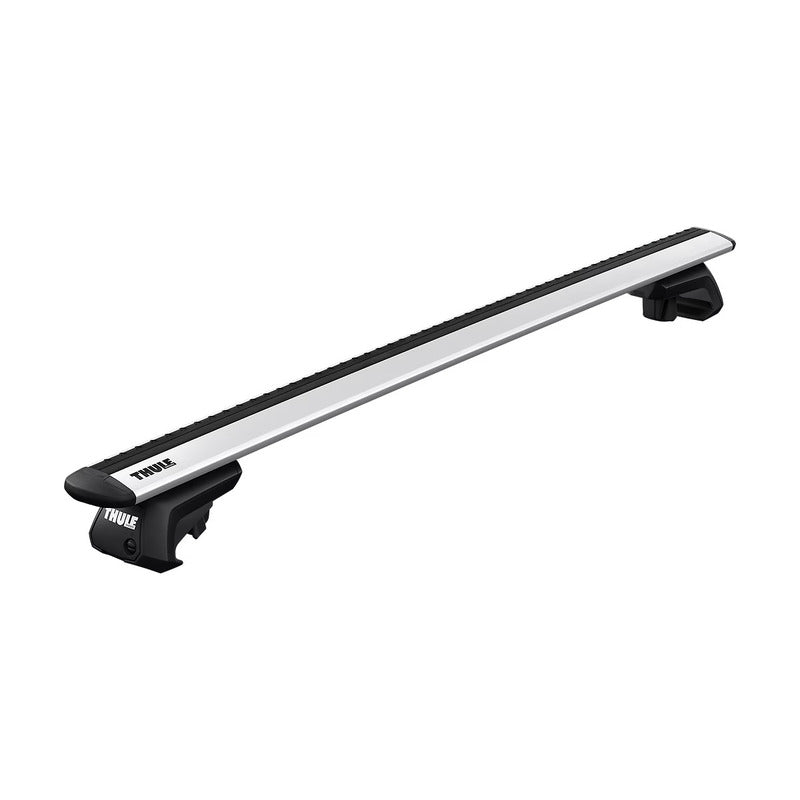
Crossbars Quick Definition: Two or three parallel bars mounted across the roof, designed as attachment points for specific rack accessories like bike carriers, cargo boxes, or kayak racks.
Roof Rack Terminology Explained: Clearing Up the Confusion
The roof rack industry uses inconsistent terminology that confuses buyers. Let's clarify the most common terms:
- Roof Rails: The longitudinal bars running front-to-back along your roof edges. Often factory-installed. They're the foundation that crossbars attach to.
- Crossbars / Roof Bars / Load Bars: All the same thing—horizontal bars running side-to-side across the roof.
- Platform Rack / Flat Rack / Full-Length Rack: Interchangeable terms for racks that cover most of the roof.
- Basket Rack: A platform rack with raised side rails around the perimeter.
- Roof Rack System: The complete setup including mounting hardware, bars/platform, and any accessories.
⚠️ Common Confusion: Many people say "roof rack" when they mean "crossbars" or vice versa. In this guide, we use "platform rack" to mean the full-coverage system and "crossbars" to mean the two-bar system. Understanding this distinction is crucial when shopping.
6 Key Differences Between Platform Racks and Crossbars
The platform rack vs crossbars decision boils down to six core differences. Understanding these determines which system matches your needs.
1. Coverage Area and Surface Space
Platform racks cover 70-90% of your roof with a continuous surface spanning 4-6 feet long and the full width of your vehicle. Crossbars occupy about 10-15% of roof space with two narrow bars typically 2-4 inches wide.
This fundamental difference affects everything else—weight, cost, versatility, and aerodynamics. Platform racks provide a "deck" you can strap anything to. Crossbars provide specific mounting points for accessories.
2. Mounting Flexibility and Accessory Compatibility
Platform racks offer unlimited mounting points. The entire platform surface has holes, slots, or channels where you can attach gear anywhere. Strap down a cooler here, bolt an awning there, mount recovery boards in another spot—all simultaneously. Nothing needs to be "compatible" with your platform—if it fits, strap it down.
Crossbars limit you to mounting accessories specifically designed for crossbar systems. You need a Thule bike rack made for Thule crossbars, a Yakima cargo box compatible with Yakima bars. Cross-brand compatibility exists but varies. Every accessory must be "crossbar-compatible."
3. Weight: System Weight and Load Capacity
Platform racks weigh 60-120 pounds depending on size and construction. A full-size Prinsu rack for a Tacoma weighs about 85 pounds. This empty weight counts against your vehicle's roof capacity before you add any gear.
Crossbars weigh 15-30 pounds for a pair. Thule WingBar Evo crossbars weigh about 18 pounds total—dramatically lighter.
For load capacity, platform racks handle 300-800 pounds dynamic load (while driving). High-end racks from Prinsu and Sherpa support up to 1,000+ pounds static load (parked). Crossbars typically max out at 150-220 pounds dynamic load.
Understanding Dynamic vs Static Load: Dynamic load is the weight your rack can safely carry while driving. Static load is the weight it can hold when parked (such as people sleeping in a roof top tent). Always check both ratings and never exceed your vehicle's roof capacity, which is usually the limiting factor. Source: NHTSA vehicle safety standards
4. Aerodynamics and Fuel Economy Impact
Crossbars create minimal wind resistance when empty. Modern aerodynamic crossbars from Thule and Yakima are designed in wind tunnels to minimize drag and noise. Expect a 0.5-1 MPG reduction in fuel economy with empty crossbars.
Platform racks act like a billboard on your roof. They catch wind, create noticeable noise at highway speeds, and reduce fuel economy even when empty. Expect a 1-3 MPG drop with an empty platform rack. Add gear on top and the impact increases.
Over a year of typical driving (15,000 miles at $3.50/gallon), that 2 MPG difference costs approximately $350 in extra fuel. This is a real ongoing cost to consider.
5. Price: Initial Cost Comparison
Crossbars cost $150-$500 for quality systems from Thule, Yakima, or Rhino Rack. Budget options start around $100 but aren't recommended for heavy use.
Platform racks cost $800-$2,000+ depending on brand, size, and features. A Prinsu rack runs $1,200-$1,800. Front Runner Slimline II costs $800-$1,400. Sherpa racks fall in the $900-$1,500 range.
That's a 3-5x price difference for the base system before adding any accessories. This is the single biggest decision factor for most buyers.
6. Purpose and Ideal Use Case
Platform racks are purpose-built for overlanding, expedition travel, and mounting multiple gear types simultaneously. They're designed for self-reliant adventure travel where you need to carry diverse equipment—roof top tent, awning, recovery gear, fuel, water, tools, and camp supplies all at once.
Crossbars excel at specific recreational activities—biking, skiing, kayaking, or hauling cargo boxes. They're designed for weekend recreation with one or two primary activities. Take your bikes to the trailhead on Saturday, swap to the ski carrier for Sunday.
Platform Rack vs Crossbars: Complete Comparison Table
Here's everything compared side-by-side so you can see exactly how these systems stack up across 15 critical factors.
| Feature | Platform Racks | Crossbars | Winner |
|---|---|---|---|
| Price Range | $800 - $2,000+ | $150 - $500 | Crossbars |
| Empty Weight | 60 - 120 lbs | 15 - 30 lbs | Crossbars |
| Load Capacity (Dynamic) | 300 - 800 lbs | 150 - 220 lbs | Platform |
| Load Capacity (Static) | 600 - 1,000+ lbs | 450 - 660 lbs | Platform |
| Installation Time | 2 - 4 hours (2 people) | 30 - 60 min (1 person) | Crossbars |
| Fuel Economy Impact | -1 to -3 MPG (empty) | -0.5 to -1 MPG (empty) | Crossbars |
| Wind Noise | Moderate to High | Low to Moderate | Crossbars |
| Mounting Flexibility | Unlimited - mount anywhere | Limited - requires accessories | Platform |
| Accessory Compatibility | Universal - strap anything | Brand-specific required | Platform |
| Roof Top Tent Mounting | Excellent - more mounting points | Good - works for most tents | Platform |
| Vehicle Clearance Impact | +5 to +8 inches | +2 to +4 inches | Crossbars |
| Ease of Removal | Difficult (2-4 hours) | Easy (15-30 minutes) | Crossbars |
| Garage Clearance | Often won't fit | Usually fits | Crossbars |
| Best For | Overlanding, RTTs, multiple gear types | Bikes, skis, kayaks, cargo boxes | Depends |
| Typical Buyer | Serious overlanders, expedition travelers | Weekend warriors, recreational users | Depends |
When to Choose Platform Roof Racks
Platform racks aren't for everyone. But if you fit any of these profiles, they're probably the right choice.
You're Building an Overland Rig or Expedition Vehicle
If you're setting up for overlanding, expedition travel, or multi-day backcountry trips, platform racks are the foundation of your roof system. They provide the space and mounting flexibility you need for awnings, recovery boards, fuel cans, water storage, lighting, and a roof top tent.
Crossbars can't handle the diversity and simultaneous mounting of gear overlanders carry. You need a platform.
You're Mounting a Roof Top Tent
Most roof top tents mount well on either system, but platform racks offer advantages. While some RTT manufacturers like Roofnest argue crossbars are sufficient (and they are for basic tent mounting), platform racks provide more mounting points, better weight distribution, and crucially—space for additional gear alongside your tent.
If you're investing $1,500-$3,500 in a quality RTT and plan to mount accessories like awnings, lights, or recovery gear, a proper platform rack makes sense. See our detailed comparison in the RTT mounting section below.
You Need Maximum Load Capacity
Platform racks handle 300-800 pounds of dynamic load (while driving). High-end racks from Prinsu and Sherpa support up to 1,000+ pounds static (parked). This capacity matters when you're hauling a roof top tent (120-180 lbs), awning (50-80 lbs), recovery gear (40 lbs), fuel (60 lbs), and water (40 lbs) simultaneously.
Crossbars max out around 165-220 pounds dynamic. That's enough for a tent alone, but not a complete overland setup.
You Want True Mounting Versatility
Platform racks let you mount anything anywhere without worrying about compatibility. Strap down a cooler, bolt on an awning, attach recovery boards, mount lights, secure jerry cans—all at once, all wherever you want on the platform.
There's no "Will this accessory fit my crossbars?" question. If it fits on the platform, strap it down. This flexibility is invaluable for overlanders who constantly adapt their gear loadout.
✓ Platform Rack Advantages
- Maximum load capacity (300-800 lbs dynamic)
- Unlimited mounting flexibility
- Ideal for roof top tents + accessories
- Handles diverse gear simultaneously
- Built for overlanding and expedition use
- Extremely durable construction
- Rugged aesthetic appeal
- Better weight distribution for heavy loads
✗ Platform Rack Drawbacks
- High cost ($800-$2,000+)
- Heavy (60-120 lbs empty weight)
- Reduced fuel economy (1-3 MPG loss)
- Increased wind noise at highway speeds
- Difficult installation (2-4 hours, 2 people)
- May not fit in standard garages
- Difficult to remove when not needed
- Permanent-looking addition to vehicle
When to Choose Crossbars
Crossbars are the smarter choice for specific use cases. Here's when they make more sense than platform racks.
You Have Specific Recreational Activity Needs
If you bike on weekends, ski in winter, or kayak in summer, crossbars with dedicated accessories handle these activities perfectly. A Thule or Yakima crossbar system with a bike rack, ski carrier, and kayak saddles covers 95% of recreational needs.
You don't need a $1,500 platform rack to haul two mountain bikes or a cargo box. Crossbars do it better and cheaper.
Budget Is a Primary Concern
Quality crossbars cost $200-$400. Add a cargo box ($300-$600) or bike rack ($200-$400), and you're still under $1,000 total for a complete system.
Platform racks start at $800 and often exceed $1,500 before adding any accessories. For many buyers, this $800-$1,200 savings is significant.
Fuel Economy Matters
If you commute daily or take long road trips, every MPG counts. Aerodynamic crossbars reduce fuel economy by 0.5-1 MPG when empty. Platform racks drop it 1-3 MPG even without cargo.
Real-world cost example: 15,000 miles/year at 20 MPG vs 18 MPG (2 MPG loss) with gas at $3.50/gallon = $291/year extra fuel cost. Over 5 years, that's $1,455 in additional fuel expenses.
You Need Easy Removal
Most crossbar systems remove in 15-30 minutes when not in use. Take them off for daily driving, reinstall for weekend adventures. This keeps your vehicle cleaner, quieter, and more fuel-efficient when you're not using the rack.
Platform racks can be removed, but it's a 2-4 hour job requiring two people. You won't want to repeat this often, so platform racks essentially become permanent.
✓ Crossbar Advantages
- Affordable ($150-$500)
- Lightweight (15-30 lbs)
- Easy installation (30-60 min, solo-friendly)
- Minimal fuel economy impact (0.5-1 MPG)
- Low wind noise (aerodynamic designs)
- Easy to remove when not needed
- Perfect for bikes, skis, kayaks, cargo boxes
- Fits in most garages
- Excellent aftermarket accessory ecosystem
✗ Crossbar Drawbacks
- Lower weight capacity (150-220 lbs dynamic)
- Limited mounting points
- Requires brand-specific accessories
- Can't handle diverse gear simultaneously
- Less ideal for roof top tents
- Accessory compatibility issues between brands
- Not built for serious overlanding
Roof Top Tent Mounting: Platform Rack vs Crossbars
This is one of the most searched questions: "Do I need a platform rack for my roof top tent, or will crossbars work?"
The short answer: Most roof top tents mount on either crossbars OR platform racks. Both work. But there are important differences.
How RTTs Mount to Each System
Roof top tents come with mounting channels or tracks on the bottom. Most use U-bolts or universal clamps to attach to:
- Crossbars: The tent clamps directly to two (or three) crossbars spaced 30-48 inches apart. The tent needs a minimum 30-inch spacing between bars for safe mounting.
- Platform racks: The tent typically clamps to the platform's crossbars (most platforms have 3-6 crossbars built in), or you can flip the tent upside down and remove some platform crossbars for an ultra-low-profile mount.
Factory Crossbars Warning: Many factory/OEM crossbars are NOT rated for roof top tents. They're designed for light cargo (bikes, skis, cargo boxes under 100 lbs). Check your vehicle's manual for dynamic load rating. If it's under 150 lbs, you need aftermarket crossbars or a platform rack. Source: Thule roof rack specifications
The "Mounting a Platform to a Platform" Debate
Roofnest founder Tim Nickles famously said platform racks for RTTs are "mounting a platform to a platform" and therefore overkill. His argument: Your RTT already has a strong aluminum floor (600+ lbs capacity), so you don't need another platform beneath it. Just use strong aftermarket crossbars.
He's right IF you're ONLY mounting a roof top tent with nothing else. In that scenario, quality crossbars save you $800-$1,500 and work perfectly.
He's wrong IF you want to mount accessories alongside your tent—an awning, recovery boards, lights, jerry cans, or a cargo box. Platform racks provide the space and mounting points crossbars can't.
Platform Rack Advantages for RTT Mounting
- More mounting points: Platform racks typically have 3-6 crossbars vs. 2 on a crossbar-only system. This distributes tent weight better.
- Space for accessories: Mount your awning, lights, and recovery gear on the same platform, in front of or behind your tent.
- Better weight distribution: The platform's full-length design spreads weight across more of the roof structure.
- Future-proofing: If you upgrade to a larger tent or add more gear, the platform handles it.
Crossbar Advantages for RTT Mounting
- Cost savings: $800-$1,500 saved vs. buying a platform rack
- Lighter weight: 60-100 lbs lighter than platform racks
- Better fuel economy: Less aerodynamic penalty
- Easier installation: 1-hour install vs. 2-4 hours for platforms
- Garage clearance: Lower profile—more likely to fit in your garage
💡 Our Recommendation: Crossbars are sufficient if the tent is your only roof cargo. Choose a platform rack if you plan to mount awnings, recovery gear, lights, or other accessories alongside your tent. Don't pay for features you won't use, but don't cheap out if you'll regret it six months later.
Total Cost Breakdown: Platform Rack vs Crossbars System
Let's break down real-world costs for each system, including common accessories and ongoing expenses.
Platform Rack Total System Cost
Here's what you'll spend building out a complete platform rack system:
- Platform rack (Prinsu, Sherpa, Front Runner): $800 - $2,000
- Awning (180° or 270°): $300 - $800
- LED light bar or pods: $100 - $400
- Recovery board mounts: $50 - $150
- Jerry can or rotopax mounts: $100 - $200
- Cargo basket or box: $150 - $400
- Professional installation (optional): $150 - $400
- Annual extra fuel cost (1.5 MPG loss @ 15k miles): $219/year
Total Platform System Cost (Year 1): $1,869 - $4,769 (including accessories + first year fuel penalty)
That's before adding a roof top tent ($1,500-$3,500).
Crossbars Total System Cost
Here's a complete crossbar system with popular accessories:
- Crossbars (Thule, Yakima, Rhino Rack): $200 - $500
- Bike rack (holds 2-4 bikes): $200 - $500
- Cargo box (16-20 cubic feet): $300 - $700
- Kayak/paddleboard carrier: $150 - $300
- Ski/snowboard carrier: $150 - $350
- Professional installation (if needed): $50 - $150
- Annual extra fuel cost (0.75 MPG loss @ 15k miles): $109/year
Total Crossbar System Cost (Year 1, with 2-3 accessories): $859 - $2,159
That's 50-70% less than platform rack systems in year one, and the lower fuel cost continues every year.
5-Year Total Cost Comparison:
Platform rack system: $2,969 - $5,869 (initial cost + 5 years fuel penalty)
Crossbar system: $1,404 - $2,704 (initial cost + 5 years fuel penalty)
Savings with crossbars: $1,565 - $3,165 over 5 years
Best Roof Rack System by Vehicle Type
Different vehicles work better with different rack systems. Here's our vehicle-specific guidance.
Toyota Tacoma: Platform Rack Territory
The Tacoma is the quintessential overland platform, and most serious Tacoma owners eventually choose platform racks. The roof dimensions (about 60" wide x 72" long on Double Cab) are perfect for racks from Prinsu or Sherpa.
Best choice: Prinsu Design Studio Tacoma rack ($1,299-$1,599) if overlanding. Yakima or Thule crossbars ($300-$450) if you only need bikes/cargo box.
Toyota 4Runner: Either Works Well
The 4Runner's large roof (about 60" x 84") accommodates either system beautifully. Factory roof rails make crossbar installation easy. The roof's high load capacity (about 700 lbs static) supports platform racks well.
Best choice: Crossbars for weekend warriors and bike/ski haulers. Platform rack if mounting a roof top tent plus accessories.
Jeep Wrangler: Crossbars Usually Win
Wranglers have limited roof space, especially 2-door models. The removable hardtop makes permanent platform racks less practical. Most Wrangler owners choose crossbars that work with both hardtop and soft top.
Best choice: Rhino Rack or Thule crossbars compatible with factory hardtop mounting points. Platform racks only for 4-door models planning serious overlanding.
Subaru Outback/Crosstrek: Crossbars Only
These adventure wagons come with excellent factory roof rails. Their roof capacity (about 176 lbs dynamic for most models) makes platform racks impractical—they'd weigh 60-100 lbs, leaving minimal capacity for cargo.
Best choice: Quality aftermarket crossbars (Thule, Yakima) to replace factory bars. Perfect for bikes, small cargo boxes, or lightweight roof top tents.
Decision Flowchart: Platform Rack or Crossbars?
Answer these questions in order to determine which system you need:
Question 1: What's your primary use?
Question 2: How much roof cargo?
Question 3: What's your budget?
🎯 Final Reality Check:
If you're still unsure: Start with crossbars. They're cheaper, easier to install, and work for 80% of users. You can always upgrade to a platform rack later if your needs change. Going the other direction (platform→crossbars) means eating a big loss on resale.
Best Platform Racks and Crossbars for 2026
Now that you know which type you need, here are the best products in each category.
Best Platform Racks 2026
1. Prinsu Design Studio Roof Racks
Prinsu racks are the gold standard for platform racks. Their full-length racks feature:
- Laser-cut aluminum construction (incredibly strong, surprisingly light)
- Vehicle-specific designs for Tacoma, 4Runner, Tundra, Jeep models
- 100% bolt-on installation (no drilling required on most models)
- Powder-coated finish in multiple colors
- Integration with Prinsu cab racks and bed racks
- 500-800 lb dynamic weight capacity
Price: $1,200 - $1,800 depending on vehicle
Best for: Toyota truck and SUV owners who want premium quality
Shop: Browse Prinsu racks at Off Road Tents
2. Sherpa Equipment Co. Roof Racks
Sherpa racks offer similar quality to Prinsu at slightly lower prices:
- Aircraft-grade aluminum construction
- Vehicle-specific mounting systems
- Integrated accessory mounting channels
- Low-profile design (better aerodynamics than some competitors)
- 400-600 lb weight capacity
Price: $900 - $1,500
Best for: Budget-conscious overlanders who won't compromise quality
Shop: Browse Sherpa racks at Off Road Tents
Best Crossbars 2026
1. Thule WingBar Evo
Thule's flagship crossbars combine aerodynamics with strength:
- Extremely quiet thanks to wing-shaped design
- 165 lb dynamic capacity
- Compatible with all Thule accessories
- TrailEdge system for easy accessory attachment
- Sleek, modern appearance
Price: $350 - $450
Best for: Those who prioritize aerodynamics and low noise
2. Yakima JetStream Bars
Yakima's premium crossbars rival Thule in every category:
- Wind-tunnel tested for minimal noise
- 220 lb dynamic capacity (highest in class)
- Compatible with Yakima's extensive accessory line
- Tool-free installation
Price: $320 - $420
Best for: Maximum weight capacity in a crossbar system
Installation Difficulty: Platform Racks vs Crossbars
Installation difficulty differs dramatically between these systems.
Installing Platform Racks
Time required: 2-4 hours
People needed: 2 (strongly recommended)
Difficulty: Moderate to Advanced
Professional installation cost: $150-$400
Installing Crossbars
Time required: 30-60 minutes
People needed: 1
Difficulty: Easy
Professional installation cost: $50-$150 (rarely needed)
Frequently Asked Questions: Platform Rack vs Crossbars
Can you mount a roof top tent on crossbars?
Yes, most roof top tents mount perfectly on quality aftermarket crossbars. You need crossbars rated for at least 150 lbs dynamic load, spaced 30-48 inches apart. Brands like Thule, Yakima, and Rhino Rack make crossbars specifically rated for roof top tents. Factory/OEM crossbars often aren't strong enough—always check your vehicle's load rating. While platform racks offer more mounting points and space for accessories, crossbars work great if the tent is your only roof cargo.
Which is better for fuel economy, platform racks or crossbars?
Crossbars are significantly better for fuel economy. Aerodynamic crossbars reduce MPG by 0.5-1 when empty. Platform racks decrease fuel economy by 1-3 MPG even without cargo because they create much more wind resistance. Over 15,000 miles per year at $3.50/gallon, a 2 MPG difference costs approximately $291 annually in extra fuel. This ongoing cost adds up significantly over the life of the rack.
Are platform racks worth the extra cost over crossbars?
Platform racks are worth it if you're building an overland rig, mounting a roof top tent with accessories, need maximum load capacity (300+ lbs), or want unlimited mounting versatility. They're not worth it if you only need to haul bikes, skis, or a cargo box occasionally. Match the rack to your actual use case—don't overspend on capability you won't use. The $800-$1,500 price difference is significant and should align with your needs.
Can I install a platform rack myself or do I need professional help?
You can install most platform racks yourself, but you'll need a helper due to the weight (60-120 lbs). Installation takes 2-4 hours and requires basic tools. Brands like Prinsu and Sherpa design racks for bolt-on installation without drilling on most vehicles. If you're not mechanically inclined, professional installation costs $150-$400 and ensures proper mounting. Crossbars, by comparison, are easy DIY projects taking 30-60 minutes solo.
How much weight can platform racks hold compared to crossbars?
Platform racks handle 300-800 lbs dynamic (while driving) and up to 1,000+ lbs static (parked). Crossbars handle 150-220 lbs dynamic and 450-660 lbs static. This is a significant difference. If you're hauling heavy gear like roof top tents (120-180 lbs), awnings (50-80 lbs), recovery boards (40 lbs), and fuel/water (100 lbs), you need a platform rack's capacity. Always check your vehicle's roof capacity, which is usually the limiting factor.
Do platform racks fit in standard garages?
Platform racks add 5-8 inches to your vehicle's height, which can prevent garage entry if clearance is tight. Measure your garage door height and your vehicle's roof height before purchasing. Standard garage doors are 7 feet tall, but interior clearance varies. Crossbars add only 2-4 inches and usually fit in standard garages. This is a practical consideration many buyers overlook until they can't park in their garage anymore.
Which rack type creates more wind noise?
Platform racks create moderate to high wind noise that's always present, even when empty, due to their large surface area and multiple crossbars catching wind. Crossbars produce low to moderate noise depending on design—modern aerodynamic models from Thule and Yakima are remarkably quiet. If noise bothers you during daily driving and you don't need platform rack capability, crossbars are objectively the better choice.
Can you mount bike racks on platform racks?
Yes, but it's not ideal. Platform racks allow you to strap bikes down or bolt bike mounting points to the platform, but dedicated bike racks designed for crossbars work better and protect bikes more effectively. If biking is your primary activity, crossbars with a purpose-built bike rack are the smarter system. If you bike occasionally but need a platform for other uses like overlanding, the platform works fine with some creativity.
What's the difference between a platform rack and a basket rack?
A basket rack is simply a platform rack with raised side rails around the perimeter. The rails prevent cargo from sliding off and provide additional tie-down points. Some manufacturers like Prinsu and Sherpa offer side rails as add-on accessories to their flat platform racks. Brands like Gobi and Baja Rack build integrated basket designs with fixed rails. Functionally, they're the same system—the basket just adds containment for loose cargo.
Can I use factory/OEM crossbars for a roof top tent?
Usually no. Most factory crossbars are rated for 100-150 lbs dynamic load, designed for light cargo like bikes or small cargo boxes. Roof top tents weigh 120-180 lbs before occupants. Check your vehicle owner's manual for the exact dynamic load rating. If it's under 165 lbs, you need aftermarket crossbars rated for heavier loads (like Thule or Yakima heavy-duty bars rated to 220 lbs) or a platform rack. Never exceed your vehicle's roof capacity regardless of what rack you use.
Making Your Final Decision: Platform Rack or Crossbars?
The platform rack vs crossbars decision ultimately comes down to honest self-assessment of your actual needs (not aspirational Instagram dreams).
Choose Platform Racks If:
- You're building an overland or expedition vehicle for serious adventure travel
- You need to mount a roof top tent plus multiple accessories (awning, lights, recovery gear)
- You require maximum load capacity (300+ lbs dynamic, 600+ lbs static)
- You want to mount diverse gear types simultaneously without compatibility concerns
- You value the overlanding aesthetic and vehicle appearance
- Budget allows $800-$2,000+ for the rack alone
- You understand and accept the fuel economy penalty (1-3 MPG loss)
Choose Crossbars If:
- You have specific recreational activity needs (biking, skiing, kayaking, cargo box)
- Budget is limited to $200-$500 for the rack system
- Fuel economy matters significantly to you (daily driving, long commutes)
- You want easy installation (30-60 min, solo-friendly) and removal
- Garage clearance is limited or important
- Wind noise bothers you during daily driving
- You don't need serious overlanding capability
- You're only mounting a roof top tent without other accessories
There's no universal "better" choice. The right roof rack is the one that matches your actual use case, fits your budget, and meets your vehicle's capabilities.
Don't buy a platform rack because it looks cool if crossbars meet your needs. Don't cheap out on crossbars if you genuinely need platform rack capability and will regret it six months later.
Ready to Equip Your Roof?
Whether you choose a platform rack or crossbars, we carry the best brands and provide expert advice to help you build the perfect setup for your adventure vehicle.
Questions? Call us at 844-200-3979 or email info@offroadtents.com