Overlanding Lights: Complete Guide to Off-Road Lighting
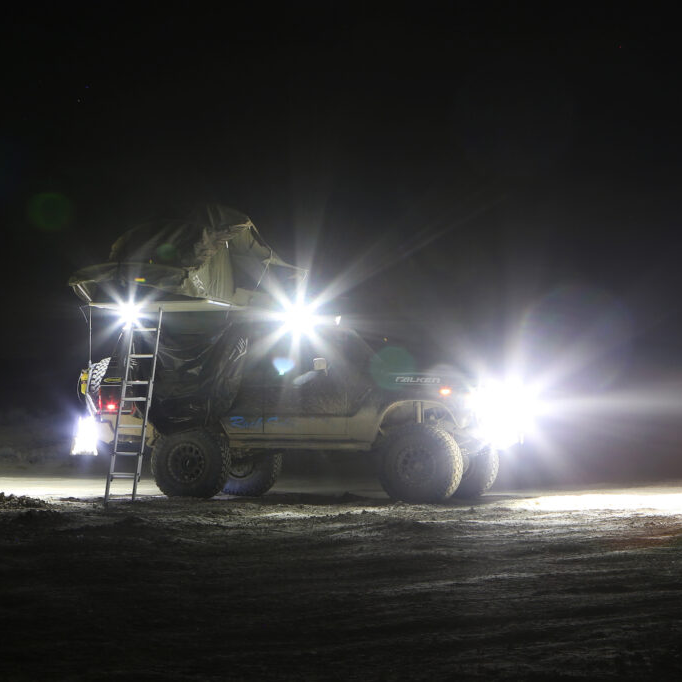
There’s something about driving down a remote trail at dusk that makes you appreciate good lighting. I learned this lesson the hard way on a trip through the Mojave when my factory headlights left me squinting at shadows. That experience kicked off what became a deep dive into overlanding lights. Whether you’re building out your first overland rig or upgrading an existing setup, lighting is one of those modifications that pays dividends every single trip. Overlanding lights provide enhanced visibility, making nighttime travel and camp setup safer and easier.
The right overland lighting setup transforms how you use your vehicle, extends your travel hours, and makes camp life more enjoyable. A well-lit path created by proper lighting solutions increases safety and confidence during nighttime adventures. Many overlanders come to love their lighting setups for the convenience and enjoyment they bring to every trip.
What Are Overlanding Lights?
Overlanding lights are aftermarket lights designed specifically for off-road travel and vehicle-based adventure. Unlike standard headlights, these are purpose-built to handle rough terrain, extreme weather, and the unique lighting needs of spending days on the trail. Think of them as specialized tools in your overland toolkit.
These lights come in all shapes and sizes—light bars, driving lights, ditch lights, rock lights, and camp lights. Each serves a distinct purpose. Scene lighting is another specialized LED solution designed to illuminate campsites and work areas, enhancing safety and functionality during nighttime activities. The beauty of modern overlanding lights is that they’ve become incredibly reliable, built to take abuse and keep working when you need them most.
Why Lighting Matters for Off-Road Adventures
Good lighting isn't just nice to have on overland vehicles—it's a safety feature. Factory headlights are designed for paved roads and street speeds, optimized for seeing a few hundred feet ahead on smooth pavement. Take that same setup onto a rocky two-track at night, and you'll quickly realize how inadequate they are.
Better visibility means spotting obstacles sooner. That rock that would've caught your skid plate? You see it 50 feet earlier with proper driving lights. There's also the fatigue factor—driving in poor lighting conditions is exhausting. Good overlanding lights reduce eye strain significantly.
And let's not forget about camp. When you roll into your spot after dark, having proper utility lights makes setup infinitely easier. No more fumbling with headlamps while trying to pitch a tent or cook dinner.
The Evolution of Overland Lighting
Back in the day, if you wanted aftermarket lights, you were basically limited to halogen fog lights or maybe some roof-mounted KC lights. These ate up power, generated tons of heat, and honestly weren't that much better than stock.
Then LEDs changed everything. Suddenly you could get incredible light output from a compact package that barely drew any power. Modern overland lights are brighter, more durable, more efficient, and surprisingly affordable. Companies like Rigid Lights and KC Lights have pushed innovation forward, and there are quality options at every price point.
Light Bars: The Heavy Hitters

A light bar is a long bar housing multiple LED lights in a single unit. They're the most recognizable type of overlanding lights, usually mounted on the roof, front bumper, or grille. Light bars excel at throwing light far down the trail—hundreds of feet of visibility in some cases.
They come in lengths ranging from about 10 inches up to 50 inches or more. Most light bars use a combination of spot and flood LED chips to create a combo beam pattern, giving you both distance and width in your lighting. Installation typically requires mounting brackets specific to your vehicle.
Straight vs. Curved Light Bars
Straight light bars are the traditional style. They mount flat and work great for most applications. Curved light bars became popular because they wrap around your vehicle's contours better, theoretically giving better light distribution to the sides.
I've run both, and straight bars are typically the better value. The curved ones look cool, but you're usually paying extra for aesthetics without major performance gains. That said, certain mounting locations benefit from curved bars if you're mounting to a curved bumper or following a roof rack's curve.
Where to Mount Your Light Bar
Roof mounting is probably the most common approach for overland lighting setup purposes. Get that bar up high, and you've got an incredible field of view. The downside is that height creates glare in dusty or foggy conditions.
Bumper mounting keeps lights lower and can reduce dust glare. You'll sacrifice some distance, but for tight trails or technical driving, lower mounted lights often work better. Some folks mount light bars to grille guards or in the grille itself—a stealthy option that keeps the lights protected.
Then there are folks who run multiple light bars—one on the roof for open terrain, one on the bumper for technical stuff. If your electrical system can handle it, there's merit to this approach.
Choosing the Right Size Light Bar
Bigger isn't always better. A light bar that extends past your mirrors can catch branches on tight trails and creates weird lighting angles. For most full-size trucks and SUVs, something in the 30 to 40-inch range hits a sweet spot. Smaller vehicles do well with 20 to 30-inch bars.
Consider your actual use case. If you're mostly on forest roads and established trails, you don't need the same lighting as someone running across wide-open desert at speed.
Driving Lights: Purpose-Built Visibility
Driving lights are auxiliary lights designed specifically to improve forward visibility while driving. They're typically round or rectangular pods, mounted in pairs. The term "driving lights" actually has a legal definition in many places—they're meant to supplement your high beams.
Most driving lights for overlanding use either spot or combo beam patterns, designed to throw light far down the trail for higher speeds on rough roads. Quality driving lights like those from Rigid Lights or KC Lights can genuinely transform night driving.
Spot vs. Flood vs. Combo Beam Patterns
Understanding beam patterns is crucial for getting the right overlanding lights for car applications. Here's how each pattern performs:
Spot Beams:
-
Focused and tight concentration
-
Throw light far down the trail (300+ feet)
-
Great for high-speed desert running or open terrain
-
Limited peripheral illumination
Flood Beams:
-
Spread light wide but don't reach as far
-
Illuminate the area immediately around your vehicle
-
Perfect for tight trails where you need to see beside you
-
Ideal for technical crawling and camp areas
Combo Beams:
-
Best of both worlds—spot pattern in center, flood on edges
-
Most versatile choice for varied terrain
-
Provides distance while lighting up periphery
-
Recommended for most overlanding applications
For most overlanders, combo patterns are the most versatile choice. You get enough distance to drive confidently while also being able to see obstacles to the sides.
Ditch Lights: Filling the Blind Spots

Ditch lights are a specific type of driving light mounted high on the A-pillars of your vehicle. They got their name from rally racing, where they illuminate the ditches beside the road. For overlanding, ditch lights are game-changers—they fill in the blind spots that even good headlights and light bars miss.
Mounting them up high on the A-pillars creates the ideal angle. The light comes from above and forward, eliminating shadows that lower-mounted lights create behind obstacles. Ditch lights are particularly valuable on tight trails when you're weaving between trees or picking your way through rocks.
Most people run flood or combo patterns in their ditch lights. You want width here, not distance. The goal is to light up what's immediately beside and in front of you.
Mounting Driving Lights Effectively
Driving lights need to be mounted where they can actually do their job. Bumper mounting is classic and effective. Get them mounted as wide as your bumper allows, and aim them properly.
For ditch lights specifically, A-pillar mounts are the way to go. You can buy vehicle-specific brackets that bolt right up, or there are universal options that clamp onto most roof racks. Whatever mounting location you choose, make sure the lights are secure—off-road vibration is relentless.
Aim is critical and often overlooked. Take the time to properly aim your lights. Too high and you're blinding oncoming traffic. Too low and you're just lighting up the ground in front of your bumper.
Utility Lights: The Workhorses
Utility lights are the catch-all category for smaller auxiliary lights that serve specific purposes. These are the lights that make camp life easier. Unlike driving lights that are all about forward visibility, utility lights illuminate your immediate surroundings.
Most utility lights are compact LED pods or strips. They draw minimal power but put out impressive light for their size. You'll typically see utility lights mounted in wheel wells, under bumpers, on sliders, inside rooftop tents, or under awnings.
Pod Lights: Small but Mighty
Pod lights are small, usually square or round auxiliary lights that pack serious punch for their size. Most pods range from 2 to 4 inches across. Despite their compact size, quality pods can put out impressive lumens.
Pods work great as reverse lights, giving you clear visibility when backing up to a campsite or down a tight trail. They're also popular as rock lights. The compact form factor makes them ideal for tucking into tight spaces where you need directional light.
Rock Lights: Lighting the Undercarriage

Rock lights are small LED lights mounted underneath your vehicle to illuminate the ground and obstacles directly around your tires. They might seem like overkill until you use them once. When you're picking your way through a boulder field at night, rock lights let you see the exact line your tires will take.
Most rock lights are small, durable LED units in weatherproof housings. They mount to your frame, sliders, or axles, pointing downward and outward. They're also surprisingly useful around camp—that ambient light under your vehicle creates a nice glow.
Amber rock lights are increasingly popular. The amber light temperature doesn't attract bugs as badly as white light, which is a real consideration when camping.
Awning and Camp Lights
Awning lights mount to your vehicle's awning and provide overhead lighting for your camp area. Most awning lights are LED strips that run the length of your awning. They're usually dimmable and might have multiple color options.
The goal with camp lighting is creating a comfortable, functional space without blinding yourself or your neighbors. Diffused, moderate light is better than harsh spotlights. Beyond awning lights, there are standalone camp lights you can hang from trees, mount to poles, or place on tables.
Many people also run interior lighting strips inside their overland vehicles. If you're sleeping in your rig or have a camper setup, good interior lighting makes everything easier.
Light Temperature and Color: More Than Aesthetics

Light temperature is measured in Kelvin and describes the color of the light. This isn't just an aesthetic choice—different color temperatures have functional differences. Lower Kelvin numbers (around 3000K) produce warm, yellowish light. Higher numbers (6000K and up) produce cool, bluish-white light.
The standard "white" LED light most driving lights use is usually around 5000K to 6000K. This produces a bright, neutral white that's similar to daylight. Your eyes are pretty adaptable, but different light temperatures do affect how you perceive contrast and depth.
The Case for Amber Lights
Amber lights have become increasingly popular in overland lighting setups for solid reasons. The big advantage of amber lights is their performance in dust, fog, and precipitation. The longer wavelength of amber light penetrates these conditions better than white light.
If you've ever driven in dense fog with white LED lights, you know the problem—the light reflects off water droplets, creating a wall of glare. Amber light reduces this effect significantly. The same principle applies to dust.
Amber lights are also gentler on your night vision. White light, especially the bluish-white of high-Kelvin LEDs, suppresses your natural night vision more than amber does. Many experienced overlanders run amber lights as their primary forward lighting or as dedicated fog lights.
Amber vs. White: Making the Choice
White lights are better for pure visibility in clear conditions. They provide better color recognition, which helps you read terrain accurately. For technical trail driving on a clear night, white is usually superior.
Amber excels in compromised visibility—fog, dust, rain, or snow. Some lights come with switchable covers that let you convert white lights to amber, giving you flexibility without needing two complete sets of lights.
When to Choose White:
-
Clear weather conditions
-
Technical trail driving requiring color accuracy
-
Maximum distance and visibility
-
Urban/suburban driving where dust is minimal
When to Choose Amber:
-
Frequent dust conditions (desert, dry trails)
-
Fog-prone areas
-
Rain or snow
-
Preserving natural night vision
-
Reducing bug attraction around camp
Consider your typical terrain and weather. Desert runners deal with dust constantly—amber makes sense. Pacific Northwest overlanders encounter fog regularly—amber again. Running mostly clear weather on established roads? White is probably fine.
Technical Specifications Decoded
When you start shopping for the best overlanding lights, you'll encounter specifications that sound complex. Let's break down what actually matters and what's just marketing noise. The specs tell you how a light performs, how much power it draws, and how long it'll last.
Lumens vs. Lux: Understanding Light Output
Lumens measure the total amount of light a source emits—it's a raw output number. Lux measures light intensity at a specific distance, telling you how much light actually reaches a particular spot. This is often more relevant for overlanding lights.
A light can have high lumens but poorly focused optics, resulting in mediocre lux at distance. When manufacturers advertise lumen numbers, take them with a grain of salt. Lux readings are more honest if provided, but they should include the distance at which they were measured.
Don't get too caught up in raw numbers. Look at beam pattern photos, read reviews from actual users, and if possible, see the lights in action before buying.
LED Technology Advantages
LEDs have completely taken over the aftermarket lights market for good reasons:
-
Power Efficiency: Produce more light per watt than halogen or HID. Critical for overlanders managing limited battery capacity.
-
Low Heat Generation: Run cool compared to halogens that get hot enough to cook on. Extends life and reduces heat damage risk.
-
Extreme Durability: No filament to break means excellent vibration resistance. Perfect for washboard and rough trail abuse.
-
Exceptional Lifespan: Tens of thousands of hours vs. hundreds for halogens. You'll likely never replace them during vehicle ownership.
-
Instant-On: Full brightness immediately when switched on. No warm-up period like HIDs require.
-
Compact Size: Smaller housings allow for more flexible mounting options and better aerodynamics.
For overlanding applications, LED technology is the clear winner across all metrics that matter.
IP Ratings: Protection Levels Explained
IP ratings tell you how well a light is protected against dust and water. The rating consists of two numbers: IP67, IP68, IP69K, etc.
|
IP Rating |
Dust Protection |
Water Protection |
Overland Suitability |
|
IP65 |
Dust protected |
Water jets |
Minimum - not recommended |
|
IP67 |
Dust-tight |
Immersion to 1m |
Good - acceptable minimum |
|
IP68 |
Dust-tight |
Continuous immersion |
Better - recommended |
|
IP69K |
Dust-tight |
High-pressure/temp washdown |
Best - overkill for most |
The first digit rates dust protection on a scale of 0 to 6. For overlanding lights, you want a 6, which means completely dust-tight. The second digit rates water protection from 0 to 9. Most quality overlanding lights are rated 7 (immersion to 1 meter) or 8 (continuous immersion beyond 1 meter).
IP67 is the minimum you should consider. IP68 is better and common on quality lights. Breather vents are important—as lights heat and cool, air inside expands and contracts. Look for lights with Gore-Tex or similar breathable membranes.
Power Draw and Electrical Considerations
Every light you add draws power from your vehicle's electrical system. Understanding amp draw helps you plan your overland lighting setup without overloading circuits or draining batteries. Amperage (amps) is what you need to pay attention to. Multiply amps by voltage (12V for most vehicles) to get watts.
Add up all your lights' amp draws to understand total load. A big light bar might pull 15-20 amps. Add ditch lights, rock lights, and camp lights, and you can easily be drawing 30+ amps when everything's on. Your vehicle's alternator must be able to handle this load while also charging batteries and running other systems.
Fusing is critical. Every light or group of lights should be on an appropriately sized fuse. Consider your battery capacity if you plan to run camp lights for extended periods with the engine off.
Building Your Overland Lighting System
Approaching your lighting as a complete system rather than individual purchases leads to better results. A good overland lights setup is modular—you don't need to install everything at once. Start with the essentials and add specialty lights as budget and needs dictate.
Think about your typical trips. Someone doing mostly forest trails has different lighting needs than someone running open desert at night. Budget realistically—quality lights aren't cheap, but they last.
Essential Lights for Every Overland Rig
If you're building from scratch, here's the priority order I recommend:
Priority 1 - Primary Forward Lighting:
-
Light bar (30-40" for full-size, 20-30" for compact rigs)
-
OR pair of quality driving lights with combo beam
-
This is your foundation—invest here first
Priority 2 - Peripheral Lighting:
-
Ditch lights or auxiliary forward pods
-
Fill in blind spots and improve trail confidence
-
Dramatically enhance situational awareness
Priority 3 - Reverse Lights:
-
Pair of pods on rear bumper
-
Makes backing into camp or down trails safer
-
Often overlooked but incredibly practical
Priority 4 - Basic Camp Lighting:
-
Awning light or LED strip
-
Makes evening camp chores easier
-
Doesn't need to be elaborate to be functional
Priority 5 - Rock Lights (Optional):
-
Nice to have for serious technical trails
-
Great ambient camp lighting as bonus
-
Can wait until other priorities are covered
Getting adequate forward visibility is the foundation. Everything else builds from there.
Planning Your Electrical System
Before you start bolting lights onto every available surface, take time to plan the electrical side. Map out where each light or group of lights will connect. Will you run individual wires to a switch panel? Use a relay harness?
Switch placement matters. You want to control your lights easily while driving. Many people use a switch panel mounted within reach of the driver's seat. Wire sizing is critical for safety and performance. Most light bar kits include appropriate gauge wire, but if you're building custom, use a wire gauge calculator.
Consider a relay setup rather than switching heavy loads directly through your switches. Relays handle the high amperage while your switches just trigger the relay. Label everything as you go—future you will appreciate it.
Mixing Brands: Does It Matter?
You'll see overlanders running all one brand of lights or mixing different manufacturers. Both approaches work fine. The advantage of sticking with one quality brand like Rigid Lights or KC Lights is consistency in build quality, beam patterns, and color temperatures.
That said, mixing brands based on what each does best is perfectly valid. Maybe one company makes the best light bars while another excels at compact pods. Don't feel obligated to buy everything from one manufacturer just because you bought their light bar.
Where brand does matter is in warranty service and replacement parts. If you have multiple light types from one manufacturer and need warranty service, dealing with one company is simpler.
Installation: DIY or Professional?
Installing overlanding lights ranges from straightforward bolt-on jobs to complex electrical work. Your mechanical aptitude and available tools determine whether DIY makes sense. Basic installations—mounting a light bar to an existing roof rack or adding pods to a pre-drilled bumper—are well within most people’s capabilities. With many setups, you can conveniently flick a switch to control your lights, making it easy to adjust lighting functions on the go.
More complex installations involving wire routing through the firewall, setting up relay systems, or fabricating custom mounts might warrant professional help. The electrical side is where most DIYers get nervous, but if you understand basic 12V systems, most lighting installations are manageable.
Basic Installation Steps
Most light installations follow similar patterns. You're mounting the light, running wiring to power, setting up switching, and testing everything. Start with mounting—follow manufacturer instructions for torque specs and hardware. Lock-tite on mounting bolts prevents vibration loosening.
Wire routing comes next. Keep wires away from hot exhaust components, sharp edges, and moving parts. Use protective loom where wires might chafe. Protect wiring at connection points with dielectric grease on connections.
Ground connections are often overlooked but critical. A poor ground causes all sorts of problems. Clean ground points down to bare metal and use star washers to maintain contact. Testing before final button-up saves frustration.
Wiring and Switch Setup
Most quality light kits include a wiring harness with a relay, fuse, and switch. The basic setup runs power from your battery to a relay. A switched source powers the relay coil. When you flip your switch, it energizes the relay, which then sends battery power to your lights.
This setup keeps high amperage loads away from your switches and prevents draining your battery when the vehicle is off. Some folks prefer switch panels that consolidate all auxiliary controls in one spot.
Placement of switches should be intuitive. Group lights by function—all forward lights together, all camp lights together. Labeling switches isn't just smart for you—it helps anyone else who might drive your rig.
Professional Installation: When It's Worth It
Complex installations with extensive wiring, integration with existing vehicle systems, or permanent mounting that requires drilling into body panels might warrant professional installation. If you're adding lights to a new truck that's under warranty, professional installation with proper documentation protects that warranty.
Custom fabrication for mounts or integration into aftermarket bumpers is another area where professional help makes sense. The peace of mind from professional installation has value. Costs vary widely depending on complexity and location.
Choosing the Right Lights for Your Setup
With hundreds of light options available, choosing the right ones for your overland vehicles can feel overwhelming. Start by honestly assessing your needs. Are you building a serious expedition vehicle for remote travel? Or a weekend warrior that sees maintained forest roads?
Your budget plays a role, obviously. But so does your vehicle type, typical travel conditions, and how much you value different features.
Budget vs. Premium: What's the Difference?
The gap between budget lights and premium brands like Rigid Lights or KC Lights isn't just price—it's engineering, materials, and reliability. Premium lights use better LED chips that produce more consistent light and last longer. They have superior optics that create clean beam patterns.
Build quality shows in the details. Premium lights have thick, well-machined housings, robust mounting brackets, and quality wiring. Budget lights often look decent initially but reveal their shortcomings over time—housings crack, lenses fog up, mounting tabs break.
Warranties reflect manufacturer confidence. Premium brands typically offer multi-year warranties. That said, the budget market has improved significantly. I'd suggest spending money on your primary driving lights where reliability and performance matter most.
Key Features to Prioritize
Certain features are worth paying attention to regardless of which best overlanding lights you're considering:
Non-Negotiable Features:
-
IP67 or higher waterproofing rating
-
Breather vents to prevent condensation
-
Quality optics (not just LEDs behind clear lenses)
-
Proper gauge wiring and connectors
Highly Recommended Features:
-
Adjustable mounting brackets
-
Built-in relay and fuse harness
-
Swappable lens covers (clear/amber)
-
Multi-year warranty from reputable manufacturer
Nice-to-Have Features:
-
Dimming capability (especially for camp lights)
-
Multiple beam pattern options
-
Integrated wiring with weather-sealed connectors
-
Vehicle-specific mounting solutions
Waterproofing is non-negotiable—stick with IP67 or better. Adjustable mounts give you flexibility in aiming your lights properly. Quality optics make or break a light's performance, so look for lights with actual designed reflectors or lenses. Built-in wiring harnesses with relays and fuses show attention to proper installation.
Brand Recommendations Worth Considering
|
Brand |
Price Point |
Best For |
Notable Features |
|
Rigid Lights |
Premium |
Serious expeditions, reliability |
Industry-leading optics, lifetime warranty options |
|
KC Lights |
Mid to Premium |
Versatile applications |
Wide product range, proven track record |
|
Baja Designs |
Premium |
Racing-inspired builds |
Extreme durability, maximum output |
|
Diode Dynamics |
Mid-Range |
SAE-compliant needs |
Street-legal options, excellent pods |
|
Nilight |
Budget |
Weekend warriors |
Good value for less critical applications |
Premium Tier (Worth the Investment):
-
Rigid Lights are often considered the gold standard in off-road lighting. Expensive but performance and reliability justify the cost for serious overlanders.
-
KC Lights have been in the game forever and make excellent products across various price points. Their HiLites series offers great value while their Pro6 range competes with anyone.
-
Baja Designs is another premium choice popular with the racing crowd. Their lights are engineered for extreme abuse and perform accordingly.
Mid-Range Options (Solid Performers):
-
Diode Dynamics focuses on LED technology and makes excellent pod lights and light bars. Their SAE-compliant fog lights are particularly well-regarded.
Budget Tier (Decent Value):
-
Nilight offers surprisingly good lights at budget prices. Not in the same league as premium brands but offering solid value for less critical applications.
Whatever brand you choose, buy from reputable dealers to ensure genuine products with valid warranties. Counterfeit lights are common, especially for popular brands.
Special Considerations for Different Vehicles
Not all overland vehicles have the same lighting needs or installation challenges. Understanding your specific vehicle's quirks helps you choose appropriate lights and plan installations effectively.
Trucks and Body-on-Frame SUVs
Full-size trucks and SUVs are the most common overland platforms, and they're generally easy to outfit with lights. Plenty of mounting options, robust electrical systems, and abundant aftermarket support. Roof rack mounting is straightforward on most trucks.
Bumper options abound. Aftermarket bumpers often include light mounting provisions. The big electrical systems in these vehicles handle substantial lighting loads easily. Ground clearance on lifted rigs gives you flexibility in low-mounted light placement.
Vans and Van-Based Campers
Vans have become hugely popular overlanding platforms, but lighting them well requires different thinking. Mounting locations are more limited and roof penetrations are concerning. Roof-mounted lights on vans often require racks or crossbars as mounting points.
Front mounting on factory bumpers is challenging since most van bumpers aren't designed for aftermarket lights. Awning lights and rear work lights are particularly useful on van builds. Interior lighting matters more in van builds than truck-based rigs.
Compact and Mid-Size Vehicles
Smaller overland vehicles like Jeeps, 4Runners, or mid-size trucks need scaled-down lighting solutions. Shorter light bars in the 20 to 30-inch range work better visually and functionally. Weight becomes more significant on smaller vehicles.
Smaller alternators mean less available power for accessories. Be realistic about how many lights your electrical system can support without upgrades. The aftermarket for popular platforms like Wranglers and Tacomas is huge, making finding vehicle-specific mounting solutions easy.
Real-World Usage Tips
Having great lights is one thing. Using them effectively is another. There are techniques and etiquette considerations that separate thoughtful overlanders from those who give the rest of us a bad reputation.
Trail Etiquette with Bright Lights
The golden rule: don't blind oncoming traffic. Here are the essential etiquette rules every overlander should follow:
When Approaching Other Vehicles:
-
Switch off auxiliary lights well before meeting oncoming traffic
-
Dim to low beams just like on paved roads
-
Be proactive—don't wait for them to flash you
When Following Others:
-
Aim lights to avoid blinding drivers ahead through mirrors
-
Temporarily switch off brightest lights if needed
-
Maintain proper following distance to reduce glare
At Camp:
-
Be aware of where lights are pointing before switching on
-
Avoid lighting up neighbors' tents accidentally
-
Use rock lights and ground lighting instead of high-mounted floods
-
Position yourself to minimize light pollution when working late
General Guidelines:
-
Light bars should only run in high-beam situations
-
Rock lights are generally camp-friendly since they're low-level
-
Use headlamps for personal tasks instead of vehicle floodlights
-
Respect quiet hours and sleeping neighbors
Light bars and auxiliary driving lights should only be on when appropriate—high-beam situations where you're alone on the trail or leading a group. When you encounter oncoming traffic, kill your auxiliary lights before they start flashing their lights at you.
Maximizing Light Effectiveness
Aim your lights properly for the terrain you're on. What works on open desert doesn't work in tight forest. Use appropriate beam patterns for the situation—spot beams for open high-speed sections, flood or combo for technical low-speed trails.
Switch to amber lights in dust, fog, or rain. The performance difference is real. Clean your lights regularly—mud-covered lights don't work well. Check your lights before trips, as vibration can loosen mounting hardware.
Managing Power Consumption
Running multiple lights for extended periods drains batteries quickly. Be strategic about what lights you actually need to have on. If you’re stopped for more than a few minutes, shut down unnecessary lights.
Consider the alternator load when driving. Running every light you own while climbing a steep trail in low range might tax your charging system. For extended camp lighting needs, auxiliary batteries are worth considering.
LED efficiency helps tremendously. You can run modern LED camp lighting for surprisingly long periods on reasonable battery capacity. Switch panels with individual circuit control let you manage power intelligently. Using exterior lighting can also save your headlamp batteries during overland trips, emphasizing energy efficiency and convenience.
Maintenance and Longevity
Quality overlanding lights last for years with minimal maintenance, but they do need some attention. Most maintenance is simple—cleaning, checking connections, verifying mounts. Knowing what to look for helps catch small problems before they become big ones.
Cleaning and Care
Wash your lights when you wash your vehicle. Dried mud and dust act like insulation, trapping heat and reducing light output. For stubborn dirt, use mild soap and water with a soft cloth. Avoid harsh chemicals that might damage lenses or housings.
Check lens condition regularly. Scratches from trail debris reduce light output and can create weird beam patterns. Inspect seals and o-rings when cleaning—look for cracks, compression, or missing sections.
Wire connections at the lights themselves need occasional attention. Corrosion can build up even with dielectric grease. Clean and re-grease connections annually.
Common Issues and Solutions
Condensation inside lights is annoying but usually manageable. It often results from temperature swings rather than seal failure. If condensation appears, leaving the light on for a while sometimes helps dry it out.
Flickering lights usually indicate wiring issues. Check connections, look for chafed wires, and verify ground points are clean and tight. Dimming lights might mean voltage drop from undersized wire or poor connections.
Physical damage from trail debris happens. Broken lenses or housings usually mean replacement. If an LED fails (rare with quality lights), it usually means the entire light needs replacement.
When to Replace vs. Repair
Some problems are worth fixing. Others mean it's replacement time. Damaged mounts or brackets are usually repairable if the light itself is fine. Broken wiring external to the light is fixable.
Internal failures—LED burnout, driver circuit problems, major seal failure—usually mean replacement. The cost of repair exceeds replacement for most lights. Obsolete lights might be worth replacing even if working, as newer LED technology offers better performance.
Advanced Lighting Setups
Once you've covered the basics, there are advanced lighting options that add capabilities beyond standard setups. Not everyone needs advanced features, but knowing what's possible helps you decide if any fit your use case.
Dimming and Control Systems
Basic on-off switching works fine, but dimming capability adds versatility especially for camp lighting. Many modern LED lights support pulse-width modulation (PWM) dimming, letting you adjust brightness smoothly.
Dimmer switches can be simple rotary dials or fancy electronic controls. For camp lighting, dimming is legitimately useful. You want bright light for cooking, dimmer ambient light for hanging out, and very dim light for moving around without disturbing people.
Remote controls via smartphone apps are available for certain lighting systems. Convenient but adds complexity and potential failure points.
Motion-Activated and Sensor Lights
Motion sensors on camp lights can be handy. You approach your rig at night, lights come on automatically. This works best for perimeter lighting around your vehicle.
Timer functions are useful for camp lights. Set them to turn off after 30 minutes so you don't accidentally drain batteries. Dusk-to-dawn sensors automate interior or awning lighting.
These automated features are nice-to-have rather than essential. Simple manual switching works fine for most people and has fewer things to potentially fail.
Legal Considerations and Regulations
Aftermarket lights exist in a weird legal gray area in many places. Understanding the relevant regulations helps you stay legal while building your ideal overland lighting setup. Laws vary significantly by location.
Auxiliary Light Regulations
Federal regulations in the US specify that auxiliary driving lights must turn off when low beams are selected. Many states have restrictions on colors—blue lights are typically prohibited for civilian vehicles.
Height restrictions exist in some jurisdictions. Number of forward-facing lights is sometimes regulated. The reality is enforcement varies widely. Some areas strictly regulate auxiliary lights. Others don't care as long as you're not blinding other drivers.
Light bars on roof racks generally aren't issues when off, but using them on public roads can draw attention. Many overlanders only use lights on private land or trails.
Off-Road Use vs. Street Legal
Many overlanding lights are sold as "off-road use only." Technically, if a light isn't SAE or DOT approved, it's not legal for street use in the US. In practice, enforcement is inconsistent.
If staying strictly legal matters to you, look for SAE/DOT markings on lights. Most overlanders take a pragmatic approach—they install quality lights, use them responsibly, and don't worry excessively about technical legality.
The key is not being a nuisance. Use your lights appropriately, don't blind other drivers, and avoid running every light you own on busy roads.
Insurance and Liability Concerns
Adding aftermarket lights generally doesn't affect insurance, but there are considerations. If lights are professionally installed and don't compromise vehicle safety, insurers typically don't care. Document your installations with receipts and photographs.
If an accident involves your auxiliary lights, you could face liability. Using lights responsibly protects you legally. Some insurance policies have clauses about modifications—read your policy and inform your insurer about major modifications.
Making Your Decision
You've got the knowledge. Now it's time to decide what overland lighting setup makes sense for your specific situation. There's no universal right answer—your ideal setup depends on your vehicle, typical travel style, budget, and personal preferences.
Assessing Your Needs Honestly
Start by thinking about when and where you actually drive at night. If you rarely travel after dark, extensive lighting might be overkill. Consider your typical terrain—open desert runners need different lighting than forest trail explorers.
Be realistic about budget. It's better to buy fewer quality lights than lots of cheap ones. Think about installation complexity you're comfortable with. Camp lighting needs vary by how you camp.
Building Your Plan
Create a prioritized list of lights you want. What's essential? What's nice-to-have? Price out your list realistically, including all components. Plan a timeline—you don't need everything immediately.
Research specific products for your shortlist. Read reviews from actual users. Consider buying a complete kit for your vehicle if available—vehicle-specific kits include proper mounts and instructions.
Taking the First Step
Don't get paralyzed by options. Pick something reasonable, buy it, and install it. Start with primary forward lighting—a quality light bar or set of driving lights transforms night driving immediately.
Add lights progressively based on what gaps you discover. Join overlanding communities and ask questions. Remember that lighting is reversible—if you don't like something, you can change it.
Conclusion
Building out the perfect overland lighting setup is part science, part art, and part personal preference. The most important thing is having lighting that lets you confidently handle whatever conditions you encounter. Whether that's a simple light bar and ditch lights or an elaborate system with every type of light imaginable, the right setup for you is the one that works for your adventures. Take your time, buy quality where it matters, and don't be afraid to experiment.