
How to Install an Awning on a Roof Rack (Step-by-Step Guide)
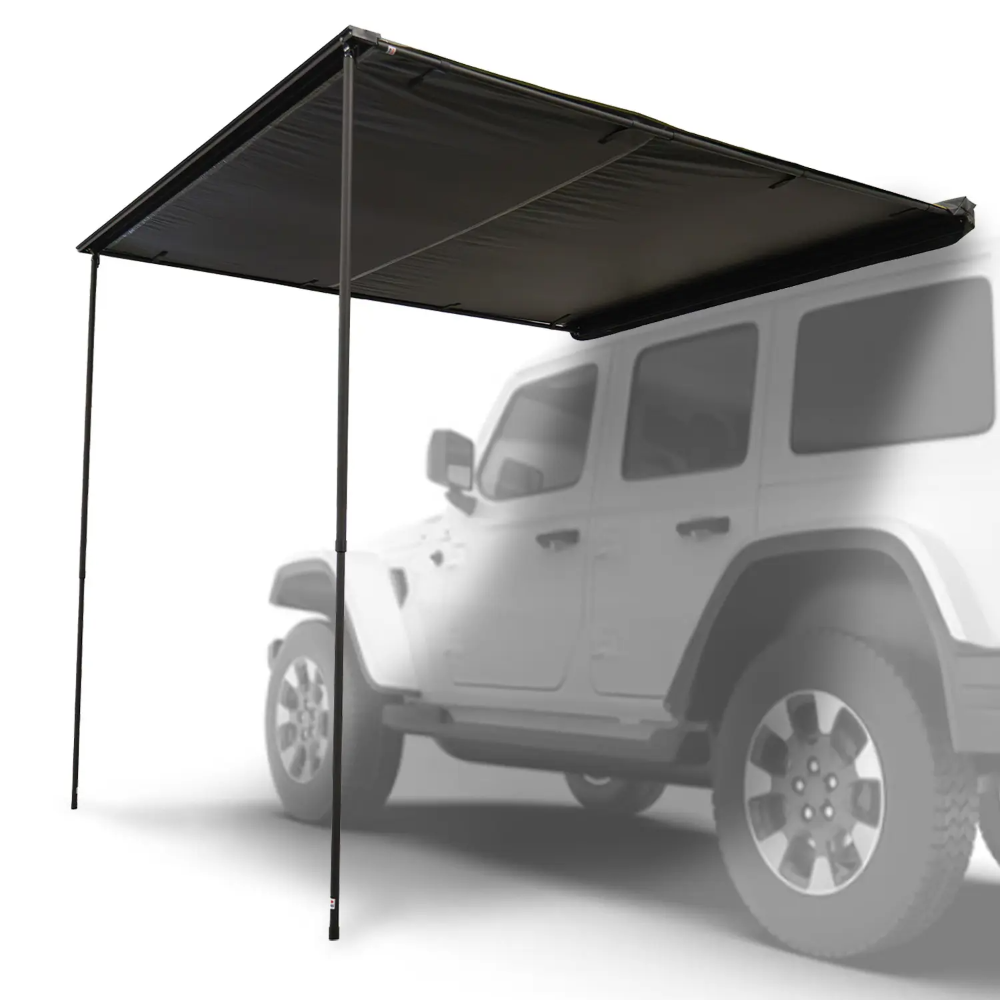
Quick Answer: Installing an awning on a roof rack takes 15–30 minutes with basic hand tools. The process involves attaching L brackets to the awning's backing channel, positioning those brackets on your roof rack or cross bars using T-bolts, clamps, or drill holes (depending on your rack type), lifting the awning into place with a friend, bolting it down, and verifying clearance with every door, tailgate, and hood opening before tightening. You'll need wrenches (typically 13mm), the mounting hardware that came with your awning, and possibly a drill if your rack doesn't have T-slot channels. Always use thread-locking compound on bolts and re-check torque after 1,000 miles.
This is a job most people overthink. Installing an awning on a roof rack is one of the simplest vehicle modifications you can do — no wiring, no cutting, and in most cases, no drilling. If you can bolt together flat-pack furniture, you can install an awning. The entire process is: attach brackets to the awning, position the awning on the rack, bolt it down, and verify everything clears when you open your doors. That's it.
Where people run into trouble isn't the installation itself — it's the fit between their specific awning brackets and their specific roof rack. The hardware that ships with your awning is designed to work with most racks, but "most" doesn't mean "yours." This guide walks you through the complete process of how to install awning on roof rack systems of every type, covers the clearance and overhang rules that prevent problems, explains what to do when the included hardware doesn't fit, and shares practical tips that keep your awning secure over thousands of trail miles.
📞 Need installation help? Call us at 844-200-3979. We'll walk you through the install for whichever awning you bought — from us or from anyone else.
Before You Start: What You Need
Tools
Most awning installations require nothing beyond basic hand tools. Here's what to have ready before you unbox anything:
Wrenches or a socket set (13mm is the most common bolt size for awning brackets), Allen keys (some awning kits use hex bolts), a measuring tape, a pencil or marker, and thread-locking compound (Loctite blue or equivalent). If your rack doesn't have T-slot channels, you may need a drill with the appropriate bit size for your bolts — typically 8mm. A step stool or ladder helps if your vehicle is tall. And bring a friend — two people make the lift easier and prevent scratching your rack or vehicle paint during positioning.
Check Your Rack's Weight Capacity
Before you install anything, verify that your roof rack or cross bars can handle the additional weight. The combined weight of the awning and whatever else you've mounted (roof top tent, cargo basket, solar panel) must not exceed your vehicle manufacturer's dynamic load capacity, which is typically 150–165 lbs for factory roof rails. Aftermarket platform racks from Front Runner, Prinsu, and Eezi-Awn handle significantly more — often 300–500+ lbs dynamic — but you still need to check. An awning weighing 25–75 lbs sounds light, but it's being added to one side of a rack that may already be carrying 100+ lbs of other gear. Do the math before you start.
Read the Instructions
This sounds obvious, but most installation problems come from skipping the manufacturer's instructions. Every awning brand has slightly different bracket designs, bolt sizes, and torque specs. The general process is the same across brands, but the details matter — especially bolt length, washer sequence, and which direction the L bracket faces. Spend five minutes reading the sheet before you pick up a wrench.
Three Ways to Mount an Awning to a Roof Rack
The way you attach your awning brackets to the rack depends entirely on what kind of rack you have. There are three methods, and the right one is dictated by your hardware — not your preference.
Method 1: T-Slot Channel Mounting (No Drilling)
If your roof rack or cross bars have a T-slot channel running along the top — a narrow groove with an opening narrower than the cavity below — you can mount your awning without drilling a single hole. This is the simplest, cleanest method and the one most overlanders end up using.
How it works: slide T-bolts (included with most awning kits) into the channel at the position where you want the brackets. Place the awning brackets over the T-bolts so the bolt heads poke through the bracket holes. Add washers and nylon-insert lock nuts on top, and hand-tighten. You now have a secure, adjustable mounting point that you can reposition by loosening the nuts and sliding the T-bolts along the channel. Platform racks from Front Runner (Slimline II), Eezi-Awn (K9), Rhino-Rack, and most aftermarket aluminum cross bars use T-slot channels.
The advantage: no permanent modification to your rack, fully adjustable positioning, and easy removal if you want to take the awning off seasonally. The disadvantage: T-bolts can work loose from road vibration if you don't use thread-locking compound. Always apply Loctite blue or equivalent to T-bolt threads before final tightening.
Method 2: Drill-Through Mounting
If your rack doesn't have T-slot channels — common on factory roof rails, some steel roof baskets, and older rack systems — you'll need to drill holes through the rack to mount the awning brackets. This sounds intimidating, but it's straightforward if you take your time.
How it works: position the brackets on the rack where you want them. Use the bracket holes as a template to mark your drill points with a pencil or center punch. Remove the brackets. Drill pilot holes first, then step up to the final bolt diameter (typically 8mm). Deburr the holes with a file to remove sharp edges. Place the brackets back, insert bolts from the top, add washers and nylon-insert lock nuts underneath, and tighten. Seal the holes with a dab of silicone or clear sealant to prevent water from pooling inside hollow rack tubes.
The advantage: the strongest possible connection — bolts through metal can't slide or shift. The disadvantage: permanent holes in your rack. Measure twice, drill once. If you plan to sell the rack later or remove the awning permanently, you'll have holes that need plugging.
Method 3: Clamp-On / U-Bolt Mounting
Some awning kits include U-bolts or clamp brackets designed to wrap around round or square cross bars without drilling. This is common with universal mounting kits for factory roof bars and tube-style crossbars from Yakima and Thule.
How it works: the U-bolt wraps around the crossbar, passes through the awning bracket, and is secured with nuts on the other side. The clamp squeezes the bracket against the bar using friction. To protect the bar from scratches, place a strip of rubber foam between the clamp and the bar surface before tightening.
The advantage: no drilling, works on round and square bars, fully removable. The disadvantage: clamps can slip under heavy lateral load (wind, bumps) if not torqued properly. They're also the bulkiest mounting method visually. For lightweight side awnings (20–35 lbs), clamps work fine. For heavier 270-degree awnings (50–75 lbs), T-slot or drill-through mounting provides better long-term security.
| Mounting Method | Drilling? | Removable? | Strength | Best For |
|---|---|---|---|---|
| T-Slot Channel | No | Yes — fully adjustable | High | Aftermarket platform racks, aluminum cross bars |
| Drill-Through | Yes | Semi-permanent | Highest | Factory rails, steel baskets, racks without channels |
| Clamp-On / U-Bolt | No | Yes | Moderate | Factory cross bars, round/square tube bars |
Step-by-Step Installation
This process applies to the majority of side-pull, 180-degree, and 270-degree awnings. Your specific awning's instructions may vary slightly — always defer to the manufacturer's guide for bolt sizes and torque specs.
Step 1: Assemble the Brackets
Unbox your awning carefully — use a knife on the cardboard, not the awning cover. Inside, you'll find the awning itself and an accessory bag containing L brackets, bolts, nuts, washers, and sometimes T-bolts or spacers. Lay everything out and confirm nothing is missing before you start. If your kit uses stainless steel L brackets, attach them loosely to the awning's backing channel first. Most awnings have a channel (a narrow slot) running along the back of the case — slide the bolts into this channel and loosely attach the brackets so they can still slide left and right. Don't tighten yet.
Step 2: Position the Brackets on Your Rack
This is where spacing and overhang matter. There are two rules to follow:
Rule 1: Spread the brackets as far apart as possible. Wider bracket spacing distributes the awning's weight more evenly across the rack and reduces stress on any single point. For a standard side awning, use two brackets positioned near each end of the awning case. For a 270-degree awning that's 2.5 meters or longer, use three brackets instead of two — the added center bracket provides critical extra support for the heavier batwing structure.
Rule 2: Keep the overhang under control. The awning should not extend more than about 27 inches past the rear bracket or the front bracket. You can calculate this: (Distance between brackets − length of awning) ÷ 2 = overhang per side. Too much overhang creates a lever arm that puts excessive stress on the brackets and rack during driving — especially on rough roads where vibration amplifies every force.
Step 3: Check Clearances
Before you tighten a single bolt, open every door on your vehicle — driver door, passenger doors, rear doors, tailgate, and hood. Ensure that the awning case, brackets, and any protruding bolt heads will not make contact with any of them. This is the step most people skip, and it's the one that causes the most regret. An awning case that rubs against your door every time you open it will scratch paint, damage the awning cover, and drive you crazy. If clearance is tight, reposition the awning forward or backward along the rack until everything swings freely.
For 270-degree awnings, also check that the rear section of the awning case clears the tailgate or hatch when fully open. The batwing wraps around the rear of the vehicle, and the case often sits close to the tailgate hinge line.
Step 4: Lift, Position, and Bolt Down
This is where you need a friend. Awnings weigh 20–75 lbs depending on type, and lifting one overhead onto a roof rack solo risks dropping it on your vehicle or yourself. Have one person lift while the other guides the brackets into position on the rack. If you're using T-slot mounting, slide the T-bolts into the channels first, then lower the bracket holes over the bolt heads. If you're using drill-through mounting, align the bracket holes with the pre-drilled holes in the rack and insert bolts from the top. If you're using U-bolt clamps, wrap them around the crossbar and through the bracket.
Hand-tighten all nuts first — don't torque anything down until you've confirmed the position is correct and all clearances check out. Once everything looks good, tighten the nuts to the manufacturer's specified torque. If no torque spec is provided, tighten until snug plus a quarter turn — you want firm, not stripped. Apply thread-locking compound (Loctite blue) to every bolt thread before final tightening. Adding grease to the threads of bolts that you may need to remove later (like seasonal awning removal) makes them easier to undo without seizing — but don't grease bolts that also get thread-lock, as grease prevents the compound from curing. Use one or the other: thread-lock for permanent installs, grease for bolts you plan to remove regularly.
Step 5: Add Spacers If Needed
Some installations require spacers between the bracket and the rack surface. Spacers serve two purposes: they prevent the awning case from rubbing directly against the rack (which causes scratching and noise), and they provide clearance for the awning cover zipper to open without catching on the rack's surface. If your awning kit includes spacers, use them. If it doesn't but you notice the awning sits too close to the rack, add rubber washers or a thin strip of rubber foam between the bracket and the rack. This simple addition prevents a lot of long-term wear and annoying rattles.
Step 6: Deploy and Test
With the awning bolted down, deploy it fully. Unzip the cover, release the internal straps, pull the fabric out, extend the legs, and set it up as if you're at camp. Check for three things:
Does the fabric unroll smoothly without catching on brackets, bolts, or the rack? If it snags, reposition the awning slightly or add spacers.
Do the legs reach the ground at the right angle? On taller vehicles, you may need to adjust telescoping legs to their full extension. On lower vehicles, you may need to shorten them so the fabric doesn't drape too close to the ground.
Is the awning stable? Grab the deployed fabric edge and pull it — side to side, up and down. There should be no play between the awning and the rack. If you feel movement, something is loose. This is the "jiggle test" — and if it fails, re-torque your bolts before driving anywhere.
Installing a 270-Degree Awning: What's Different
The basic process is the same, but 270-degree awnings have a few additional considerations that don't apply to straight-pull or 180-degree models.
Three brackets instead of two. A 270 awning is longer and heavier than a side pull. The additional weight and the cantilevered rear section create more stress on the mounting points. Using three brackets — front, center, and rear — distributes this load properly. Most 270 awning kits include hardware for two brackets, which means you may need to buy a third bracket separately. Don't skip it. Two brackets on a heavy 270 awning is asking for bracket failure or rack damage on rough roads.
Side-specific mounting. Most 270 awnings are designed for either the driver's side or the passenger side — they're not interchangeable. The batwing arms fold in a specific direction, and mounting a passenger-side awning on the driver's side means the arms deploy the wrong way. Confirm your awning matches your intended mounting side before you start.
More weight on one side of the rack. A 270 awning puts 50–75 lbs on one side of your roof, creating an asymmetric load. On a heavily loaded rig, this shifts the center of gravity toward the awning side. It's not dangerous on pavement, but on off-camber trails and steep side-slopes, you'll feel the bias. Account for this when loading the rest of your rack — put heavier items (cargo box, extra fuel) on the opposite side to balance the load.
Rear clearance is critical. The rear section of a 270 awning sits behind the vehicle's roofline. On trucks with camper shells or SUVs with upward-opening hatches, the awning case can interfere with the hatch opening angle. Check this before tightening. Some overlanders mount the rear of the awning 2–3 inches forward of the rack's end to create clearance.
What to Do When the Included Hardware Doesn't Fit
This is the most common frustration people post about on overlanding forums — and it's fixable. The hardware that ships with your awning is designed to work with the most common rack configurations, but there are dozens of rack types out there. Here's what to do when things don't line up.
T-bolts don't fit your channel: T-slot dimensions vary between rack brands. If the T-bolts in your kit are too wide or too narrow for your rack's channels, source the correct size from a hardware store or from your rack manufacturer. Bring a sample T-bolt and your rack's channel dimensions — stainless steel T-bolts are available in most metric sizes.
L brackets don't align with your crossbar spacing: Slide the brackets along the awning's backing channel to match your crossbar positions. If the crossbars are too close together or too far apart, you can sometimes add a third bracket or reposition your crossbars on the rack's mounting rail. Don't compromise bracket placement to match a bad crossbar position — move the crossbars instead.
U-bolts are the wrong diameter: This happens often when mounting to non-standard bar shapes. Source U-bolts from a hardware store in the correct diameter for your bars. Stainless steel is ideal — it won't rust and won't damage powder-coated bars the way carbon steel can.
You need brackets your kit doesn't include: Universal awning brackets from Front Runner, ARB, and Rhino-Rack fit most rack systems and most awning brands. These are the go-to solution when your awning's included hardware wasn't designed for your specific rack. They run $50–$100 for a pair and solve most compatibility issues. Mechanical fasteners (bolts through metal) should always be prioritized over temporary solutions like zip ties, hose clamps, or wire — these are not safe mounting methods for highway use.
Post-Install: What to Check and When
Your awning is mounted. You've tested it at home. Now you need to maintain the install over time, because road vibration loosens hardware — it's not a question of if, but when.
After your first use: check every bolt and nut for tightness. Deploying and retracting the awning puts lateral forces on the brackets that driving alone doesn't. Hand-check with a wrench after your first camp trip.
After 1,000 miles: re-torque all mounting hardware. This is the interval most manufacturers recommend, and it catches bolts that have worked slightly loose from highway vibration and washboard roads. Mark a calendar or set a reminder.
Periodically thereafter: check nuts and bolts at the start of every trip, or at least every 3,000–5,000 miles. The bolts most likely to loosen are the T-slot bolts and the nylon lock nuts on L brackets — these take the most vibration on rough terrain. If you find a bolt that keeps loosening despite thread-locking compound, replace it with a fresh stainless steel bolt and a new nylon-insert lock nut. Nylon lock nuts lose their grip after being removed and reinstalled multiple times.
Guy ropes: once installed, always use the provided guy ropes when the awning is deployed. Even in calm conditions, an unexpected gust can stress the awning frame and transfer that force directly into your mounting brackets and rack. Guy ropes redirect wind load into the ground, protecting your hardware. Many people skip this step on calm days and only learn its importance after a bracket bends during an unexpected gust. Don't be that person.
Common Installation Mistakes
Not checking clearances before tightening. The #1 mistake. You bolt the awning down, feel proud, close your door — and hear metal scraping against the awning case. Now you have to loosen everything and reposition. Always open every door, the tailgate, and the hood before you commit to final torque.
Using only two brackets on a 270 awning. Two brackets are adequate for a 6-foot side awning weighing 25 lbs. Two brackets on a 65 lb 270-degree awning create excessive stress on each mounting point. Use three brackets for any awning 2.5 meters or longer.
Skipping thread-locking compound. Nylon lock nuts help, but they don't eliminate vibration-induced loosening entirely. Thread-locking compound on every bolt thread is cheap insurance against a catastrophic failure at highway speed. A loose awning that departs your vehicle on the highway is dangerous — for you and everyone behind you.
Over-tightening bolts. Enthusiasm with a ratchet strips bolt threads, cracks nylon lock nuts, and warps thin rack material. Tighten until snug plus a quarter turn — no more. If the bolt keeps spinning, you've stripped it. Replace the hardware.
Not accounting for the awning's weight on one side. This matters more on technical off-road terrain than on pavement. If your awning adds 60 lbs to the passenger side and you have nothing on the driver side, your rig will lean slightly under load. Balance what you can on the opposite side.
Can You Install an Awning Without a Roof Rack?
Technically, yes — but it depends on your vehicle. Some vehicles have factory cross bars or roof rails that are strong enough to support an awning directly. ARB awnings, for example, can be installed on factory cross bars or roof rails using the appropriate L bracket or clamp system. If your vehicle has factory-installed rails with sufficient weight capacity (check your owner's manual), you can mount an awning to them without adding a full aftermarket roof rack.
What you can't do is mount an awning to a bare roof with no structural mounting points. The awning needs a rigid connection to the vehicle's roof structure — something bolted through sheet metal or clamped onto a rail designed to bear load. Adhesive mounts, suction cups, and magnetic attachments are not safe mounting methods for any awning that will experience driving forces and wind loads.
If your vehicle has nothing on the roof, the simplest path is a pair of cross bars from Thule, Yakima, or Rhino-Rack. These bolt onto factory mounting points (rain gutters, fixed points, or flush rails) and give you a solid base for an awning — often for under $300. You don't need a full platform rack or basket just for an awning.
Frequently Asked Questions
How long does it take to install an awning on a roof rack?
With the right tools and a second person to help lift, most installations take 15–30 minutes. T-slot mounting is the fastest — often under 15 minutes once you've read the instructions. Drill-through mounting adds time for measuring, drilling, and sealing holes. 270-degree awnings with three brackets take slightly longer than side-pull awnings with two brackets. If it's your first time, budget 45 minutes to an hour including the clearance checks and test deployment.
Do I need to drill holes to install an awning?
Only if your rack doesn't have T-slot channels or a compatible clamp system. Most aftermarket platform racks and aluminum cross bars have T-slots that accept slide-in T-bolts — no drilling required. Factory roof rails without channels may require drilling. Check your rack type before purchasing an awning to know what mounting method you'll use.
Can one person install an awning alone?
It's possible, but not recommended. Lifting a 25–75 lb awning overhead onto a roof rack while keeping it aligned with mounting points is awkward and risks scratching your vehicle or dropping the awning. Two people make the job significantly easier and safer. If you must work alone, rest the awning on the rack first, then slide it into position from one end.
Which side should I mount the awning on?
In the US, the passenger side is most popular because it keeps your camp area away from traffic when parked roadside. The driver's side works better if your tailgate kitchen is on the left or if the passenger side is occupied by a roof top tent opening. For 270-degree awnings, the side choice also determines which direction the batwing wraps — make sure you order the correct driver-side or passenger-side version before mounting.
What hardware do I need that might not come in the box?
The most common extras people need: correctly sized T-bolts for their specific rack channel, a third bracket set for 270 awnings, rubber spacers or foam strips to prevent rack-to-awning rubbing, and thread-locking compound. If you're using universal brackets from a different brand than your awning, you may need to source bolts that match both the awning's backing channel and the bracket holes — bring your parts to a hardware store and match them in person.
How do I know if my rack can support an awning?
Check your rack's dynamic load rating in the manufacturer's documentation. The awning's weight, plus any other gear on the rack, must stay under this number. Factory roof rails are typically rated for 150–165 lbs total dynamic load. Aftermarket racks often support 300–500+ lbs. If you're close to the limit, consider whether adding an awning pushes you over — and whether removing other gear or upgrading the rack is the better move.
Should I hire a professional to install my awning?
For most people, no — this is a straightforward DIY job with basic tools. Professional installation makes sense if you're uncomfortable drilling into a rack, don't have the right tools, or want the assurance that a shop stands behind the work. Some overlanding shops offer awning installation as an add-on service when you purchase a rack or tent from them. If you go the professional route, ask them to use thread-locking compound and confirm clearances — these details sometimes get missed in quick installs.
Related Guides
📖 Complete Car Awning Guide
Types, materials, sizing, pricing, and every awning we carry — the full guide.
📖 270 Awning vs 180 Awning
Coverage, weight, cost, and setup compared — which design fits your rig?
📖 Best Awning for RTT Setup
How to pair an awning with a roof top tent on the same rack without interference.
📖 Shop All Awnings
OVS, Eezi-Awn, ARB, Rhino-Rack, Tuff Stuff, 23Zero, Front Runner & more — free shipping.
Need Help With Your Install?
Whether you bought your awning from us or somewhere else, we're happy to walk you through the installation. Call us, tell us your awning model and rack type, and we'll help you sort out the mounting.
Shop All Awnings📞 844-200-3979 | Free Shipping | Expert Fitment Advice