
Roof Top Tent Weight Limits Explained: Static vs Dynamic Load (2026 Guide)

Roof top tent weight limits are the most misunderstood-and most critical-specification in the entire RTT buying process. Get this wrong and you risk damaging your vehicle, voiding warranties, or worse-creating a dangerous driving situation. Yet most first-time buyers focus on tent features while completely ignoring whether their vehicle can actually support the tent safely.
Here's what confuses everyone: your vehicle has two different weight ratings for the roof-dynamic and static-and understanding the difference determines whether a roof top tent will work on your vehicle or not. A tent might weigh 165 pounds, but need a vehicle with 200+ pound capacity. Your roof might support 800 pounds when parked, but only 150 pounds when driving.
This guide explains roof top tent weight capacity in plain English. We'll cover what dynamic and static loads actually mean, how to find your vehicle's specifications, which tents work with different capacity limits, and the safety margins you need to maintain. By the end, you'll know exactly whether your vehicle can safely support the roof top tent you want-and what happens if you exceed the limits.
📋 Quick Navigation
- → Dynamic vs Static Weight: The Critical Difference
- → How to Find Your Vehicle's Weight Capacity
- → Common Vehicle Weight Capacities
- → Actual Roof Top Tent Weights
- → Calculating Your Total Roof Load
- → Safety Margins and Best Practices
- → What Happens If You Exceed Limits
- → Solutions for Low Capacity Vehicles
- → FAQs
Dynamic vs Static Weight: The Critical Difference
Your vehicle's roof has two completely different weight ratings, and confusing them is the number one mistake first-time roof top tent buyers make.
Dynamic Load Capacity (While Driving)
Dynamic load capacity measures the maximum weight your roof can safely support while the vehicle is in motion. This rating accounts for all the forces acting on your roof during normal driving-acceleration, braking, cornering, bumps, and wind resistance.
Dynamic capacity is always lower than static capacity because your roof system experiences significantly more stress when the vehicle is moving. Think about what happens when you hit a pothole at 45 mph-that impact multiplies the effective weight on your roof several times over.
What counts toward dynamic load:
- The roof top tent's weight (when closed)
- The roof rack or crossbar system weight
- Any gear stored inside the tent when closed
- Other roof-mounted accessories (awnings, light bars, cargo boxes)
Example: The Toyota 4Runner has a dynamic load capacity of 165 pounds. An iKamper Skycamp weighs 165 pounds. Add a roof rack (40 lbs) and you're already at 205 pounds-exceeding the limit by 40 pounds.
Static Load Capacity (When Parked)
Static load capacity measures the maximum weight your roof can support when the vehicle is stationary and the tent is deployed. This rating is significantly higher because the weight distributes across the vehicle's entire frame and is supported by the tent's ladder touching the ground.
When you're sleeping in a roof top tent, the ladder acts as a fifth support point. Your vehicle's suspension, tires, and frame all share the load. The tent essentially becomes a ground-supported structure that happens to be attached to your vehicle.
What counts toward static load:
- The tent's weight (when open)
- All occupants sleeping in the tent
- Gear and bedding inside the tent
- The roof rack system
Example: That same Toyota 4Runner has a static load capacity of 700-770 pounds. The iKamper Skycamp holds up to 900 pounds when deployed. The limiting factor is the vehicle's 770-pound static capacity, not the tent's capacity.
Why the Huge Difference in Capacity?
Static capacity is typically 3-5 times higher than dynamic capacity. Here's why:
Dynamic loads create multiplied forces. When you brake hard, the weight on your roof effectively doubles or triples due to inertia. Cornering creates lateral forces. Bumps create vertical forces. Your vehicle's structure must handle all these forces simultaneously without deforming.
Static loads distribute differently. When parked with the tent deployed and ladder extended, weight transfers through multiple paths: the roof mounts, the vehicle's frame, the suspension, and the ladder to the ground. The vehicle's not experiencing acceleration forces, so the structure handles weight more efficiently.
The critical takeaway: Your vehicle might safely hold 600 pounds of people sleeping in a deployed tent, but cannot safely drive with a 200-pound tent on the roof. Dynamic capacity determines whether you can mount the tent. Static capacity determines how many people can sleep in it.
🎯 Need Help Choosing a Compatible Tent?
Read our complete guide to selecting your first roof top tent with vehicle compatibility tips
READ THE BUYING GUIDEHow to Find Your Vehicle's Weight Capacity
Determining your vehicle's exact dynamic and static load capacity requires checking multiple sources. Manufacturers don't always make this information easy to find.
Step 1: Check Your Owner's Manual
Your vehicle's owner's manual is the definitive source for weight specifications. Look for these terms in the index:
- "Roof load capacity"
- "Roof rack weight limit"
- "Dynamic weight capacity"
- "Maximum roof load"
The specification might be listed in pounds or kilograms. It's usually in the "Specifications" or "Towing and Loading" sections. Some manuals distinguish between "roof load" (dynamic) and "roof-mounted tent load" (static), but many don't specify static capacity at all.
Step 2: Check the Door Jamb Sticker
Some vehicles list roof load capacity on the door jamb sticker (driver's side door frame). This sticker shows tire pressures, GVWR, and sometimes roof capacity. Not all manufacturers include it, but it's worth checking.
Step 3: Contact the Manufacturer
If your manual doesn't specify roof load capacity (common with older vehicles), call your dealership's parts or service department. Provide your VIN (vehicle identification number) for exact specifications.
Ask specifically: "What is the dynamic roof load capacity for my vehicle?" Dealership staff often confuse static and dynamic ratings, so be explicit about needing the dynamic (while driving) capacity.
Step 4: Research Online Forums
Vehicle-specific forums (TacomaWorld, 4Runners.com, Wrangler Forum) are invaluable resources. Search for "[your vehicle] roof weight capacity" and you'll find dozens of owners who've researched the same question.
⚠️ Warning: Don't rely solely on forum posts. Verify any information you find against official sources. We've seen incorrect specifications repeated across forums for years.
Step 5: Conservative Estimates for Unknown Capacity
If you absolutely cannot find your vehicle's official roof load capacity, use these conservative estimates:
Sedans and compact crossovers: 100-110 lbs dynamic
Mid-size SUVs and crossovers: 130-150 lbs dynamic
Full-size SUVs and trucks: 150-200 lbs dynamic
Static capacity (all vehicles): Approximately 3-4x dynamic capacity
These are conservative estimates designed to keep you safe. Your actual capacity might be higher, but these numbers provide a safety margin if official specs are unavailable.
Common Vehicle Weight Capacities (Real Numbers)
Here are actual dynamic and static roof load capacities for popular overlanding vehicles. These numbers come from owner's manuals, manufacturer specifications, and verified forum research.
| Vehicle | Model Years | Dynamic Capacity | Static Capacity |
|---|---|---|---|
| Toyota 4Runner | 2010-2024 (5th Gen) | 165 lbs | 700-770 lbs |
| Toyota 4Runner | 2025+ (6th Gen) | 165 lbs | 770 lbs |
| Toyota Tacoma | 2016-2023 (3rd Gen) | 200 lbs | 600-800 lbs |
| Toyota Tundra | 2014-2021 | 180 lbs | 700 lbs |
| Jeep Wrangler JL | 2018-2024 | 150 lbs | 600 lbs |
| Jeep Gladiator | 2020-2024 | 150 lbs | 600 lbs |
| Ford F-150 | 2015-2024 | 150-200 lbs | 700 lbs |
| Chevrolet Silverado | 2014-2024 | 165 lbs | 600-700 lbs |
| Subaru Outback | 2015-2024 | 176 lbs | 700 lbs |
| Subaru Crosstrek | 2018-2024 | 176 lbs | 700 lbs |
| Land Rover Defender | 2020-2024 | 370 lbs | 660 lbs |
| Ford Bronco | 2021-2024 | 150 lbs | 600 lbs |
Important notes about this table:
- Static capacities are estimates where official specs aren't published (typically 3-4x dynamic capacity)
- Capacities can vary by trim level and roof configuration-always verify your specific vehicle
- These are maximum capacities-you should operate below these limits with safety margins
- Some manufacturers (looking at you, Land Rover) provide exceptionally high capacities due to reinforced roof structures
Actual Roof Top Tent Weights (By Category)
Knowing your vehicle's capacity is only half the equation. You need to know how much roof top tents actually weigh-and manufacturers' stated weights aren't always the full picture.
Hardshell Roof Top Tent Weights
Hardshell tents use rigid panels and gas struts, making them heavier but more aerodynamic. Here are real weights for popular models:
iKamper Skycamp 3.0: 165 lbs (75 kg) | Static capacity: 900 lbs
iKamper Skycamp 2.0: 165 lbs (75 kg) | Static capacity: 900 lbs
iKamper Skycamp Mini: 125 lbs (57 kg) | Static capacity: 900 lbs
OVS Bushveld: 160-180 lbs depending on size | Static capacity: 800 lbs
OVS Mamba 3: 250 lbs (aluminum construction) | Static capacity: 800 lbs
Roofnest Sparrow Eye: 123 lbs | Static capacity: 500 lbs
Softshell Roof Top Tent Weights
Softshell tents use fabric and pole construction. They're generally lighter than hardshells but create more wind resistance:
OVS Nomadic 3 Extended: 140-156 lbs (varies by model) | Static capacity: 850 lbs
OVS Nomadic 3 Standard: 174 lbs | Static capacity: 850 lbs
OVS Nomadic 4 Extended: 180-196 lbs | Static capacity: 900 lbs
OVS TMBK 3: 108 lbs | Static capacity: 600 lbs
Tepui Explorer Kukenam 3: 130 lbs | Static capacity: 880 lbs
Smittybilt Overlander: 108 lbs | Static capacity: 800 lbs
Don't Forget: Roof Rack Weight
The tent's weight isn't your only concern. Your roof rack system adds significant weight:
- Factory crossbars: 20-40 lbs depending on vehicle
- Aftermarket crossbars (Yakima, Thule): 25-50 lbs
- Platform roof racks (Prinsu, Sherpa): 70-90 lbs
- Truck bed racks: 100-150 lbs for full systems
Real-world example: iKamper Skycamp (165 lbs) + Prinsu roof rack (75 lbs) = 240 pounds total dynamic load. This exceeds the Toyota 4Runner's 165-pound dynamic capacity by 75 pounds-a serious problem.
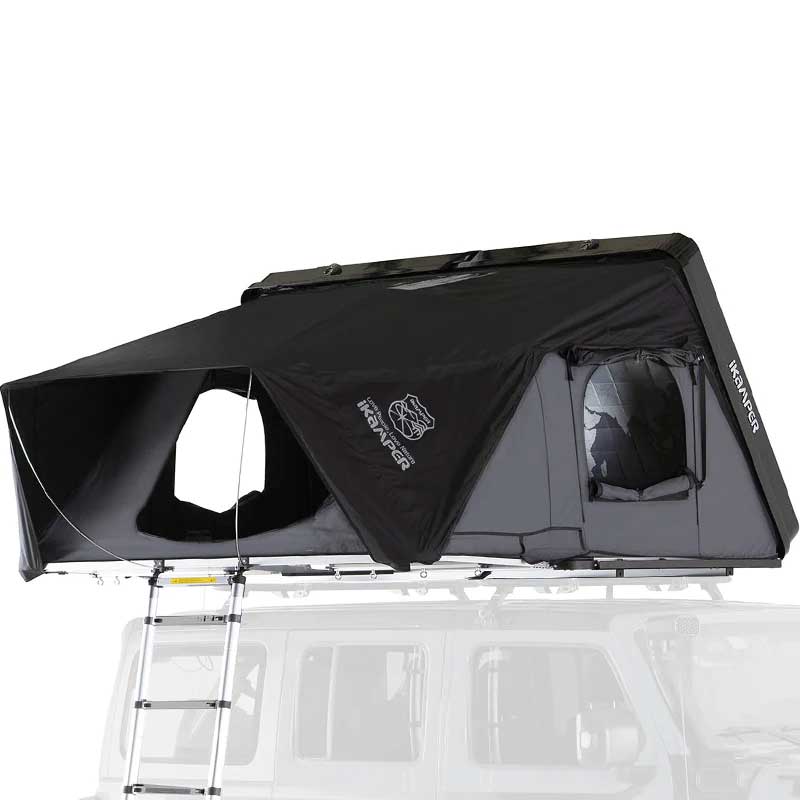
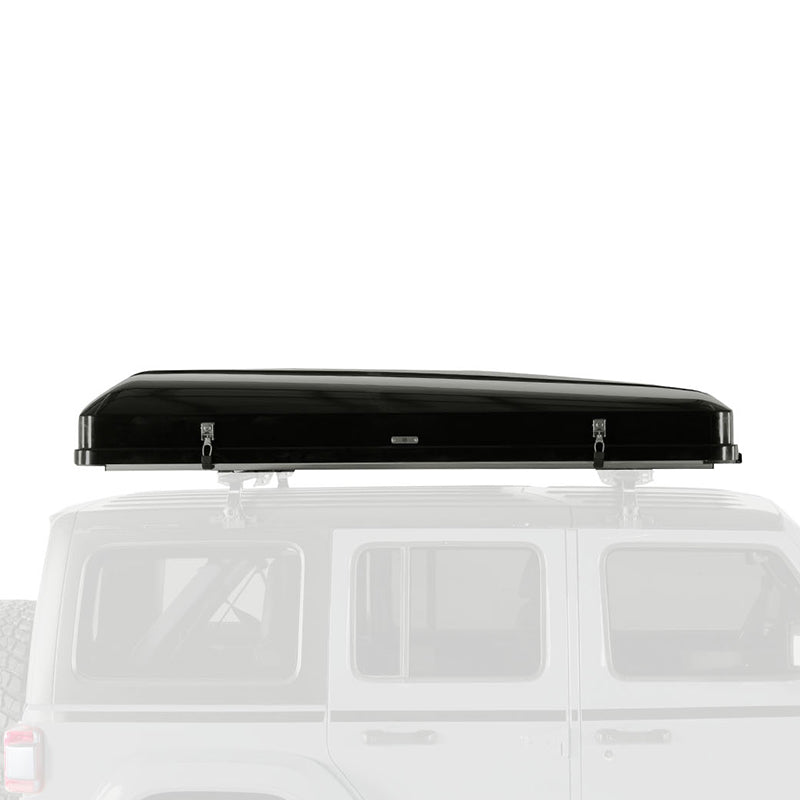
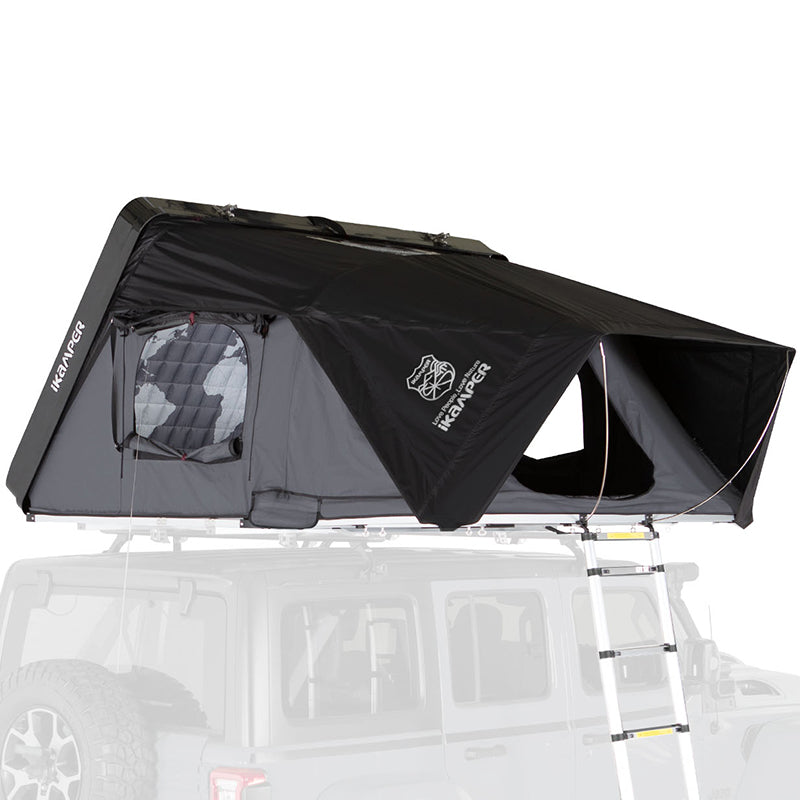
iKamper Skycamp 3.0 hardshell tent - 165 lbs with 900 lb static capacity
🔍 Browse Weight-Compatible Tents
Filter roof top tents by weight to find options that work with your vehicle's capacity
SHOP ALL ROOF TOP TENTSCalculating Your Total Roof Load (The Right Way)
Here's the step-by-step process for determining whether a specific roof top tent will work on your vehicle.
Step 1: Calculate Dynamic Load (While Driving)
Add up everything that will be on your roof while driving:
Dynamic Load Formula:
Roof Rack Weight + Tent Weight + Stored Gear Weight + Accessory Weight = Total Dynamic Load
Example Calculation:
Prinsu Roof Rack: 75 lbs
OVS Nomadic 3: 156 lbs
Gear stored in closed tent: 15 lbs
Awning: 40 lbs
Total Dynamic Load: 286 lbs
Now compare this to your vehicle's dynamic capacity. If your total exceeds the vehicle's rating, you need to either:
- Choose a lighter tent
- Remove accessories
- Upgrade to a different vehicle
Step 2: Calculate Static Load (When Camping)
Add up everything that will be on/in your tent when deployed:
Static Load Formula:
Roof Rack Weight + Tent Weight + Occupant Weight + Gear Weight = Total Static Load
Example Calculation:
Prinsu Roof Rack: 75 lbs
OVS Nomadic 3: 156 lbs
Two adults: 360 lbs (180 lbs average each)
Bedding and gear: 40 lbs
Total Static Load: 631 lbs
Compare this to both your vehicle's static capacity AND the tent's static capacity. Use whichever is lower as your actual limit.
Step 3: Check Both Limits
Both calculations must be under their respective limits for safe operation:
Example Vehicle: Toyota 4Runner
Dynamic Capacity: 165 lbs | Static Capacity: 770 lbs
Your Calculated Loads:
Dynamic: 286 lbs ❌ EXCEEDS LIMIT BY 121 LBS
Static: 631 lbs ✅ WITHIN LIMIT (139 lbs under)
Verdict: This setup will NOT work safely
Even though the static load is fine for camping, the dynamic load exceeds the vehicle's capacity. You cannot safely drive with this setup.
Safety Margins and Best Practices
Operating at exactly your vehicle's maximum capacity isn't smart or safe. You need headroom for unexpected situations.
The 20% Safety Rule
Never exceed 80% of your vehicle's rated capacity. This provides a safety buffer for:
- Unexpected road conditions: Potholes, speed bumps, and rough terrain create impact forces exceeding normal driving
- Gear accumulation: You'll add more gear over time-extra water, recovery equipment, camping accessories
- Passenger variations: Different occupants weigh different amounts
- Roof rack degradation: Mounting points and hardware weaken over time and use
- Manufacturing tolerances: Your specific vehicle might be at the lower end of the capacity range
Example with 20% buffer:
Toyota 4Runner dynamic capacity: 165 lbs
Safe operating maximum (80%): 132 lbs
This means:
Maximum combined weight of rack + tent + accessories should not exceed 132 pounds
This significantly limits your options. With a 75-pound roof rack, you have only 57 pounds remaining for the tent and accessories. Most roof top tents exceed this by 50-100 pounds.
When You Can Use the Full Capacity
There are scenarios where operating closer to maximum capacity is acceptable:
Upgraded mounting systems. Aftermarket roof racks specifically designed for roof top tents (Prinsu Pro, Front Runner, Sherpa) reinforce mounting points and sometimes increase usable capacity. However, they don't change your vehicle's underlying structural limit-just distribute loads better.
Bed rack systems for trucks. Bed racks mount to truck bed rails rather than the roof. They typically support 500-1,000 pounds dynamic capacity-far more than roof-mounted systems. If you drive a truck, bed rack mounting eliminates most weight concerns.
Vehicles designed for roof top tents. Some vehicles (Land Rover Defender at 370 lbs, Mercedes Sprinter conversions, purpose-built overlanders) have significantly higher factory capacity specifically to accommodate roof tents.
Track Your Weight Over Time
Your roof load increases gradually as you add gear:
- Year 1: Just the tent and rack
- Year 2: Add an awning (30-50 lbs)
- Year 3: Add light bars (15-25 lbs)
- Year 4: Add cargo boxes (20-40 lbs empty)
Suddenly you're 50-100 pounds over capacity without realizing it. Periodically recalculate your total roof load, especially after adding accessories.
What Happens If You Exceed Weight Limits
Let's be direct about the consequences of ignoring weight capacity limits. These aren't theoretical risks-these are documented failures that happen to real people.
Immediate Safety Risks
Handling degradation. Excess roof weight raises your vehicle's center of gravity dramatically. You'll experience increased body roll in turns, longer braking distances, and reduced stability at highway speeds. In emergency maneuvers-swerving to avoid an obstacle-your vehicle becomes far more likely to roll over.
Structural failure while driving. Roof mounting points can tear free from the vehicle under stress. This typically happens during hard braking or sharp turns when dynamic forces multiply. The tent becomes a 150+ pound projectile.
Roof collapse when camping. Exceeding static capacity can cause the roof to buckle inward while you're sleeping. This is rare with moderate overloading but becomes likely if you exceed static capacity by 30%+ (e.g., three 200-pound adults in a tent rated for 600 pounds total).
Long-Term Damage
Roof panel deformation. Operating above capacity causes permanent roof sagging. The sheet metal between supports gradually deforms under constant load. You might not notice for months, but the roof slowly bows downward.
Mounting point fatigue. Bolts, brackets, and factory mounting points experience metal fatigue from repeated stress cycling. They weaken over time even if they don't fail immediately.
Suspension wear. Excess roof weight accelerates wear on suspension components-particularly struts, shocks, and springs. Your vehicle's suspension wasn't designed for a constant 200+ pound roof load.
Insurance and Warranty Implications
Voided warranties. If your vehicle experiences roof-related damage and the manufacturer determines you exceeded weight limits, your warranty claim will be denied. This includes damage to the roof structure, suspension components, and even paint/finish issues.
Insurance claim denials. If you're in an accident and investigators determine your vehicle was overloaded, your insurance company may deny coverage or reduce payouts. This applies even if the weight wasn't the direct cause of the accident.
Liability concerns. If you cause an accident and excess roof weight contributed (even partially), you could face enhanced liability claims. This is particularly serious if injuries occur.
"But I've Seen People Running Heavier Setups..."
Yes, many people operate above manufacturer capacity limits. Some do so for years without obvious problems. Here's why that's not reassuring:
Survivorship bias. You see the successful installations online. You don't see the failures-people don't post about their collapsed roofs or insurance claim denials.
Different driving conditions. Someone running 200 pounds on a 165-pound-capacity roof might drive gently on paved roads. You might encounter rough terrain, high speeds, or emergency situations where that excess weight causes failure.
Manufacturing variation. Some vehicles are stronger than others due to production tolerances. The person running an overweight setup might have lucked into a particularly robust example. You might not.
Hidden damage accumulation. The person with the overweight setup might have roof damage developing invisibly. Metal fatigue doesn't announce itself until catastrophic failure occurs.
⚠️ CRITICAL SAFETY WARNING
We've watched social media forums normalize exceeding weight limits. "My 4Runner holds my 200-pound tent fine!" becomes accepted wisdom. This is dangerous. Manufacturer limits exist for good reasons-primarily your safety. Don't risk your life, your passengers' lives, and others on the road because "everyone else does it."
Solutions for Low Capacity Vehicles
If your vehicle has limited roof capacity, you have several options beyond "buy a different vehicle."
Solution 1: Choose a Lighter Tent
Budget and lightweight tents work better for capacity-limited vehicles:
Ultralight options:
- OVS TMBK 3: 108 lbs-works with 130+ lb dynamic capacity
- iKamper Skycamp Mini: 125 lbs-works with 150+ lb dynamic capacity
- Smittybilt Overlander: 108 lbs-works with 130+ lb dynamic capacity
Pair these with lightweight crossbars (25-40 lbs) instead of platform racks (70-90 lbs) to stay within limits.
Solution 2: Use Bed Rack Mounting (Trucks Only)
If you drive a truck, bed rack systems bypass roof capacity limits entirely. Bed racks mount to the truck's bed rails, which can support significantly more weight:
- Typical bed rack capacity: 500-1,000 lbs dynamic, 1,500-2,000 lbs static
- Advantage: Mount any roof top tent without weight concerns
- Disadvantage: Bed space is occupied by rack structure
Popular bed rack options include Leitner Designs, Prinsu, Front Runner, and many others in our collection.
Solution 3: Consider Truck Bed Tents
Truck bed tents mount inside the bed rather than on the roof. They weigh 20-50 pounds and don't count against roof capacity at all. They're less convenient than roof top tents but solve the weight problem completely.
Solution 4: Trailer-Mounted Tents
Trailer tents eliminate roof weight entirely. You tow your sleeping quarters behind the vehicle. This costs more (trailer + tent = $4,000-10,000) but removes all vehicle capacity concerns and lets you disconnect at camp to drive around freely.
Solution 5: Upgrade Your Vehicle
If you're serious about roof top tent camping and your current vehicle's capacity is too limited, this might justify upgrading to a vehicle with higher capacity:
High-capacity vehicles worth considering:
- Land Rover Defender: 370 lbs dynamic capacity
- Toyota Tundra: 180-200 lbs (plus bed rack option)
- Full-size trucks with bed racks: Effectively unlimited for RTT purposes
💬 Questions About Weight Compatibility?
Our team can help you determine if a specific tent will work safely on your vehicle
CONTACT USFrequently Asked Questions About Roof Top Tent Weight Limits
What is the difference between dynamic and static roof load capacity?
Dynamic load capacity is the maximum weight your roof can support while the vehicle is moving (driving). It includes the tent weight, roof rack, and any stored gear. Static load capacity is the maximum weight when the vehicle is parked with the tent deployed. Static capacity is typically 3-5 times higher than dynamic capacity because the tent's ladder provides additional ground support and the vehicle isn't experiencing acceleration forces.
How do I find my vehicle's roof weight capacity?
Check your vehicle's owner's manual first-look in the specifications or towing/loading section for "roof load capacity" or "maximum roof weight." If not listed there, check the door jamb sticker or contact your dealership's parts department with your VIN. For common overlanding vehicles: Toyota 4Runner has 165 lbs dynamic/770 lbs static, Jeep Wrangler has 150 lbs dynamic/600 lbs static, and Subaru Outback has 176 lbs dynamic/700 lbs static.
Can I exceed my vehicle's roof weight limit if I drive carefully?
No. Exceeding weight limits creates serious safety risks regardless of driving style: increased rollover risk, roof structural failure, voided warranties, and potential insurance claim denials. Weight limits account for emergency situations (hard braking, swerving) where forces multiply dramatically. Even if you drive carefully, you can't control other drivers or road conditions that might require emergency maneuvers. Always maintain at least 20% safety margin below maximum capacity.
How much does a roof top tent weigh?
Roof top tent weight varies by type and size. Hardshell tents typically weigh 125-250 lbs: iKamper Skycamp weighs 165 lbs, iKamper Mini weighs 125 lbs, OVS Bushveld weighs 160-180 lbs. Softshell tents range from 108-196 lbs: OVS Nomadic 3 weighs 140-156 lbs, OVS TMBK 3 weighs 108 lbs, OVS Nomadic 4 weighs 180-196 lbs. Don't forget to add roof rack weight (25-90 lbs) to the tent weight for total dynamic load calculation.
Does an aftermarket roof rack increase my vehicle's weight capacity?
No, aftermarket roof racks cannot increase your vehicle's underlying structural weight capacity. Premium racks like Prinsu, Front Runner, or Sherpa better distribute loads and may have higher rack-specific ratings (600-700 lbs), but your vehicle's roof structure still has the same limits. The vehicle's roof panel, mounting points, and frame determine actual capacity. However, truck bed racks bypass roof limitations entirely-they mount to bed rails and typically support 500-1,000 lbs dynamic capacity.
What happens if I exceed the static weight capacity while sleeping in my tent?
Exceeding static capacity can cause roof panel buckling or collapse-the roof bows inward under excessive weight. This is rare with moderate overloading but becomes likely when exceeding capacity by 30%+. For example, three 200-pound adults (600 lbs total) plus tent and rack weight (200 lbs) equals 800 lbs total-exceeding a Toyota 4Runner's 770 lb static capacity. The tent's internal capacity rating also matters: most tents are rated for 600-900 lbs static load regardless of vehicle capacity.
Can I mount a roof top tent on a car with 100 lb roof capacity?
It's extremely difficult with 100 lb dynamic capacity. The lightest roof top tents (OVS TMBK 3, Smittybilt Overlander) weigh 108 lbs. Add crossbars (25-40 lbs) and you're already at 133-148 lbs total-exceeding capacity. Your only realistic options: 1) Use a lightweight tent with the lightest possible crossbars and stay barely within limits with no safety margin, 2) Consider ground tents instead, or 3) Upgrade to a vehicle with higher capacity. Most sedans and compact cars aren't suitable for roof top tents.
Do I need to include the roof rack weight in my calculations?
Yes, absolutely. Roof rack weight counts toward both dynamic and static capacity. Factory crossbars weigh 20-40 lbs, aftermarket crossbars weigh 25-50 lbs, and platform roof racks weigh 70-90 lbs. For example: Prinsu roof rack (75 lbs) + iKamper Skycamp (165 lbs) = 240 lbs total dynamic load before adding any accessories or gear. This exceeds a Toyota 4Runner's 165 lb capacity by 75 lbs. Always include rack weight in your total load calculations.
How much weight can a Toyota 4Runner roof hold?
Toyota 4Runner (2010-2024 5th Gen and 2025+ 6th Gen) has 165 lbs dynamic load capacity and 700-770 lbs static load capacity. This means you can drive with up to 165 lbs on the roof (tent + rack + gear combined) and camp with up to 770 lbs total weight (tent + rack + occupants + gear). For safe operation, stay under 132 lbs dynamic (80% of maximum) to maintain safety margin. This limits tent selection to lighter models like OVS TMBK 3 or iKamper Mini with lightweight crossbars.
What's the lightest roof top tent available?
The lightest roof top tents weigh around 108-125 lbs. OVS TMBK 3 weighs 108 lbs with 600 lb static capacity. Smittybilt Overlander weighs 108 lbs with 800 lb static capacity. iKamper Skycamp Mini weighs 125 lbs with 900 lb static capacity. These ultralight options work best for vehicles with 130-150 lb dynamic capacity. When paired with lightweight crossbars (25-40 lbs), total dynamic load stays under 150 lbs, making them compatible with most SUVs and crossovers. Browse our affordable tent collection for weight-conscious options.
📚 More Roof Top Tent Guides
Complete RTT Buying Guide
Everything you need to know to choose your first roof top tent: hardshell vs softshell, sizing, vehicle compatibility, and installation.
Read Guide →Are RTTs Worth the Cost?
Honest cost-benefit analysis including hidden expenses, pros and cons, and who should buy versus skip roof top tents entirely.
Read Analysis →Winter Camping with RTTs
Master cold weather camping: insulation tips, condensation management, heating solutions, and 4-season tent recommendations.
Read Guide →